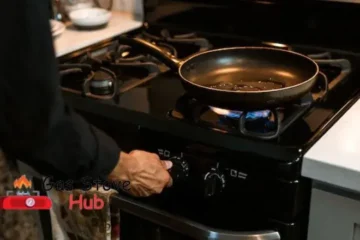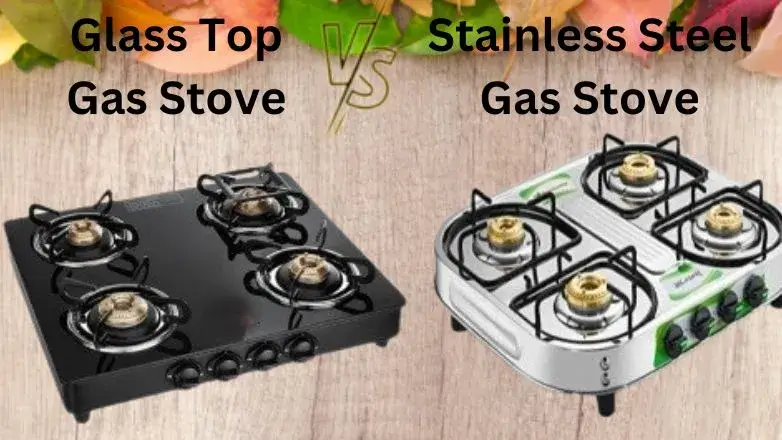
A glass top gas stove and a stainless steel gas stove can both work well in an Indian kitchen. The main difference is the cooktop surface: toughened glass looks sleek and is generally easy to wipe, while stainless steel avoids a glass panel that can crack from a hard impact. The better choice depends on your cookware, cleaning habits, kitchen use, budget, and the warranty on the exact model.
Written by Abdul Khader, researcher and writer at Gas Stove Hub. Last updated: October 25, 2026
This guide compares glass and stainless steel tops on cleaning, durability, price, repair, and everyday use. It also explains what matters more for safety than the surface finish, including product certification, stable pan supports, gas compatibility, and correct installation. If you are comparing burner count, ignition, and kitchen fit as well, read How to Choose a Gas Stove in India.
What Is A Glass Top Gas Stove?
A glass top gas stove uses a purpose-made toughened glass panel over its supporting frame. It gives the cooktop a smooth, modern finish that is easy to wipe after spills. Toughened glass is designed for the intended heat and use of the appliance, but it is not unbreakable. A heavy impact, damaged panel, unsuitable cookware, or use contrary to the product manual can still create a risk of breakage. Inspect the glass and follow the manufacturer’s care instructions.
The burners and gas controls sit beneath or alongside the top panel, and their design varies by model. Two stoves can look similar but differ in burner spacing, pan supports, ignition, flame control, and thermal efficiency. Compare these specifications separately from the cooktop material.
What Is A Stainless Steel Gas Stove?
A stainless steel gas stove has a metal cooktop surface. It has a practical, familiar appearance and can tolerate the everyday bumps that would crack glass, although it can still scratch, dent, stain, or show water marks. Stainless steel grades and surface finishes vary, so construction quality and maintenance instructions matter.
Glass Top Gas Stove Vs Stainless Steel Gas Stove
Neither surface is automatically better in every category. Use this table as a starting point, then compare the specifications, certification, and warranty of the exact models you are considering.
| Factor | Glass Top Gas Stove | Stainless Steel Gas Stove |
|---|---|---|
| Appearance | Smooth, glossy, contemporary look | Simple, functional, traditional finish |
| Daily cleaning | Usually quick to wipe because spills sit on a smooth surface | Can need more attention around edges, joints, and burner areas |
| Impact damage | Glass can crack or shatter if hit or stressed in ways the manual does not allow | Can scratch or dent, but there is no glass panel to crack |
| Heat and cookware care | Avoid impact, sudden temperature changes, and cookware or loads not approved by the maker | Still needs correct pan supports and suitable cookware |
| Stains and marks | Can show fingerprints, dried spills, or scratches | Can show water spots, smudges, scratches, or discolouration |
| Repair cost | Glass-panel replacement may be expensive or model-specific | Repair cost depends on the damaged part and availability |
| Price | Often costs more at similar feature levels, but prices vary widely | Often has budget options, but premium models may cost more |
| Best fit | People who value a glossy look and easy surface wiping | People prioritising a practical metal surface and less concern about glass breakage |
Aesthetics
Glass tops often suit modern or modular kitchens because of their glossy finish and dark, seamless look. Stainless steel has a more utilitarian appearance and can blend well with traditional kitchens or heavy everyday cooking setups. Appearance is subjective, so choose the finish you like and can maintain rather than treating one as universally better.
Safety
The top material alone does not determine whether a gas stove is safe. Both types need genuine applicable BIS certification, stable pan supports, suitable burner design, correct gas connection, good flame behaviour, and installation and maintenance according to the manufacturer’s instructions. Glass adds a surface-specific risk from impact or damage; stainless steel can still scratch or dent. Check the exact model’s safety features and warranty rather than relying on material alone.
Check the Exact Model, Not Just the Surface Material
Confirm the applicable certification mark and model details with the seller or manufacturer. Compare the burner layout, pan supports, gas inlet, warranty terms, and local service availability. A glass top or steel top by itself is not a safety rating.
Ease of Maintenance and Cleaning
Both surfaces need regular cleaning, but glass is usually quicker to wipe because it is smooth and spills sit on the surface. Stainless steel may need extra attention around joints and burner areas. For either type, switch the stove off, let it cool completely, use a soft cloth and a cleaner approved for the finish, remove residue, and dry it. See our guides to How to Clean a Gas Stove Top and How to Clean a Stainless Steel Stove.
Glass can be scratched or damaged by impact, abrasive pads, or incompatible cleaning chemicals. Stainless steel can also scratch, stain, or show water marks when treated with harsh products. Follow the cleaner instructions in your appliance manual and do not assume a product safe for one surface is suitable for the other.
Do not clean either surface while it is hot. Let the stove cool completely before wiping it, and do not pour cold liquid onto a hot glass panel because sudden temperature changes can damage it. Avoid abrasive scouring pads, metal wool, knives, and unapproved chemicals on both finishes. On glass, impacts and hard-edged utensils are particular concerns; on stainless steel, abrasive cleaning can leave permanent scratches.
Ignition
Manual and auto ignition are options available on different models of both surface types. Auto ignition is a convenience feature, not evidence that a stove is more or less safe by itself, and it is not the same as flame failure protection. If a burner does not light promptly, follow the manual, turn the control off, and allow unburned gas to disperse before trying again. If you smell gas, stop using the appliance and follow the supplier’s emergency guidance.
Price
Price depends on brand, burner count, ignition type, glass thickness or steel construction, pan supports, finish, and warranty. Stainless steel models often include budget options, while glass-top models may cost more for comparable features, but this is not a fixed rule. Compare the complete specifications rather than selecting only by surface material.
A damaged glass panel can be costly to replace and may require a specific part for that model. Steel-panel repairs can also cost money depending on the design and availability of parts. Before purchasing, ask the seller or manufacturer whether replacement glass or panels are available, what is covered by warranty, and whether accidental impact is excluded.
Safety and Care Tips for a Glass Top Gas Stove
Toughened glass is made for the appliance’s intended use, but it still needs careful handling. Follow the model-specific manual and the safety guidance below.
Use Cookware That Fits the Burner and Pan Supports
Use pots and pans that fit the burner and sit securely on the pan supports. Follow the manufacturer’s limits for cookware diameter and weight. Avoid dropping heavy vessels onto the glass, dragging rough-bottomed cookware across the surface, or using a pan that overhangs the supports in an unstable way. A suitable heavy vessel can be used when the product manual and pan supports permit it.
Use utensils of the right size. It will be usually mentioned in the product guide. Also, use stable utensils because the utensils that do not have flat bottoms can increase the risk of food spillage on the cooktop.
Do Not Cover the Stove While It Is Hot or in Use
Never place a cover, cloth, or other object over a lit or hot stove. Once the appliance is switched off and fully cool, use a cover only if the manufacturer explicitly recommends one for that model. Keep burner areas clear and do not block ventilation or access to controls.
Avoid Impact and Do Not Use the Glass Panel as a Worktop
The glass panel is the cooktop surface, but it is not a chopping board or extra countertop. Do not strike it with utensils, drop heavy cookware, stand or sit on it, or place sharp, rough-edged objects on it. If the panel is cracked, chipped, or damaged, stop using the appliance and contact the manufacturer or an authorised service professional before using it again.
Clean The Burners Regularly
Clean removable pan supports and burner caps only as described in the manual, and dry them fully before reinstalling. Do not pour water into burner openings or poke jets with pins, needles, or metal wire. If the flame becomes uneven, keeps going out, or a burner appears blocked after routine cleaning, stop using that burner and contact an authorised service technician.
Read the Manual and Follow the Model-Specific Care Instructions
Glass thickness, approved cleaners, cookware limits, burner construction, ignition method, and warranty terms vary between models. Read the manual before first use, and check any special instructions for the glass panel, pan supports, burner caps, ignition components, and gas connection.
If your stove uses auto ignition, keep the ignition area clean and dry and follow the manufacturer’s troubleshooting instructions. For further help, see Auto-Ignition Gas Stove Problems. Do not dismantle gas controls or attempt repairs yourself.
Which Is Better: Glass Top or Stainless Steel Gas Stove?
Choose a glass top if you prefer a glossy finish and easy wiping, and you can take care to prevent impacts and follow the model’s cleaning instructions. Choose stainless steel if you prefer a metal surface and are more concerned about accidental impact to glass than about scratches or dents. For either type, certification, burner performance, pan support stability, warranty, and service availability matter as much as appearance.
A Glass Top May Suit You If
- You want a smooth, modern-looking cooktop that is quick to wipe.
- You generally handle cookware carefully and can avoid dropping or striking the panel.
- The model’s glass warranty and replacement-part availability meet your expectations.
Stainless Steel May Suit You If
- You prefer a practical metal finish and do not want a glass panel.
- Your kitchen has frequent movement of large vessels and you want to avoid glass-impact damage.
- You accept that steel can still scratch, dent, stain, or show water marks and will need appropriate cleaning.
Does Cooktop Material Affect Safety or Gas Consumption?
The material alone does not determine the stove’s safety or fuel use. Burner design, gas pressure compatibility, flame stability, thermal efficiency, installation, maintenance, and certification are important. A well-designed glass-top model is not automatically less safe than a stainless steel model, and stainless steel does not guarantee better efficiency. Compare the exact model specifications and applicable certification instead of judging by top material alone.
For Indian LPG stoves and built-in hobs, check the current applicable Bureau of Indian Standards requirements, including IS 4246:2025 and any applicable amendments. See the BIS Standard IS 4246:2025 for Domestic Gas Stoves and Built-In Hobs. IndianOil also explains that its promoted LPG stoves include both glass-top and stainless-steel options among ISI-approved products on its LPG Stove and Suraksha Hose Information page.
Compare Warranty and Long-Term Repair Costs
Do not compare warranty duration without checking what it covers. A manufacturer may offer different coverage for the glass panel, burners, valves, ignition components, and the rest of the appliance. Ask whether accidental glass breakage is excluded, whether replacement panels are available for the model, and what an out-of-warranty repair could cost. Keep the invoice, warranty documents, and model number for future service.
Buying Checklist Before You Decide
- Confirm the full dimensions and clearances fit your countertop.
- Check burner count and spacing using the size of your usual kadai, tawa, and pressure cooker.
- Verify the genuine applicable BIS or ISI certification for the exact model.
- Confirm compatibility with your LPG or PNG gas supply and use an authorised installer when required.
- Compare ignition type, pan support stability, burner performance, and any flame failure protection offered.
- Read the glass or steel care instructions and warranty exclusions.
- Check the availability of local authorised service and replacement parts.
Frequently Asked Questions: Glass Top vs Stainless Steel Gas Stove
Is a Glass Top Gas Stove Better Than Stainless Steel?
Glass top stoves are often easier to wipe and have a glossy finish. Stainless steel avoids a glass panel that could crack from impact. The better option depends on your use, care habits, budget, and the warranty of the exact model.
Which Gas Stove Lasts Longer, Glass Top or Stainless Steel?
There is no universal winner. The glass panel can last well when used as directed, but impact damage may require a costly replacement. Stainless steel can dent, scratch, or corrode depending on quality and care. Build quality, maintenance, spare parts, and service support affect long-term ownership.
Can a Glass Top Gas Stove Crack During Cooking?
Toughened glass is designed for its intended appliance use, but it is not unbreakable. Impact, an already damaged panel, incorrect installation, or use outside the manufacturer’s cookware and care instructions may increase the risk. Stop using the stove if you see a crack or chip and contact an authorised service professional.
Is a Stainless Steel Gas Stove Safer Than a Glass Top Stove?
Not automatically. Both types use gas and should meet applicable standards, have stable pan supports, and be installed and maintained correctly. Stainless steel avoids glass-breakage risk, while the overall safety of either stove depends on model design, certification, condition, and safe use.
Does a Glass Top Gas Stove Use More Gas?
Not because it has a glass top alone. Gas use depends on burner design, heat output, flame adjustment, thermal efficiency, cookware, and cooking habits. Compare manufacturer specifications and applicable certification for the individual models.
How Do I Clean a Glass Top Gas Stove Without Scratching It?
Switch the stove off and let it cool completely. Use a soft cloth or non-abrasive sponge with a cleaner approved for that finish, then remove residue and dry it. Avoid metal scrubbers, abrasive powders, and harsh chemicals unless the manual explicitly permits them. Read How to Select the Best Glass Top Gas Stove for more selection advice.
Can I Use Heavy Utensils on a Glass Top Gas Stove?
Use cookware only within the weight and size limits in the user manual, and set it carefully onto the pan supports rather than dropping it. Do not place heavy cookware directly on exposed glass or use the panel as a work surface. The manufacturer’s instructions take priority for each model.
Related Guides
For more practical guidance, read How to Clean a Gas Stove Top, How to Clean a Stainless Steel Stove, and How to Select the Best Glass Top Gas Stove.
Source & About This Guide
This comparison uses general product-selection principles and manufacturer care guidance. Product design, glass specifications, warranty coverage, and approved cleaners vary by model, so confirm details with the product manual and manufacturer before buying or cleaning. This guide is general information and does not replace model-specific instructions or authorised service advice.
- Bureau of Indian Standards: IS 4246:2025 and Applicable Amendments
- IndianOil: LPG Stove and Suraksha Hose Information
- Elica India: Gas Hob Cautions and Care
- Elica India: Cooktop Cleaning and Maintenance FAQs
- Bosch Home Appliances India: How to Clean a Gas Stove
About this guide: Gas Stove Hub publishes practical information to help Indian households compare cooking appliances and maintain them safely. Always verify model-specific specifications with the manufacturer and use authorised professionals for installation or repairs.