
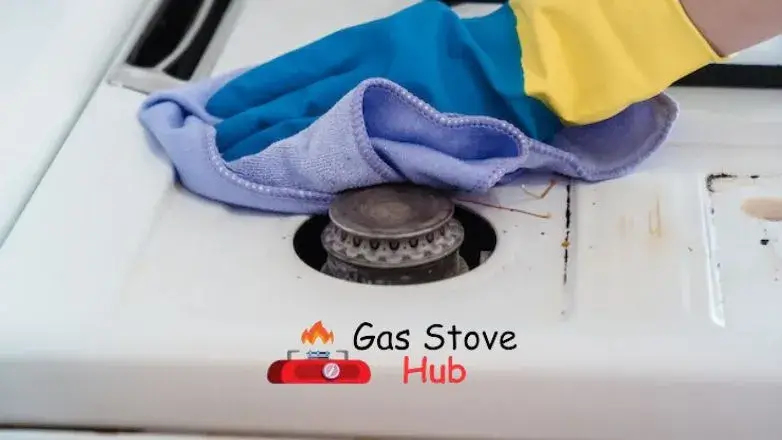
To clean a stainless steel gas stove, switch it off, let every surface cool, then wipe it with warm water, a little mild dishwashing liquid, and a soft non-abrasive cloth. Work in the direction of the steel grain, remove soap residue with a clean damp cloth, and dry the surface thoroughly to help prevent streaks and water spots. Always check your stove’s manual first because finishes and permitted cleaners vary by model.
Written by Abdul Khader, researcher and writer at Gas Stove Hub. Last updated: October 25, 2026
This guide covers everyday cleaning, greasy and burnt-on marks, water spots, burner-area precautions, and which products to avoid. For broader surface comparisons, read Glass Top Gas Stove or Stainless Steel.
How to Clean a Stainless Steel Stove Step by Step
1. Switch Off the Stove and Gather Your Supplies

Before cleaning, turn all burner controls off and wait until the cooktop, pan supports, and burner parts are completely cool. If your model uses a gas cylinder, turn the regulator off before cleaning when it is safe and practical to do so. Do not disconnect the gas hose or remove fixed parts to clean the stove. Keep water and cleaning spray away from electrical ignition parts, sockets, and openings.
Prepare warm water, a few drops of mild dishwashing liquid, a soft sponge or microfiber cloth, a separate dry lint-free cloth, and a soft brush for accessible crevices. Use only tools and products permitted by the appliance manual.
2. Remove Loose Debris and Wipe Fresh Spills
Lift off loose crumbs with a soft cloth once the stove is cool. Wipe fresh food splashes promptly with a damp cloth rather than allowing salty, sugary, or acidic residue to dry on the steel. Do not flood the cooktop with water. If you use a spray cleaner, apply it to the cloth rather than spraying it directly near burner openings, knobs, labels, or ignition components.
3. Wash the Stainless Steel With Mild Soapy Water
Mix a few drops of mild dishwashing liquid into a bowl of warm water. Dip in a soft sponge or microfiber cloth, wring it out so it is damp rather than dripping, and gently wipe the stainless steel in the direction of the grain. Use light pressure and repeat instead of scrubbing aggressively.
- Wipe away loosened grease with the damp, soapy cloth.
- Use a clean cloth lightly dampened with plain water to remove soap residue.
- Dry immediately with a soft, lint-free microfiber cloth, following the grain.
4. Remove Greasy or Stuck-On Marks Gently
For dried grease, place a warm, damp cloth over the mark for a short time to soften it, then clean with mild dish soap and a non-abrasive sponge. For a stubborn spot, use a small amount of baking soda mixed with water only if your stove manual permits it, and test a hidden area first. Rub very gently with the grain, wipe all residue away, and dry completely. Do not use olive oil, baby oil, WD-40, or other oily products as a routine cleaner because they can leave a residue and are not a substitute for a cleaner approved for your appliance.
5. Clean Around Knobs and Burner Openings Carefully

Wipe knobs and the area around each burner with a lightly damp cloth or soft brush. Never pour water into burner ports, spray cleaner into the ignition system, or force liquid into gaps around the controls. Do not remove knobs or fixed components unless the user manual specifically explains how. If grease is trapped inside a control or gas component, stop and ask an authorised service technician rather than trying to dismantle it.
6. Rinse and Dry the Steel to Prevent Streaks
Use a separate clean cloth dampened with plain water to remove leftover detergent. Dry the whole stainless steel surface straight away with a soft, lint-free cloth, moving with the grain. Leaving water to air-dry can cause streaks or mineral spots. Keep the stove off and do not use it again until cleaned parts and the area around the burners are completely dry.
How to Clean Removable Grates and Burner Caps
Remove only the pan supports, trivets, or burner caps that the user manual identifies as removable. Wash those parts separately with warm water and mild dish soap using a non-metallic brush or soft sponge. Do not submerge ignition electrodes, electrical parts, or fixed burner assemblies, and do not push pins or metal wire into burner ports.
Rinse removable parts where permitted and dry them completely before putting them back in their original position. Burner caps must sit flat and be correctly aligned. If a part is corroded, damaged, difficult to remove, or still clogged after normal cleaning, use an authorised service technician.
Which Cleaning Products Should You Avoid on Stainless Steel?
Unless the manufacturer says otherwise, avoid steel wool, metal scouring pads, abrasive powders, gritty scrubbers, rough brushes, and harsh cleaners containing chlorine bleach. Do not use oven cleaner, strong acids, or ammonia-based products on a finish that does not explicitly allow them. These can scratch, dull, stain, or discolour stainless steel. Avoid mixing cleaning products, especially bleach with acids or ammonia.
- Do not use a knife, metal scraper, or razor blade to remove food stuck to the steel.
- Do not leave vinegar or other acidic cleaners sitting on the surface. Some finishes are sensitive to them.
- Do not use flammable sprays, WD-40, or oily polishes around a gas appliance.
- Do not use a steam cleaner or soak the stove body unless the manufacturer specifically approves it.
Quick Reference: Which Cleaner Should You Use?
| Stain or Problem | Safest Starting Method | Important Caution |
|---|---|---|
| Everyday dirt and fresh spills | Warm water, mild dishwashing liquid, and a soft cloth | Let the stove cool first and dry the steel afterwards |
| Greasy or stuck-on food | Soften with a warm damp cloth, then gently use mild soapy water | Do not scrape with a blade or use abrasive pads |
| White water spots | Wipe with clean water and buff dry with microfiber | Use vinegar only if the stove manual permits it |
| Heat tint or discolouration | Use a stainless steel cleaner or brightener approved for your model | Some marks may be permanent; avoid harsh scrubbing |
How to Remove Common Stainless Steel Stove Stains
Burnt-On Grease
Soften the mark with a warm, damp cloth, then use mild dish soap and a non-abrasive sponge. A cleaner specifically labelled for stainless steel cooktops can be used if the manufacturer approves it. Follow its label, wipe away all residue, and dry the area. Do not scrape the steel with a blade.
White Water Spots
Start with a soft cloth dampened with clean water and dry the area fully. If mineral spots remain, check the appliance manual before trying vinegar because acid tolerance differs by finish. Where the manufacturer permits it, use a small amount briefly, wipe it away promptly, rinse with a clean damp cloth, and dry.
Heat Tint or Discolouration
Heat tint may not come off with ordinary washing. Avoid harsh scrubbing and choose only a stainless steel brightener or conditioner approved for your model. Keep polish away from knobs, burner openings, markings, and non-steel surfaces. If discolouration is severe or the steel appears pitted, ask the manufacturer or an authorised technician about the next step.
How Often Should You Clean a Stainless Steel Gas Stove?
Wipe splashes and grease after cooking once the surface is cool. Do a more complete clean when residue builds up, and clean removable pan supports and burner caps according to the manual and how frequently you cook. Prompt cleaning makes grease easier to remove and reduces the temptation to use aggressive scrubbers. Always wait for all components to cool before cleaning.
Common Mistakes That Can Damage a Stainless Steel Stove
- Scrubbing across the grain or using steel wool and abrasive pads.
- Leaving acidic cleaner or salty food residue on the surface for a long time.
- Using too much water around burner openings, knobs, or ignition parts.
- Reassembling burner caps or pan supports while wet or misaligned.
- Polishing with oil or using unapproved chemicals to hide scratches or heat marks.
- Ignoring the stove manual or trying to dismantle gas controls to clean trapped dirt.
Frequently Asked Questions About Cleaning Stainless Steel Stoves
What Is the Best Cleaner for a Stainless Steel Gas Stove?
For routine cleaning, start with warm water, a few drops of mild dishwashing liquid, and a soft non-abrasive cloth. Use a specialist stainless steel cooktop cleaner only if it is approved for your stove’s finish.
Can I Use Vinegar on a Stainless Steel Stove?
Not on every finish. Some manufacturers allow vinegar for specific marks, while others warn that acidic cleaners may damage certain stainless or fingerprint-resistant finishes. Check your manual, never leave vinegar to sit, and wipe and dry the surface promptly if its use is permitted.
Can Baking Soda Clean a Stainless Steel Stove?
A small amount of baking soda mixed with water may help with a stubborn spot on some traditional stainless steel surfaces, but it can be too abrasive for certain finishes. Check the manual, test an inconspicuous area, use minimal pressure, and remove all residue.
How Do I Make a Stainless Steel Stove Shiny Without Scratches?
Clean with mild soapy water, wipe in the direction of the grain, remove soap residue, and buff dry with a clean microfiber cloth. If needed, use a compatible stainless steel polish approved by the manufacturer rather than oil or an all-purpose spray.
Can I Use Steel Wool or a Metal Scrubber?
No. Steel wool and metal scrubbers can scratch the finish and may leave particles that rust. Choose a soft cloth or non-abrasive sponge instead.
How Do I Clean Grease Around Gas Burner Knobs?
With the stove off and cool, wipe around the knobs using a lightly damp cloth or soft brush. Do not spray liquid into gaps or dismantle controls. If grease has entered the control mechanism, contact an authorised service technician.
Final Tips for a Clean Stainless Steel Stove
The safest routine is simple: let the stove cool, clean with mild soapy water and a soft cloth, follow the direction of the grain, rinse away residue, and dry thoroughly. For stubborn stains, use only a product and method approved for your stove’s exact finish. For related guidance, read How to Clean a Gas Stove Top, How to Clean Gas Stove Burners With Vinegar and Baking Soda, and Auto-Ignition Gas Stove Problems.
Source & About This Guide
This guide uses general stainless steel cleaning principles and manufacturer care guidance. Always follow the manual supplied with your own stove because cleaners approved for one stainless steel finish may not be suitable for another.
- Electrolux India: How to Clean a Gas Stove Thoroughly
- Bosch Home Appliances India: How to Clean Your Gas Stove
- Whirlpool India: Hob Cleaning and Care FAQs
- Whirlpool: Cleaning a Stainless Steel Cooktop
- KitchenAid: Guide to Cleaning Stainless Steel Cooktops
About this guide: Gas Stove Hub publishes practical cooking-appliance care and safety information. Recommendations are general and do not replace the product manual or advice from an authorised service professional.


