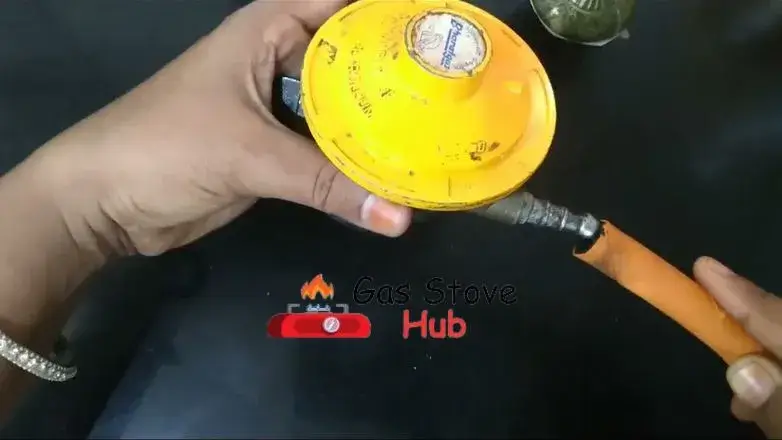
The gas stove pipe is the flexible hose that carries LPG from the cylinder regulator to the stove. It must remain accessible, away from heat and checked regularly for damage. You can wipe the outside of an approved hose, but cleaning inside it, disconnecting it for routine cleaning or attempting repairs can create a gas leak. This guide explains safe external cleaning, what to inspect, when to request hose replacement, how leak checks should be handled and what to do if you smell LPG. For burners and grates, see our guide on How to Clean Gas Stove Pipes, Burners and Grates.
Written by Abdul Khader, researcher and writer at Gas Stove Hub. Last updated: October 24, 2026
This guide is for cylinder (LPG) connections. If your home has a piped natural gas (PNG) line, the fixed pipes are installed and maintained by your gas provider, so do not clean, move or modify them yourself, and call the provider for any concern.
Quick Answers
- Clean only the outside of the hose with a clean damp cloth, then dry the exterior. Do not use soap or chemicals unless the manufacturer specifically permits them, and never put liquid inside the hose.
- Use the hose type currently approved by your LPG distributor. IndianOil describes the Suraksha LPG hose as having a five-year life, but replace it earlier if damaged and follow the printed “replace before” date. Rules for ordinary rubber tubes vary by provider.
- Check the date printed on the hose, and look along its whole length for cracks, hard patches and kinks.
- Never use a flame to check for leaks. If you smell LPG or suspect a leak, do not test the connection yourself. Switch off the regulator only if safe, leave the area and call 1906 from a safe location.
- If you smell gas or find a leak, turn the gas off, ventilate and call the LPG emergency helpline 1906.
Rubber Tube vs Suraksha Hose
| Factor | Ordinary Rubber Tube | Suraksha LPG Hose |
|---|---|---|
| Replacement timing | Rules differ by oil company. Some published guidance says two years, while BPCL’s more recent charter says ordinary rubber tube use is prohibited. Ask your own distributor what is currently permitted. | IndianOil says five years, or sooner if damaged. Follow the printed “replace before” date and current distributor guidance. |
| Where to obtain | Do not buy or use unless your LPG provider confirms this type is permitted and specifies the required mark. | Available through LPG distributors of the oil companies. |
| Construction | Depends on the approved product | IndianOil describes a reinforced, multi-layer construction with a braided metal layer and a fire-resistant outer layer. |
| Date marking | May not carry a replace-before date, so confirm the approved replacement interval with your distributor. | Batch and manufacturing information, including a replacement date, should be printed on the hose or packaging. |
Oil-company guidance is not identical for every hose type. IndianOil’s Suraksha LPG Hose Information describes a five-year life, and its Domestic LPG Maintenance FAQ recommends periodic cleaning with a wet cloth. HPCL consumer guidance lists two years for an ordinary rubber tube and five years for Suraksha, while BPCL’s Citizen’s Charter says ordinary rubber tube usage is prohibited. Because rules can differ or change, follow the current requirement of your own LPG provider and the hose’s printed replacement date.
Before You Touch the Pipe: Safety Rules
- Turn all stove knobs to off, switch the regulator off and, if you can, shut the cylinder valve.
- Let the stove and the area around it cool completely.
- Keep flames, lit incense, cigarettes and sparking switches well away.
- If there is no smell of gas, ventilate the kitchen by opening a window. If you smell LPG, do not switch electrical appliances, fans or lights on or off. Leave the area and call 1906 from a safe location.
- Keep children and pets out of the kitchen while you work.
How to Inspect Your Gas Pipe
Visually inspect the accessible length of the hose, from the regulator to the stove, without twisting, bending or pulling it. If you smell LPG or suspect a leak, do not continue the inspection. Look for:
- Cracks, splits or fine lines in the rubber, especially where the pipe bends.
- Hard, brittle, sticky or swollen patches, which mean the rubber is ageing.
- Kinks, sharp bends or a pipe that is stretched tight or twisted.
- Bite marks or holes from rats or insects.
- Loose or rusty clamps and connections at the regulator and the stove.
- Any part of the pipe that touches the hot stove body, burner or a hot pan.
If you find any of these problems, do not tape, glue, clamp, patch or otherwise repair the hose. Do not bend or manipulate it to see whether the damage gets worse. Stop using the stove, turn off the regulator only if it is safe to do so, and contact your LPG distributor or authorised mechanic for replacement. If you smell gas, follow the emergency steps below rather than inspecting further.
How to Check the Date on a Suraksha Hose
A Suraksha hose has its manufacturing date printed on it, so look along the length of the hose for the printed date and count five years from it. Your distributor may also remind you when a replacement is due. For an ordinary rubber tube, note the date you fitted it, for example in your phone calendar, so you remember to change it every two years.
How to Clean the Outside of a Gas Pipe
What You Need
- One clean, soft cloth dampened with plain water
- A clean dry cloth
- Gloves, if you prefer
Steps
- Follow the safety rules above, and leave the pipe connected unless you are replacing it.
- Dampen the soft cloth with clean water and wring it out thoroughly. It should be damp, not dripping.
- Gently wipe only the accessible outer surface. Do not twist, pull, sharply bend, stretch or rotate the hose, and do not wet the regulator, hose fittings or stove inlet.
- If needed, wipe away surface dirt with a second clean cloth that is barely damp, then gently dry the exterior. Follow your hose manufacturer’s instructions if they differ.
- Look for visible cracks, hardening or other damage without flexing the hose. If you see damage or notice a gas smell, do not use the stove. Follow the leak emergency instructions or contact your distributor.
What Not to Do
- Do not soak the pipe, and never pour or push water, vinegar or lemon juice into it. The inside of a gas pipe should stay clean and dry.
- Do not use dish soap, oil, polish, petrol, kerosene, thinner, bleach, disinfectant or other chemicals on the hose unless the hose manufacturer specifically permits them. Oil-company consumer guidance recommends wiping the Suraksha hose with a wet cloth.
- Do not scrape it with a blade, wire brush or scouring pad.
- Do not disconnect the pipe just to clean it. Disconnecting and refitting it adds a chance of a poor connection.
- Do not try to clear a “clogged” pipe with liquids. A weak flame is usually caused by blocked burner ports, a regulator problem or a nearly empty cylinder, so check those instead, as explained in our guides on How to Clean a Gas Burner at Home and Common Gas Stove Problems.
Leak Checks: When to Call an LPG Technician
Important: If you already smell LPG, hear hissing, see a damaged hose or suspect an active leak, do not turn the regulator on to test it and do not try to find the leak yourself. Move away and follow the emergency steps below. After cylinder delivery, hose replacement or connection work, ask the distributor’s trained mechanic to check the installation. Routine consumer leak checks should only be carried out if your LPG provider specifically instructs you how to do them safely.
If Your Distributor Has Asked You to Check for Leaks
- Do not proceed if there is any smell of gas, a hissing sound, visible damage or uncertainty about the connection. Call the distributor instead.
- Follow the exact instructions supplied by your LPG distributor. Do not disconnect, tighten, dismantle or reposition the hose or regulator.
- Use only the leak-check method your distributor specifies. Never use a match, lighter, candle or any flame.
- If bubbles, a smell of gas or another abnormal sign appears, stop immediately. If it is safe, close the regulator, avoid operating electrical switches, leave the area and call 1906 from a safe location.
IndianOil advises regular visual inspection and periodic wiping of the Suraksha hose with a wet cloth, while domestic LPG installation safety audits should be arranged through the distributor’s trained mechanic. For the current guidance, read the IndianOil Domestic LPG Maintenance FAQ and the Government LPG Safety Pledge. Our guide on Automatic Gas Stove Safety explains why routine checks matter.
What to Do If the Pipe Leaks
- Turn off the stove knobs, the regulator and, if it is safe to reach, the cylinder valve.
- Open all windows and doors to ventilate, and move everyone out of the kitchen.
- Do not light a flame, and avoid switching electrical items on or off near the leak.
- From a safe place outside the room, call the LPG emergency helpline on 1906. It works for Indane, HP Gas and Bharat Gas, and the leak service is free of charge from the distributor. The HPCL Complaints and Feedback Page lists the helpline.
- Do not use the stove again until a trained mechanic has fixed the problem and checked the connection.
Our guide on Whether Gas Stoves Can Explode covers the warning signs of a leak in more detail.
How to Replace the Gas Pipe
- Replace the pipe when it reaches its replacement interval, or at once if it is cracked, hard, swollen, chewed or damaged.
- Ask your LPG distributor which hose type is currently approved for your connection. Suraksha LPG hoses are supplied through LPG distributors. Do not assume an ordinary rubber tube is permitted, and never use an unmarked or unapproved hose.
- Ask a trained technician or your distributor’s mechanic to fit it, since oil company guidance advises that repairs and replacements are done by qualified people.
- Do not disconnect or refit the hose as a home DIY task. Ask your LPG distributor’s trained mechanic to replace it and verify the installation before you use the stove again.
- Keep the pipe short, straight and away from the hot stove, and do not stretch or twist it.
IndianOil and the Government’s LPG safety guidance recommend inspection of the domestic LPG installation by an authorised mechanic every five years. Arrange an earlier inspection if you notice damage, a connection problem or another safety concern, and follow the current instructions from your own distributor.
Gas Hose Problems: Signs and Safe Next Steps
Cleaning removes surface dust and grease, but it cannot make an aged, damaged or unsuitable hose safe again. Use this table to decide when a visual check is enough and when to stop using the stove and request professional help.
| What You Notice | What It May Mean | Safe Next Step |
|---|---|---|
| Dust or food splashes on the outside, no smell or visible damage | Surface dirt only | Turn the regulator off, let the area cool, and gently wipe the exterior with a clean damp cloth, then dry it. |
| Cracks, cuts, swelling, hardening, softness, sticky patches or rodent damage | Hose deterioration | Do not use tape or glue. Stop using the stove and arrange replacement by the LPG distributor’s trained mechanic. |
| Hose touches a hot burner, stove body or hot cookware | Risk of heat damage | Do not pull or reroute the hose while connected. Ask the distributor’s mechanic to correct the installation. |
| Hose is twisted, stretched, trapped, enclosed or inaccessible | Incorrect routing or difficult inspection | Have an authorised mechanic reposition or replace it. Do not hide it behind a sleeve or casing. |
| Gas smell, hissing sound or suspected leakage | Possible active leak | Do not clean or test the hose. Avoid flames and electrical switches, leave the area and call 1906 from a safe location. |
| Weak flame but no gas smell and no obvious hose damage | Could be a burner, regulator or cylinder issue | Do not poke into the hose. With the appliance cool, check the burner cleaning instructions or contact a qualified technician. See Common Gas Stove Problems. |
What to Record During a Visual Inspection
Note the hose type, printed manufacturing or replace-before date, visible condition and the date you inspected it. Save the distributor’s contact information. Do not bend the hose repeatedly to check its flexibility because handling can worsen existing damage.
When to Stop Using the Stove
Stop using the stove if the hose is damaged, its replacement date has passed, the connections look abnormal, or you have any concern about leakage. If you smell LPG, follow the emergency procedure instead of continuing your inspection. Ask the distributor to identify the approved hose and check the connection.
Good Habits to Keep the Pipe Safe
- Turn the stove knob and the regulator off after you finish cooking, as oil company guidance recommends.
- Keep the cylinder upright, below the level of the stove, and in a ventilated space.
- Inspect the hose visually on a regular schedule and whenever you receive a cylinder. Do not carry out DIY leak tests unless your LPG provider has specifically advised you how to do so.
- Keep the pipe away from the hot stove body, hot pans and spills.
- Put a reminder in your phone for the replacement date.
For the standards behind the ISI mark on stoves and hoses, see the Bureau of Indian Standards, and our Gas Stove Buying Guide if you are replacing the stove itself.
Gas Stove Pipe Cleaning FAQs
How do you clean a gas stove pipe at home?
Wipe the outside with a lightly damp, soapy soft cloth, rinse the cloth and wipe again, then dry the pipe. Do it with everything switched off, and never soak the pipe or put liquid inside it.
Can a gas stove pipe get clogged?
A household gas hose does not clog like a drain. A weak or uneven flame is usually due to blocked burner ports, a regulator or cylinder issue, or low gas in the cylinder. Check those first, and call a technician if the problem continues.
How often should I replace my gas pipe?
Oil company guidance says every two years for an ordinary rubber tube and every five years for a Suraksha LPG hose, or immediately if you see cracks or damage.
How do I know when my Suraksha hose expires?
Look for the manufacturing date printed on the hose and count five years from it. Your distributor may also remind you when it is due.
Can I use vinegar or lemon juice on a gas pipe?
A mild soap solution on a damp cloth is enough for the outside. There is no need for vinegar or lemon juice, and you should never put any liquid inside the pipe.
Do I need to disconnect the pipe to clean it?
No. You can wipe the outside while it is connected and everything is switched off. Disconnect it only when you are replacing it.
What should I do if I smell gas near the pipe?
Do not light the stove or operate any electrical switch. If it is safe, close the regulator, open doors and windows manually, and leave the area if the smell persists. Call 1906 from a safe location and follow the emergency operator’s instructions.
Where can I buy a Suraksha hose?
Oil company guidance says it is sold through LPG distributors. Buying from your distributor helps you avoid unmarked or non-standard pipes.
Can I Clean Inside a Gas Stove Pipe?
No. Do not push water, soap, vinegar, a wire or any tool into a gas hose, and do not disconnect it for cleaning. The hose carries fuel and must remain intact. If you suspect a blockage or damage, stop using the stove and ask your LPG distributor or an authorised mechanic to inspect the installation.
How Often Should I Replace an LPG Gas Hose?
IndianOil says the Suraksha LPG hose has a five-year life, and its printed replacement date should be followed. Replace any hose sooner if it is cracked or damaged. Rules for ordinary rubber tubes differ: some HPCL guidance says two years, while BPCL’s newer Citizen’s Charter says ordinary rubber tube use is prohibited. Confirm which hose type is currently approved by your own LPG distributor rather than relying on a single interval for every household.
How Often Should an LPG Installation Be Inspected?
IndianOil and the Government’s LPG safety guidance recommend an installation safety inspection by an authorised mechanic every five years. Arrange an earlier inspection if you see damage, have a connection concern or notice abnormal operation, and use the mechanic identified by your distributor.
Can I Clean a Fixed PNG Gas Pipe at Home?
Do not move, open, modify or repair fixed piped natural gas connections yourself. Contact your PNG provider if you notice damage, smell gas or need installation maintenance. This article’s external wiping steps apply only to an accessible LPG hose and do not replace your gas provider’s instructions.
Conclusion
Safe hose care means wiping only the outside with a damp cloth, checking the visible condition and printed replacement date, keeping the hose away from heat and arranging an authorised inspection or replacement when needed. Do not open, patch or clean inside a gas hose. If you smell LPG, do not test or clean the connection. Follow the emergency instructions and call 1906 from a safe location. If you also want to clean the rest of the stove, read our guides on How to Deep Clean a Gas Stove and How to Clean Gas Stove Pipes, Burners and Grates.
Source & About This Guide
This article is based on published Indian oil-company LPG consumer guidance and government safety information, combined with practical guidance about inspecting and externally wiping an accessible hose. It does not recommend DIY gas-line disassembly, repairs or leak investigation. Hose requirements and replacement advice can differ by LPG provider, so follow the current rules for your connection, the hose manufacturer’s printed replacement date and the instructions from your authorised distributor.
- IndianOil: Domestic LPG Maintenance and Safety FAQ
- IndianOil: Suraksha LPG Hose Construction and Service Life
- IndianOil: 24-Hour LPG Leakage Emergency Helpline 1906
- Government of India: LPG Safety Pledge and Installation Inspection Guidance
- Hindustan Petroleum: LPG Consumer Safety Guidance
- Bharat Petroleum: Citizen’s Charter and LPG Hose Guidance
- Bharat Gas: LPG Gas Manual and Consumer Instructions
About This Guide: Written by Abdul Khader, researcher and writer at Gas Stove Hub. This research-based guide is intended to help Indian LPG users understand safe external hose cleaning, visible warning signs and when to seek professional help. For installation, suspected leaks, replacement or repairs, contact your LPG distributor or authorised mechanic.