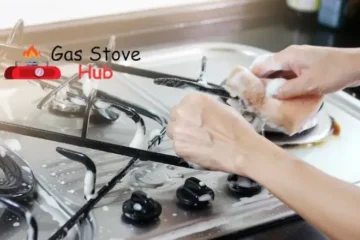
Cleaning a gas stove top regularly helps remove grease, spilled food and residue around the burners. For most Indian LPG stoves, start with a soft cloth, warm water and mild dish soap, then clean removable parts only as the manufacturer allows. Keep water away from burner openings and ignition components, and dry all removable parts completely before putting them back.
Written by Abdul Khader, researcher and writer at Gas Stove Hub. Last updated: October 25, 2026
Short on time? Use the checklist below for everyday cleaning. For heavy, baked-on residue, choose a cleaner specifically approved for your cooktop material and follow its label. Do not use an ammonia-bag method or mix household cleaning products, and do not use a metal blade on glass or coated surfaces.
What You Need to Clean a Gas Stove Top
- Warm water and a few drops of dish soap
- Diluted white vinegar, only if the manufacturer permits it for your cooktop material
- Baking soda and water for a small paste, only if approved for the surface
- A microfiber cloth or sponge
- A soft nylon brush for accessible surfaces of removable parts, if the manual permits it. Do not push brushes or tools into gas ports.
- A non-abrasive plastic scraper only if the stove manufacturer approves it for your cooktop surface. Do not use a metal razor blade on glass or coated surfaces.
- Rubber gloves and a dry towel
The 7-Step Checklist
- Switch off the stove and let it cool completely. Turn all burner knobs to OFF and close the LPG regulator if it is safe and appropriate for your installation. Wait until the cooktop, pan supports and burner parts are cool before cleaning.
- Remove only user-removable parts. Lift off pan supports and burner caps only if your stove manual identifies them as removable. Wash approved parts in warm, soapy water. Do not soak uncoated cast iron or special finishes unless the manual allows it, because prolonged soaking can cause rust or damage.
- Remove loose crumbs and spills. Use a soft dry cloth first, then a wrung-out damp microfiber cloth with a few drops of mild dish soap. Apply cleaner to the cloth rather than spraying directly into burner openings, ignition parts or gaps around knobs.
- Loosen stuck-on residue gently. Start with warm soapy water. Use diluted vinegar or a small baking soda paste only if the manufacturer permits it for your cooktop material. Do not mix cleaners, and test an approved product in an inconspicuous area first.
- Clean tight areas carefully. Use a soft nylon brush on accessible surfaces of removable parts where permitted. Wipe around the burner base and igniter with a barely damp cloth, keeping water out of ports and electrical parts. Do not probe gas openings, and do not use a metal razor blade on glass or coated surfaces.
- Rinse and dry approved parts. Rinse removable parts only as directed by the manual, wipe off all cleaner residue, and dry completely with a soft towel. Moisture left in burner parts can cause ignition problems, while wet cast-iron supports may rust.
- Reassemble and check placement. Return each dry burner cap and pan support to its correct position. Make sure caps sit flat and grates are stable. If the flame is unusually yellow, weak or uneven after cleaning, stop using that burner and consult the manufacturer or an authorised technician.
Choose the Cleaning Method for Your Cooktop Material
| Surface or part | Safer cleaning method | Avoid |
|---|---|---|
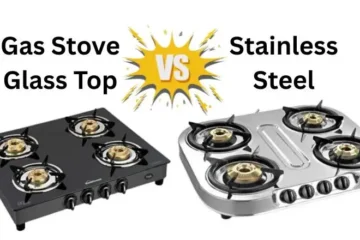
| Glass-top gas stove | Let it cool fully, then use a soft microfiber cloth and mild soapy water or a glass-safe cooktop cleaner. | Metal blades, abrasive pads, hard impacts, and sudden temperature changes. |
| Stainless steel surface | Use a damp soft cloth and a non-abrasive cleaner, wiping with the grain, then dry to reduce streaks. | Steel wool, harsh scouring pads and cleaners not approved for the finish. |
| Enamel-coated surface | Use warm soapy water and a soft sponge. Wipe up cleaner residue and dry. | Hard scraping, abrasive powders and chemical products that the manual excludes. |
| Pan supports and grates | Use warm soapy water only when permitted. Dry promptly, especially if the supports are cast iron. | Long soaking of uncoated cast iron or placing parts in a dishwasher unless the manufacturer permits it. |
| Burner caps and heads | Clean only the parts the manual says are removable and washable. Dry completely before refitting. | Wetting the fixed burner base, gas injector or ignition components, and probing gas openings with improvised tools. |
These are general guidelines, not a substitute for the manual for your exact model. Manufacturer advice differs by material and burner design. For example, Elica India’s Cooktop Care Guidance recommends a non-abrasive cloth and keeping water out of burner openings, while Bosch India’s Gas Stove Cleaning Guide explains material-specific products for glass and stainless steel.
How to Clean Around Burners and Igniters
Wipe accessible surfaces with a barely damp cloth, keeping liquid away from the burner base, ports, spark electrode, flame-safety device and control gaps. Do not pour water over the hob or spray cleaner directly into openings. If the user manual gives a specific cleaning method for removable burner heads, follow that method and dry them completely before replacing them.
When to Stop and Call for Service
Stop cleaning and contact authorised service if the burner ports appear blocked, ignition continues clicking after parts are dry, a burner will not light normally, or a flame remains weak, unusually yellow or uneven. If you smell LPG, do not light a flame or operate electrical switches. Follow the Official LPG Safety Guidance and call the emergency helpline at 1906.
How to Remove Stubborn Grease Safely
For heavy, baked-on residue, use a cooktop or grate cleaner specifically approved for the material and follow the label. Do not use an ammonia-bag method, and never mix ammonia, bleach, vinegar or other cleaners. If deposits remain or the burner seems blocked, contact the manufacturer or an authorised technician rather than dismantling gas components.
If your stove has a stainless steel body, wipe with the grain and use a non-abrasive cleaner approved for the finish. For specific care instructions, read our Guide to Cleaning a Stainless Steel Stove. For removable burner caps, our Guide to Cleaning Gas Stove Burners With Vinegar and Baking Soda explains why the model manual should determine which methods are suitable.
Cleaning Mistakes to Avoid
- Do not clean while the stove or grates are hot.
- Do not pour water or spray cleaner into burner openings, ignition electrodes or the fixed burner base.
- Do not use a metal razor blade or abrasive pad on glass, enamel or coated surfaces.
- Do not mix vinegar, bleach, ammonia or other cleaning chemicals.
- Do not soak uncoated cast iron or specialty burner parts unless the manual allows it.
- Do not probe gas ports or dismantle injectors to fix an uneven flame.
- Do not relight or use the stove until removable parts are completely dry and correctly seated.
If cleaning does not resolve an ignition or flame problem, stop and seek authorised service. See How to Repair a Gas Stove Safely for guidance on faults that should not be handled as routine cleaning.
Gas Stove Top Cleaning FAQs
How often should I clean my gas stove top?
Wipe spills after cooking once the surface has cooled. Give the stove a deeper clean weekly or fortnightly depending on how often you cook, the amount of splatter, and the manufacturer’s advice. Clean sugary or acidic spills promptly after the stove cools because they can mark some surfaces.
Can I use a razor blade scraper on my stove top?
Do not use a metal razor blade as a general cleaning tool. It can scratch or damage glass, enamel and coated surfaces. Use a soft cloth or a manufacturer-approved non-abrasive plastic scraper only if the manual permits it for your exact cooktop.
Do I need to remove the burner grates every time I clean?
For a quick daily wipe, no. For a proper weekly clean, removing the grates lets you reach the grease that collects underneath and around the burner base, which a surface wipe alone will not get.
What should I do about burnt-on food that will not come off?
First soften the residue with warm, soapy water and wipe with a non-abrasive sponge. If the surface manual allows baking soda, try a small paste on the stain and remove it gently. Otherwise use a cooktop cleaner approved for the material. Avoid metal blades on glass or coated tops, and do not combine cleaners.
Can I pour water directly over a gas stove top?
No. Wipe the surface with a wrung-out damp cloth instead of pouring water over the stove. Excess liquid can enter burner openings, ignition components or the gaps around controls and may cause ignition problems. Follow your model’s manual for removable parts.
Can I clean gas burner holes with a needle?
Do not use a needle or improvised tool to clear burner ports unless the manufacturer specifically instructs it for your exact model. The wrong tool can damage or enlarge an opening. If the flame remains weak or uneven after safe surface cleaning and complete drying, contact an authorised technician.
Can I use vinegar on a glass-top gas stove?
Use it only if the cooktop manufacturer’s care instructions allow vinegar on that surface. Many manufacturers recommend mild soapy water or a cleaner made for glass cooktops. Avoid abrasive pads and metal blades, and never pour liquid into burner or ignition openings.
What should I do if I smell gas while cleaning?
Stop cleaning, do not light a flame or operate electrical switches. If it is safe, turn the regulator off, open doors and windows, move away if the smell persists, and call the LPG emergency helpline at 1906. Follow the Official LPG Safety Guidance, and do not use the appliance until it has been checked.
Conclusion
A safe gas stove cleaning routine is simple: switch off the gas, let the appliance cool, clean the surface with a soft cloth, wash only approved removable parts, keep liquid away from gas and ignition openings, then dry and refit every part correctly. Use material-specific cleaners for stubborn residue and seek authorised service if the flame remains abnormal. For more detailed guidance, read our Guide to Cleaning a Stainless Steel Stove, Guide to Cleaning Gas Stove Burners With Vinegar and Baking Soda, and Glass Top vs Stainless Steel Gas Stove.
Source & About This Guide
This guide was reviewed against manufacturer care instructions and official Indian LPG safety information. Cleaning methods vary by cooktop material, burner design, coating and finish, so the user manual for your exact model takes priority over general household cleaning advice. Routine cleaning is not a substitute for professional servicing of blocked gas passages, abnormal flames or suspected leaks.
- Elica India: Cooktop Maintenance and Cleaning FAQs
- Electrolux India: How to Clean a Gas Stove Thoroughly
- Bosch India: How to Clean Your Gas Stove
- Pradhan Mantri Ujjwala Yojana: LPG Safety Pledge and Emergency Helpline
About the author: Abdul Khader researches and writes practical gas stove guides for Gas Stove Hub. This article provides general cleaning guidance and recommends following the appliance manual and authorised service advice where a fault or safety concern is present.