

The best induction cookware in India is cookware with a magnetic, flat base that fits your induction cooktop and suits the food you cook most often. For many Indian kitchens, practical choices include an induction-compatible stainless steel kadai or saucepan, a flat cast iron or carbon steel tawa, a pressure cooker explicitly marked for induction, and a compatible non-stick pan when easy release matters. Before buying a full set, check each vessel with a magnet and confirm the base diameter fits your cooktop’s cooking zone.
Written by Abdul Khader, researcher and writer at Gas Stove Hub. Last updated: October 26, 2026
Induction cookware comes in many formats, including tawas, kadhais, frying pans, saucepans, milk pans, and pressure cookers. Choose by cooking task and household size, then compare base construction, weight, handles, lid fit, coating care, and warranty. A large set is not necessarily better value if it includes vessels you will rarely use.
Looks and colour are secondary to compatibility. Check the induction symbol or manufacturer’s product details, use a flat base, and make sure the vessel fits the marked cooking zone. This guide explains how to test existing utensils, compare materials, select cookware for Indian recipes, and avoid common buying mistakes.
Best Induction Cookware in India by Use Case
Rather than treating one brand or set as best for everyone, use these practical categories to shortlist cookware. Compatibility, price, and stock vary by model and retailer, so verify the current specification and warranty before ordering.
| Cooking need | Useful cookware type | What to check |
|---|---|---|
| Daily sabzi, curry, and gravies | Induction-compatible stainless steel or triply kadai with lid | Flat magnetic base, capacity, handle grip, and lid fit |
| Dosa, roti, chilla, and paratha | Flat cast iron, carbon steel, or magnetic-base tawa | Base flatness, weight, heating-zone size, and seasoning care |
| Dal, rice, and one-pot meals | Pressure cooker explicitly approved for induction | Base diameter, capacity, pressure-cooker instructions, and compatibility marking |
| Eggs, pancakes, and quick frying | Induction-compatible non-stick frying pan | Magnetic base, coating care, and heat limits |
| Tea, milk, and small portions | Small magnetic-base saucepan or milk pan | Minimum pan size supported by the cooktop and stable base |
| Most household cooking tasks | Small curated set of compatible kadai, tawa, saucepan, and cooker | Useful pieces, compatibility of every item, and total cost |
What is an Induction Cookware Set?
Induction cookware includes pans, kadhais, tawas, saucepans, and pressure cookers made with a magnetic base that can work with an induction cooktop. Induction cooking uses a magnetic field to heat compatible cookware directly, so a vessel that works on a gas flame may not work on induction. In addition to a magnetic base, the vessel needs a suitable, stable base shape and a diameter supported by your cooktop.
Common compatible choices include cast iron, iron, and stainless steel cookware with a magnetic base. Some aluminium cookware can also work if it has a purpose-made induction-compatible base. Check the induction symbol or manufacturer’s specifications, and use the magnet test as a quick first check.
So, when you turn on the induction, the heat goes directly to the vessel due to magnetism. This in turn speeds up the cooking time.
Cookware materials include stainless steel, aluminium, cast iron, carbon steel, copper, and coated constructions. Material names alone do not confirm compatibility. For example, plain aluminium and copper do not work on most induction cooktops unless a magnetic layer is built into the base, while not every grade of stainless steel is magnetic.
Use the compatibility chart below before replacing your kitchen vessels or buying a full set.
Induction Cookware Compatibility Chart
| Cookware Material or Type | Usually Works on Induction? | What to Check |
|---|---|---|
| Cast iron or iron | Yes | Choose a flat base that fits the cooking zone and lift heavy cookware instead of dragging it |
| Magnetic stainless steel | Usually | Not all stainless steel grades are magnetic, so check the base or manufacturer’s mark |
| Triply or layered stainless steel | Only if induction-compatible | Confirm a magnetic outer base and manufacturer compatibility statement |
| Plain aluminium | No | Works only when it has a purpose-made magnetic induction base |
| Copper | No | Needs a compatible magnetic base |
| Glass, ceramic, or clay | No | These materials do not work on their own unless a compatible magnetic base is incorporated |
| Non-stick pan or tawa | Depends on the base | Look for induction compatibility and follow the coating’s heat and utensil instructions |
| Round-bottom wok or curved-base handi | Often unsuitable | A flat, stable base generally makes better contact with the cooking zone |
How to Check Whether Your Existing Utensils Work on Induction
Try the Magnet Test
Place a fridge magnet against the centre of the vessel’s bottom. If it sticks firmly, the base is likely to be induction-compatible. If it does not stick or the pull is weak, check the induction symbol or the manufacturer’s product details before using it. The magnet test is a quick screening method, not a guarantee that the vessel’s size or shape suits every cooktop.
Check the Base Diameter and Flatness
Compare the vessel’s actual base diameter with the minimum and maximum cookware sizes in the cooktop manual. The base should sit flat and stable on the cooking zone. A large rim with a small base, a badly warped pan, or a round-bottom vessel may heat poorly or remain undetected even if a magnet sticks.
Benefits of Induction-Compatible Cookware
Using cookware that is compatible with the cooktop helps the appliance detect the vessel and transfer heat as intended. A well-matched flat base can improve stability and help heat transfer evenly, although results also depend on the pan construction, settings, and food being cooked.
- Induction-compatible vessels have a suitable magnetic base that allows the cooktop to heat them.
- A flat, stable base is easier to position safely and makes better contact with the cooking zone.
- Stainless steel, cast iron, and carbon steel offer different balances of durability, weight, heat retention, and maintenance.
- Choosing individual vessels for your cooking habits can be more useful than purchasing a large set with pieces you rarely use.
Best Induction Cookware Shapes for Indian Cooking
Kadai for Sabzi, Curries, and Deep Frying
An induction-compatible kadai with a stable, flat base is useful for daily sabzi, gravy, poha, and shallow or deep frying where the vessel and cooktop manual permit it. Choose the capacity according to meal size and ensure the base fits the cooking zone. Traditional round-bottom kadhais may not sit correctly on a flat induction surface.
Tawa for Dosa, Roti, Chilla, and Paratha
Choose a flat-base tawa made from cast iron, carbon steel, or a coated material with a magnetic induction base. A broad rim does not tell you the size of the magnetic base, so check the bottom diameter against your cooktop’s cooking zone. Follow coating or seasoning instructions to reduce sticking and avoid damaging the surface.
Pressure Cooker for Dal, Rice, and One-Pot Meals
Choose a pressure cooker explicitly marked for induction. Confirm its model, capacity, base diameter, regulator and safety instructions, and current warranty. Plain aluminium pressure cookers without an induction base generally will not heat on induction, and older models can differ from current versions.
Saucepan or Milk Pan for Tea and Small Portions
A small induction-compatible saucepan is useful for boiling milk, making tea, heating dal, or preparing a single portion. Check the minimum cookware diameter supported by your cooktop, as some induction models may not detect very small vessels.
Frying Pan for Eggs, Pancakes, and Sautéing
A flat magnetic-base frying pan works for eggs, pancakes, chilla, shallow frying, and sautéing. Non-stick versions need the correct induction base and should be used within the manufacturer’s temperature and utensil limits. Stainless steel versions can last well with suitable preheating and cooking technique.
Triply Cookware for Multi-Purpose Use
Triply cookware typically combines layers of stainless steel and aluminium to balance durability and heat distribution. For induction, the external base must be magnetic and approved by the manufacturer. Triply construction alone does not guarantee compatibility, so check the induction symbol or product page before buying.
Buying Guide to Select the Best Induction Cookware
You’ve learned about various cookware types above. So, it’s time to discover the Best Induction Cookware in India. Before buying the best, you must learn more about materials used, pan sizes, weight, etc. By doing so, you can curate the best induction cookware set for your Indian kitchen. So, let’s get further into the guide.
Pan and Pot Sizes
Choose capacity based on what you cook and the quantity you usually prepare, not household size alone. A small saucepan may suit tea or reheating for one or two people, while a larger kadai or pressure cooker may be useful for batch cooking. Check both the vessel capacity and the bottom diameter because a large rim does not guarantee that the base will match the induction zone.
Make sure that you check the pot or pan size online before buying. So, you’ll get the right size delivered to the home.
Cookware Material
Induction cookware may use stainless steel, cast iron, carbon steel, or coated aluminium with a magnetic base. The material affects weight, heat retention, maintenance, and cooking style, but induction compatibility depends on the base. Plain glass cookware, ceramic vessels, copper, and ordinary aluminium do not work on their own unless a compatible magnetic layer is built in.
❖ Stainless steel
Stainless steel is durable and relatively easy to maintain, but not every stainless steel grade is magnetic. Choose a vessel marked for induction or verify the base with a magnet. Multi-layer or triply cookware may combine stainless steel with an aluminium core for heat distribution, but its magnetic base still needs to be designed for induction.
Aluminium Cookware
Aluminium conducts heat well and is often used in cookware, including hard-anodised and non-stick vessels. Plain aluminium is not magnetic and generally will not work directly on an induction cooktop. An aluminium pan can work if it has a purpose-made induction-compatible magnetic base. Check the exact model rather than assuming that every aluminium vessel will work.
❖ Cast iron
Cast iron is naturally magnetic and works well on induction when the base is stable and suitable for the cooktop. It retains heat, which can suit tawas and skillets, but it is heavy and can scratch a glass cooktop if dragged. Uncoated cast iron may need seasoning and thorough drying to prevent rust. Follow the maker’s care advice; mild dish soap is acceptable for many modern pans, while some traditional seasoning routines recommend gentler cleaning.
❖ Glass
Glass is commonly used for lids, not as the active induction base. A glass lid lets you monitor food with less heat loss from lifting it, but it can break if dropped or exposed to unsuitable temperature changes. Use the lid and cleaning methods recommended by its manufacturer.
Each material has different handling and cleaning needs. Regardless of construction, the base must be suitable for induction and the vessel must fit the cooktop’s cooking zone.
Heat Distribution
Heat distribution depends on the cookware’s base thickness and construction as well as the cooktop setting. A flat, well-made base can reduce uneven heating, but no material guarantees perfectly even results. Choose a pan suited to the recipe and avoid overheating an empty vessel.
Material and Food Contact
Check the cookware manufacturer’s information about food-contact materials, coatings, and permitted uses. Do not assume that every aluminium vessel is unsafe or that every stainless steel vessel is suitable for every cooking method. Plain aluminium and copper often fail induction compatibility because they are not magnetic, while a magnetic induction base can make an aluminium-bodied vessel work on the cooktop. Choose reputable products with clear material and care instructions, and avoid using cookware with a damaged coating or badly pitted surface.
● Flat base & sides
A flat, stable base is essential for good contact with the induction zone. Deep sides help contain soups and gravies, while a wider pan with lower sides suits dosa, chilla, and shallow frying. Choose shape and capacity based on the food you cook rather than assuming one pot style is ideal for every task.
● Weight
Weight is a trade-off. Lighter cookware is easier to lift, while heavier cast iron or thick-base cookware may retain heat well but needs careful handling. Choose a weight you can safely lift when filled, and do not drag rough or heavy vessels across a glass induction surface.
● Convenience to carry
Look for securely attached, heat-resistant handles that are comfortable to hold and large enough for a safe grip. Check whether side handles and lids are included, whether the lid handle gets hot, and whether the filled vessel is manageable. Use dry oven mitts or potholders when the handles are hot.
● Easy to clean
Cleaning depends on material, surface treatment, and coating. Stainless steel can need soaking or a compatible cleaner for stuck food; seasoned cast iron generally needs prompt drying to prevent rust; and non-stick cookware should be cleaned with non-abrasive tools. Follow the maker’s instructions and do not assume that every pan is dishwasher-safe.
Choose Set Size by Your Actual Needs
A compact set with a kadai, tawa, saucepan, and pressure cooker may be more useful than a large set full of duplicate pans. List the dishes you cook most, compare each piece’s capacity, and confirm every vessel in the set is induction-compatible. A set may include a vessel with a non-magnetic base even when some other pieces are induction-ready.
Check Handles, Lids, and Storage
Look for securely attached handles, a stable grip, practical lid fit, and manageable weight when the vessel is full. Make sure the handles and lid knob can be used safely and follow any temperature limits in the care instructions. Stackable designs can save storage space, but do not stack heavy cookware in a way that damages non-stick coatings.
Compare Price, Warranty, and Replacement Parts
Compare the price against the construction, useful pieces, warranty coverage, and spare-part availability. A bigger set is not automatically better value. Read whether the warranty covers manufacturing defects only, how coating damage is treated, and how to request service.
For a simple explanation of how the cooktop heats compatible vessels, read How an Induction Stove Works: Pros and Cons.
Induction Cookware Products to Consider in India
The following are examples of product lines whose official manufacturer information describes induction compatibility. This is a practical shortlist, not an independent lab-test ranking. Availability, model names, specifications, warranty terms, and prices may change, so verify the exact model and its induction symbol before purchase.
1. Stainless Steel Kadai for Everyday Indian Cooking
A flat-base, induction-compatible stainless steel kadai is a versatile choice for sabzi, curries, gravies, and shallow frying. Compare the capacity and base diameter with your family size and cooking zone. One current example is the Pigeon Elite Tri-ply Stainless Steel Kadai, whose product page describes a three-layer stainless steel and aluminium construction and induction compatibility.
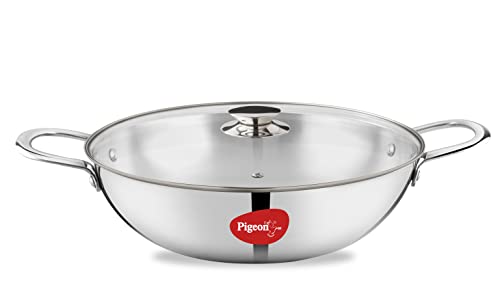
- Base: Compatible with all types of heating sources. 3 Layer Body: Stainless Steel 304, Aluminium 1050, Stainless Steel
- Try-Ply Benefits: Food Safety & Durable, Quick & Even Heating, Induction Ready & Wear Resistant.
- Quality Standard: Certified by ISI Quality Standard
2. Stainless Steel Fry Pan for Shallow Frying and Sautéing
Choose a flat magnetic-base fry pan with a stable handle and a diameter that matches the cooktop zone. A tri-ply construction can spread heat through multiple layers, but cooking technique still matters to prevent sticking. One example to compare is the Pigeon Elite Tri-ply Stainless Steel Fry Pan. Check its current specifications and cleaning instructions before buying.

- Base: Compatible with all types of heating sources. 3 Layer Body: Stainless Steel 304, Aluminium 1050, Stainless Steel 4…
- Try-Ply Benefits: Food Safety & Durable, Quick & Even Heating, Induction Ready & Wear Resistant.
- Quality Standard: Certified by ISI Quality Standard
3. Induction-Compatible Tawa for Dosa, Roti, and Paratha
For dosa, roti, and paratha, look for a flat tawa with a magnetic base and a cooking surface that fits within the induction zone. Cast iron and carbon steel can retain heat well but are heavier and need appropriate care. A coated aluminium tawa can also work if it has a compatible magnetic induction base. The official Pigeon Pathri Tawa listing is one product example to check; confirm that its base diameter suits your cooktop, not just the overall rim size.

- Strong and sturdy cool-touch handle
- Heats evenly, cooks faster
- 5 mm thick body with spiral bottom
4. Pressure Cooker Designed for Induction
Do not assume every older aluminium pressure cooker will work on induction. Select a model explicitly approved for induction and follow its pressure-cooking safety instructions. The Hawkins Stainless Steel Pressure Cooker product information says models supplied for the Indian market since April 2011 are suitable for induction, while earlier models may not be. Always check the manufacturing period and markings on the cooker you are considering.

- Capacity Specification: Suitable for 3 or 4 persons with a 3 litre capacity for everyday cooking needs
- Durable Construction: Features 100% stainless steel body and lid for long-lasting performance and corrosion resistance
- Advanced Heating Technology: 6.6 mm thick sandwich bottom heats evenly for consistent cooking results
5. Induction-Base Stainless Steel Pressure Cooker
If you prefer a newer tri-ply stainless steel pressure cooker, compare capacity, base construction, pressure-regulator and safety components, warranty, and service access. For example, the Pigeon Inner Lid Tri-ply Pressure Cooker listing describes an induction base and multiple capacity options. Read the current product instructions and confirm the size you need before ordering.
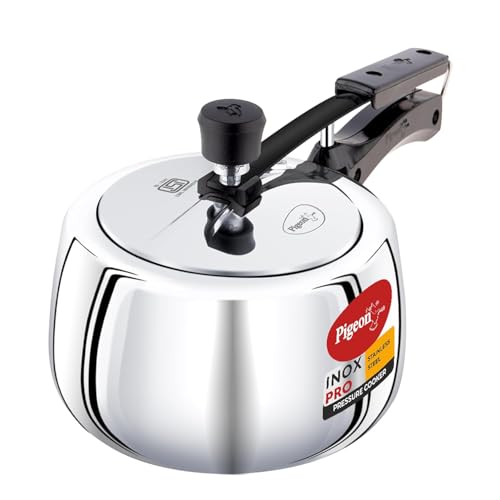
- Stainess steel outer lid cooker
6. Triply Cookware if You Want a Small, Multi-Purpose Collection
Triply cookware combines layers of metal, often with aluminium between stainless steel layers. Induction compatibility depends on the base construction, including a magnetic outer layer, so do not assume every multi-layer vessel will work. Stahl’s Triply Cookware Information describes its range as induction-compatible. Compare cost, weight, handles, lid fit, and cleaning requirements across brands rather than choosing by the word “triply” alone.
How These Product Examples Were Selected
These examples were selected because current manufacturer pages provide information about induction compatibility and product construction. Gas Stove Hub has not independently laboratory-tested these models against every alternative, and this shortlist is not a claim that one product is best for every buyer. Check the live listing, exact model number, seller, current price, return policy, and warranty before purchase.
Conclusion: Choose Induction Cookware That Fits Your Kitchen
The best induction cookware is compatible with your cooktop, has a flat and stable base, and suits the food you prepare most often. For everyday Indian cooking, start with an induction-ready kadai, tawa, saucepan, and pressure cooker rather than buying a large set by default. Confirm the induction symbol or test the base with a magnet, check the base diameter against your cooktop’s manual, and compare material, weight, care instructions, warranty, and parts availability before buying.
Product compatibility, availability, price, and warranty can change by model. Verify current specifications with the manufacturer or reputable seller before ordering, and do not assume that every vessel in a cookware set is induction-compatible. For more help, read How an Induction Stove Works: Pros and Cons, Common Induction Cooktop Issues and Their Solutions, and How to Clean an Induction Stove.
Frequently Asked Questions About Induction Cookware
What Cookware Is Suitable for an Induction Cooktop?
Induction cooktops need cookware with a suitable magnetic base and a flat, stable bottom. Some vessels used on gas stoves will work, but not all. Check the induction symbol or manufacturer’s instructions and confirm that the base fits the cooktop’s cooking zone.
Is All Stainless Steel Cookware Compatible With Induction?
No. Stainless steel grades vary, and some do not have a magnetic base. Check the induction symbol, manufacturer’s compatibility statement, or use a magnet on the bottom as a quick test. Food-contact safety also depends on the material, finish, condition, and use instructions, not on a broad “non-toxic” label alone.
Which Material Is Best for Induction Cookware?
There is no single best material for every cook. Magnetic stainless steel is versatile, cast iron and carbon steel retain heat well, and non-stick cookware can be convenient when it has a compatible induction base. Compare weight, durability, cleaning, coating care, and the foods you prepare. The vessel’s base must be induction-compatible regardless of its material.
How Do I Check if My Existing Pan Works on Induction?
Look for the induction symbol or the manufacturer’s compatibility statement. You can also place a fridge magnet against the base. If it sticks firmly, the vessel is likely compatible, but still check its base diameter and flatness against the cooktop manual.
Can I Use Aluminium Cookware on Induction?
Plain aluminium is not magnetic and usually will not work directly on induction. Aluminium cookware can work when the manufacturer has incorporated a suitable magnetic induction base. Confirm the exact model before purchasing.
Is Triply Cookware Suitable for Induction?
Triply cookware is suitable only when its construction includes a magnetic base designed for induction. Do not assume all multi-layer cookware is compatible. Verify the exact product specifications and induction symbol.
Can I Use a Non-Stick Tawa or Frying Pan on Induction?
Yes, if the pan has a manufacturer-approved induction base. Use the heat settings and utensils recommended for its coating, avoid overheating an empty pan, and replace cookware with badly damaged or peeling coating according to the manufacturer’s guidance.
Can I Use My Regular Gas Stove Pressure Cooker on Induction?
Only if the exact pressure cooker is approved for induction. Some newer models have a magnetic base, while plain aluminium and some older pressure cookers may not work. Check model markings and instructions rather than relying on the cooker’s shape alone.
Can Round-Bottom Cookware Be Used on Induction?
Round-bottom vessels often sit unstably and make poor contact with a flat induction surface. Use flat-base cookware that fits the cooktop’s cooking zone unless the appliance manufacturer specifically approves a different shape.
Is Cast Iron Safe for a Glass Induction Cooktop?
Cast iron can work on induction, but it is heavy and may scratch glass if dragged or dropped. Lift it carefully, keep the base clean and smooth, and follow the cooktop manufacturer’s handling instructions.
Do I Need to Buy a Complete Induction Cookware Set?
No. Buying separate pieces can be better value if you only need a kadai, tawa, saucepan, or pressure cooker. For a set, check that every included vessel is compatible and compare total price, useful sizes, warranty, and cleaning requirements.
For help choosing an induction appliance to match your cookware, read Why Induction Cooking and Induction Cooktops in India.
Source & About This Guide
This article combines general induction cookware selection guidance with manufacturer product information. Product examples are linked to official manufacturer pages that describe induction compatibility. They are not independent laboratory rankings, and product availability, specifications, prices, and warranty terms can change. Verify the exact model and instructions before purchase.
- Philips India: What Cookware Should I Select for My Induction Cooktop?
- Electrolux India: How to Use an Induction Stove
- Orient Electric: Induction Cookware Compatibility Guide
- Hawkins: Stainless Steel Pressure Cooker and Induction Compatibility
- Pigeon: Elite Tri-ply Stainless Steel Kadai
- Pigeon: Induction-Base Tri-ply Pressure Cooker
- Stahl: Triply Cookware Compatibility and Care Information
About this guide: Gas Stove Hub publishes practical appliance and cookware information for Indian households. Product examples are selected from manufacturer descriptions, and readers should confirm current model details before buying.


