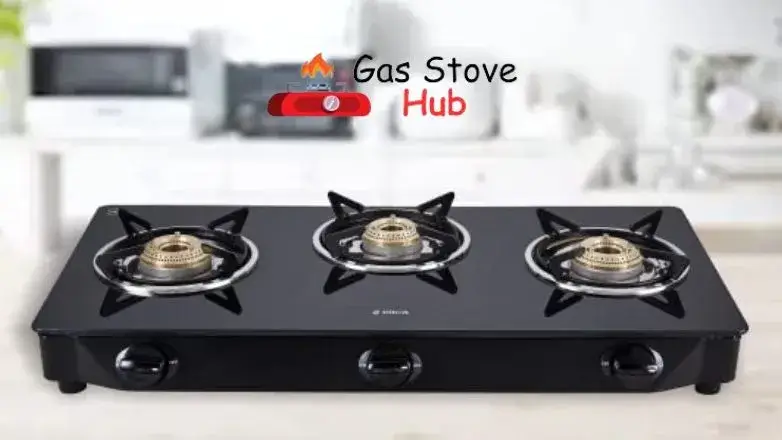
A 3-burner gas stove can be a practical choice for an Indian kitchen when you regularly cook several dishes but do not need four cooking positions at once. Its real usefulness depends on more than burner count: the spacing between burners, the size and heat output of each burner, your cookware, available counter space, and the way your household cooks all matter. This guide explains the pros and cons, how it compares with 2- and 4-burner stoves, and what to check before buying.
Written by Abdul Khader, researcher and writer at Gas Stove Hub. Last updated: October 26, 2026
Is a 3-Burner Gas Stove Good or Bad?
Quick answer: a 3-burner gas stove is often a good middle-ground option for small and medium households that regularly cook two or three dishes together. It can save counter space compared with some 4-burner models while offering more flexibility than a 2-burner stove. It is less suitable if you usually cook only one dish at a time, use several very large vessels together, or need four burners for frequent family gatherings.
There is no fixed family size for which three burners are automatically right. A couple who prepares several dishes may value three burners, while a family of four that cooks simply may manage comfortably with two. Look at your cooking routine and the actual layout of the appliance before deciding.
Advantages of a 3-Burner Gas Stove
1. Cook Several Dishes at the Same Time
A third burner can make everyday meal preparation easier when rice, dal, a curry, tea or milk need attention at the same time. It reduces the need to wait for one pan to finish before starting another. The practical benefit depends on whether the burner spacing allows your actual vessels to sit safely together.
2. A Useful Balance of Cooking Capacity and Counter Space
Many 3-burner models provide a middle ground between compact 2-burner stoves and wider 4-burner models. However, dimensions vary by brand and design. A 3-burner stove is not automatically narrow or portable, so measure the exact unit before buying and leave the clearances required by its manual.
3. Different Burner Sizes Can Suit Different Tasks
Some models pair a large burner with medium and small burners. That mix can be useful for heating a kadhai, cooking a main dish, and simmering a smaller pot. Check the burner layout and the manufacturer’s stated heat input instead of assuming that every 3-burner stove has the same performance.
4. More Flexibility Than a 2-Burner Stove
If your meal usually needs two pans plus one additional task, three burners can reduce juggling between pots. It may suit a household that prepares breakfast and lunch together or cooks rice, a side dish and a curry concurrently.
5. A Manageable Cleaning Routine
With one fewer burner than a 4-burner model, there may be fewer caps and supports to remove for cleaning, depending on the design. Cleaning effort also depends on whether the stove has removable pan supports, a spill tray, sealed or open burner areas, and a glass or stainless-steel surface. For routine care, read How to Deep Clean a Gas Stove.
6. Often a Practical Price Compromise
A 3-burner model may cost less than a similar 4-burner model in the same product range, but prices vary with the brand, materials, ignition, burner design, dimensions and warranty. Compare the specifications and total value rather than assuming that burner count alone sets the price.
Disadvantages of a 3-Burner Gas Stove
1. Three Vessels May Still Feel Crowded
The third burner does not guarantee room for three large pots. On some layouts, a pressure cooker or wide kadhai can obstruct the neighbouring burner or make handles difficult to reach. Check the positions and diameters of the burners, then imagine your largest everyday vessels sitting on the pan supports together.
2. Less Simultaneous Capacity Than Many 4-Burner Models
If you regularly prepare several dishes, cook for guests or make large meals, a 3-burner stove may require you to cook in batches. A well-spaced 4-burner model can be more practical when your counter has enough room for it.
3. Not Always Cheaper or More Compact
Premium 3-burner glass-top stoves and built-in hobs can cost more than basic 4-burner tabletop models. Compare actual width, depth, installation type, warranty and features. Do not rely on burner count as a substitute for checking dimensions and cost.
4. Burner Layout and Heat Output Vary
A stove with three similar-sized burners may not meet the same needs as one with a large, medium and small burner. If you often use a wide vessel for biryani or frying, prioritise a suitable high-output burner and stable support. If you regularly simmer milk or sauces, a smaller burner with controllable low heat may be more useful.
Who Should Choose a 3-Burner Gas Stove?
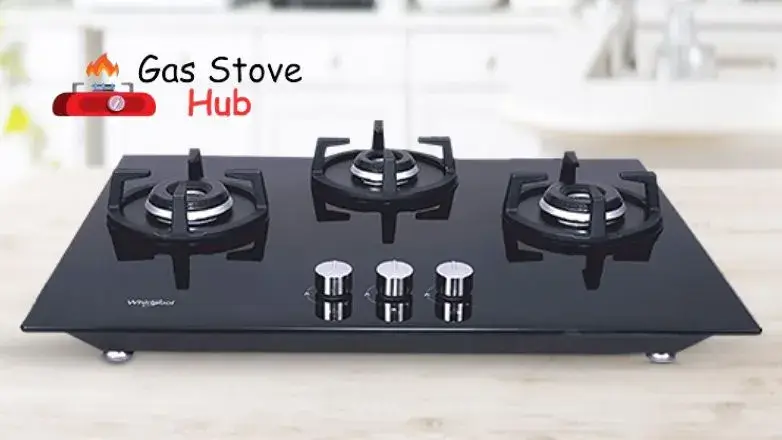
A 3-Burner Stove May Suit You If
- You usually cook two or three dishes at once.
- You want more cooking flexibility than a 2-burner stove but do not have room for a wide 4-burner model.
- Your regular vessels fit the spacing of the stove you plan to buy.
- You want a mix of burner sizes for boiling, frying and simmering.
- You have a small or medium kitchen and have measured the counter space available.
A 2-Burner Stove May Be Better If
- You live alone or as a couple and usually prepare one or two dishes at a time.
- Your counter space is very limited.
- You want a simple, lower-cost cooking setup and do not need an extra burner.
A 4-Burner Stove May Be Better If
- You often cook three or four dishes simultaneously.
- You prepare large family meals or regularly host guests.
- Your counter has enough width and depth for the appliance and safe clearances.
- The burner spacing can accommodate your largest pans without overlap or unstable placement.
Comparing 2-Burner, 3-Burner and 4-Burner Gas Stoves
| Factor | 2 Burners | 3 Burners | 4 Burners |
|---|---|---|---|
| Typical cooking capacity | One or two vessels | Two or three vessels if spacing allows | Three or four vessels if spacing allows |
| Counter space | Usually the most compact | Varies by model, often a middle option | Often needs a wider cooking area |
| Price | Basic models often cost less | Varies by design and features | Can cost more, but compare specific models |
| Cookware fit | Usually easier to fit two large pans | Three large pans may be crowded | Four pans can still overlap on a compact layout |
| Best suited for | Singles, couples and light cooking | Households needing three cooking positions | Frequent multi-dish cooking and larger meals |
| Cleaning | Fewest burner parts in many designs | Moderate, depending on supports and trays | More parts in many designs, but design matters |
This table is a general guide, not a strict rule for family size. A household’s meal pattern, vessel sizes, layout and available counter space matter at least as much as the burner count.
What to Check Before Buying a 3-Burner Gas Stove
1. Measure the Countertop and Check Clearances
Measure the usable width and depth of the countertop and compare them with the product’s stated dimensions. For a built-in hob, check the exact cut-out dimensions and installation requirements. Also check the manufacturer’s required clearances from walls, cabinets, electrical equipment and the extractor hood. Do not assume that two models with three burners will have the same footprint.
2. Look at Burner Spacing, Not Just Burner Count
Check whether the layout is triangular, staggered or arranged in a line. Consider the diameter of the largest pressure cooker, tawa and kadhai you normally use. Look for enough room for pan handles, easy access to the control knobs and stable positioning of each vessel without touching neighbouring cookware.
3. Compare Burner Sizes and Rated Heat Input
Different dishes require different levels of heat. A larger burner can be useful for a wide kadhai or large pot, while a smaller burner may be better for gentle simmering. Compare the manufacturer’s burner specifications and choose a layout that suits your actual cooking rather than assuming that three burners of equal size will be more versatile.
Match Each Burner to Your Common Vessels
Before deciding, imagine your largest pressure cooker, a wide kadhai and a small saucepan on the stove at the same time. Check that each vessel sits securely, the handles remain reachable, and one pan does not obstruct the neighbouring flame or control knobs. If possible, compare the layout against your actual cookware in a showroom.
4. Choose the Top Material for Your Kitchen
Stainless steel is practical for everyday use and tolerates normal kitchen handling, although it can show scratches. Toughened glass can be easy to wipe and may suit a modern kitchen, but it still needs careful handling and should not be struck with heavy cookware. Check the cleaning instructions, warranty exclusions and support availability for the exact model. Compare the materials in our guide to Glass Top vs Stainless Steel Gas Stoves.
5. Check Ignition Type and Service Support
Manual ignition uses a separate approved lighting method, while an auto-ignition model generates a spark using a model-specific system. Battery-powered and piezoelectric systems behave differently, so confirm the type, battery requirement if any, warranty and authorised service availability. Read What an Auto Ignition Gas Stove Is and How It Works and Is an Automatic Gas Stove Safe?.
6. Verify BIS Certification and the Model Details
Before purchasing a domestic LPG stove in India, check the product’s BIS Standard Mark and the current licence or model details against official information. BIS lists IS 4246:2025 for domestic gas stoves and built-in hobs for use with LPG, with mandatory certification. Check the exact product documentation rather than relying only on a marketplace title or seller’s claim. See the BIS Standard Details for IS 4246:2025.
7. Review the Warranty, Installation and Cleaning Requirements
Compare warranty coverage for the glass top, burners, ignition system and other parts. Check whether the brand has an authorised service centre accessible to you. Follow the supplied manual for installation and cleaning, and do not modify gas fittings, burner injectors or the regulator yourself.
Does a 3-Burner Stove Consume More Gas?
Not simply because it has three burners. Gas use depends on how many burners are operating, their rated heat input, the flame setting and how long you cook. If only one burner is running at the same heat input and for the same duration, the presence of unused burners does not by itself make that burner consume more gas. For efficient use, match the flame to the vessel and avoid letting flames extend far up the sides of a pan.
3-Burner Gas Stove and Vastu Shastra
Some Indian households consider Vastu Shastra when planning a kitchen. Traditional Vastu advice commonly associates cooking with the fire element and often recommends the southeast area for a stove, with the cook facing east. Other practitioners may give different advice depending on layout and tradition. These are cultural and spiritual beliefs, not scientifically established rules for appliance performance, safety or the number of burners.
There is no need to choose three burners instead of two or four for a proven safety or cooking advantage based on Vastu. Prioritise safe installation, suitable counter space, ventilation, stable cookware supports and the manufacturer’s required clearances. If Vastu is important to your household, treat it as a personal placement preference alongside those practical requirements.
वास्तु के बारे में संक्षिप्त जानकारी
वास्तु शास्त्र में रसोई और गैस स्टोव की दिशा को महत्व दिया जाता है। कई पारंपरिक मान्यताओं में दक्षिण-पूर्व दिशा और खाना बनाते समय पूर्व की ओर मुख करने का सुझाव मिलता है। ये सांस्कृतिक मान्यताएँ हैं, वैज्ञानिक रूप से प्रमाणित सुरक्षा नियम नहीं। गैस स्टोव चुनते समय सही स्थापना, वेंटिलेशन, स्थिर पैन सपोर्ट और निर्माता के निर्देशों को प्राथमिकता दें।
Safe Use and Maintenance of a 3-Burner Gas Stove
- Place the stove on a stable, suitable platform and follow the LPG distributor’s installation instructions.
- Keep the stove and LPG cylinder arrangement consistent with the distributor’s safety instructions and the appliance manual.
- Use suitable pans that sit securely on the supports and do not let cookware overlap neighbouring flames.
- Turn controls off after cooking and switch off the LPG regulator when it is not in use, following the distributor’s guidance.
- Clean burner caps and pan supports only when cool, and reinstall user-removable parts correctly.
- Never probe gas jets with sharp objects, dismantle gas controls, or repair hoses and regulators yourself.
If you smell LPG, do not light a burner, smoke, operate electrical switches or turn on an exhaust fan in the affected area. Leave the area and call the 24-hour LPG emergency helpline 1906 from a safe location. Turn off the regulator only if you can do so without approaching danger and follow the emergency service or distributor’s instructions. The Government of India’s LPG Safety Pledge provides additional official guidance.
Frequently Asked Questions
Is a 3-burner gas stove good for a family of four?
It can be a good fit if you normally cook two or three dishes at once and your regular vessels fit the burner layout. A 2-burner model may be enough for simpler cooking, while a 4-burner model may be more convenient for elaborate meals.
Is a 3-burner gas stove better than a 4-burner stove?
Neither is universally better. Three burners can be a useful compromise where space is limited and three cooking positions meet your needs. Four burners can help with larger meals, but only if the unit has sufficient width and spacing for the vessels you use.
Does a 3-burner gas stove use more LPG than a 2-burner stove?
Not just because of the extra burner. LPG consumption depends on the burners in use, heat input, flame setting and cooking duration. Unused burners do not consume gas simply by being present.
Can I use a large pressure cooker on a 3-burner stove?
Possibly, depending on the cooker’s base diameter, the stove’s burner spacing and the pan support design. Check the largest vessel against the product layout and make sure the cooker sits securely without blocking neighbouring controls or making adjacent cookware unstable.
Which burner arrangement is best on a 3-burner stove?
It depends on your cooking. A large, medium and small burner can offer flexibility for heavy cooking, everyday curries and gentle simmering. A layout with more space between the burners may be better if you frequently use wide pans. Compare the rated burner sizes and the vessel positions on the exact model.
Is a glass-top 3-burner gas stove durable?
Durability depends on the glass, frame, burner assemblies, pan supports, installation and handling. Toughened glass still needs protection from sharp impacts and misuse. Read the warranty terms and cleaning instructions, and stop using the stove if the glass becomes cracked.
What should I check before buying a 3-burner gas stove in India?
Measure the counter, check burner spacing and sizes, confirm that your regular cookware fits, compare ignition type and warranty, and verify the BIS Standard Mark and exact model details. Also check authorised service support and the manufacturer’s installation requirements.
What is the best Vastu direction for a 3-burner gas stove?
Traditional Vastu advice often recommends the southeast area of the kitchen and facing east while cooking, but guidance varies. These are cultural beliefs rather than proven rules about burner count or safety. Do not compromise required installation clearances, ventilation or safe LPG placement to meet a placement preference.
How do I clean a 3-burner gas stove?
Switch it off and let it cool completely. Clean only the exterior and removable parts the manual permits, dry them fully and reinstall them correctly. Avoid letting water or cleaning solution enter ignition parts or gas openings. For detailed steps, see How to Deep Clean a Gas Stove.
Final Verdict: Is a 3-Burner Gas Stove Right for You?
A 3-burner gas stove is a sensible choice when three cooking positions match your usual meals and the design offers enough room for your cookware. Before buying, compare burner arrangement, heat input, counter dimensions, top material, ignition, warranty and valid certification details. A 2-burner stove may suit simpler cooking, while a well-spaced 4-burner model can be better for larger meals. Make the decision around your own kitchen rather than family size or burner count alone.
For broader buying advice, read How to Choose a Gas Stove in India, or compare cooking methods in Induction Stove vs Gas Stove.
Source & About This Guide
This guide is intended to help Indian households compare burner counts and select a stove based on practical cooking needs. It is based on published product guidance, current Indian standard information and official LPG safety advice. Burner performance, dimensions and warranty terms vary by model. Check the product manual and authorised service information before buying or installing a stove. The Vastu section describes traditional beliefs and is not safety or product-performance guidance.