Last updated: 29 September 2026 by the Gas Stove Hub team
An induction cooktop has made cooking easier and more energy-efficient for many households, but like any appliance it can misbehave now and then. This guide walks through the most common induction cooktop problems, from a pan the cooktop won’t detect to error codes, noises and uneven cooking, along with practical fixes you can try before calling a technician.
Safety note: an induction cooktop runs on mains power and contains high-current electrical components. The fixes below are things you can safely do from outside the unit. Never open the cooktop body or touch internal wiring or coils yourself, since this carries a real risk of electric shock and should only be handled by a qualified technician.
Common Induction Cooktop Problems and Solutions

Problem 1: Induction Cooktop Not Detecting the Pan
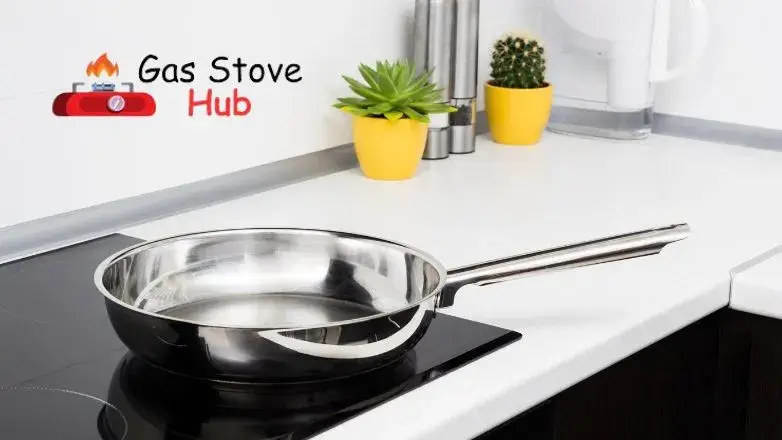
Solution: For the cooktop to detect a pan, the base has to be ferromagnetic and flat. Hold a fridge magnet to the bottom of the pan. If it sticks firmly, the pan should work. Pan size matters too, since a base that is too small or too large for the heating zone often will not register. Thermador’s own Induction Troubleshooting Guide lists undersized or incompatible cookware as one of the most common causes of this exact issue.
Problem 2: Cooktop Shuts Off Abruptly While Cooking
Solution: A few different causes can lead to this.
An automatic shutoff timer has kicked in. Most cooktops turn themselves off once a cooking zone has run at the same setting for a set number of hours, as a built-in safety feature rather than a fault.

The cookware was moved or removed. Unlike a gas flame, induction stops the moment it stops sensing a pan in place, so double-check the pan is centred on the zone.
The internal temperature hit its limit. When an internal sensor detects excess heat, the unit shuts down to protect itself. Let it rest for 20 to 30 minutes before switching it back on, and make sure the vents underneath are not blocked, since a blocked vent is a common trigger for this.
Problem 3: Induction Stove Not Turning On
Solution: Start with the basics before assuming a fault.
- Confirm the cooktop is properly plugged in and the socket has power. Test the same socket with another small appliance to rule out a dead outlet.
- Check that the outlet’s voltage matches what the cooktop requires, and check the circuit breaker for a trip.
- Try a simple restart: switch the cooktop off, wait about a minute, then switch it back on.
If none of these steps bring it back, the issue is likely internal, such as the control board or coil, and needs a qualified technician rather than a DIY fix.

Problem 4: Cooktop Not Detecting Cookware Despite Being Compatible
If you have confirmed the pan is induction-compatible and correctly placed but the cooktop still will not respond, the sensor itself may be at fault. Power the unit off and on again first, since this resolves many sensor glitches. If it persists across different pans, the sensor likely needs professional attention.
Problem 5: Cooktop Making Unusual Noise
Fan noise: A cooling fan runs after use to bring the internal temperature down, and this is normal. It stops once the unit has fully cooled.
Soft humming or buzzing: A light hum during cooking is a normal part of how induction generates heat, and most manufacturer guides describe it as expected rather than a fault. If it bothers you when the cooktop is idle, enabling the lock or standby feature can help.
Clicking sound: A single click when you place a pan down is usually the cooktop’s own recognition signal, confirming it has detected the cookware.

Problem 6: Touch Control Panel Not Responding
Check first whether the child lock or control lock is switched on, since this deliberately disables the panel. Refer to the manual for the exact combination if you cannot find the lock button. Grease, dust or moisture on the panel can also block the touch sensors, so wipe it with a clean, barely damp cloth. If the panel still does not respond after both checks, contact a technician rather than pressing harder or repeatedly, which will not help and can damage the surface.
Problem 7: Food Burning or Cooking Unevenly
Very thin, lightweight cookware heats unevenly on induction since it cannot distribute heat as well as a heavier base. Choose medium to heavy-gauge cookware with a flat, even base. It also helps to use a lower power level than you would on gas, since induction heats much faster, and to become familiar with your cooktop’s presets for boiling, grilling and roasting rather than guessing a setting each time.

Problem 8: LED Lights Blinking Constantly
A blinking light is usually a mild alert rather than a serious fault. Check that the cooktop was switched off properly after the last use, that the pan is centred and correctly sized, and that the power settings match what the pan can handle. If the blinking continues after checking these, restart the unit, and if it still persists, check the manual for what that specific light pattern means on your model.
Problem 9: Induction Cooktop Displaying an Error Code
Error codes are one of the most common things people search for when an induction cooktop misbehaves. It is worth being upfront here: error codes are not standardised across brands. The same letter and number combination can mean something different on a Bosch, Thermador, Prestige or Wipro cooktop. Manufacturer support pages, such as Bosch’s Induction Error Code Guide, confirm this variation across their own product lines.
That said, a few broad patterns are common across many brands:
- Codes in the E0 to E2 range often relate to cookware detection, meaning the pan is missing, incompatible, or incorrectly placed.
- Codes in the E3 to E4 range often point to a voltage problem, either too high or too low.
- Codes in the E5 to E7 range commonly indicate overheating in the ceramic plate or internal components.
Treat these as general patterns, not a universal key. Always check your specific model’s manual for the exact meaning, since acting on the wrong assumption can delay a real fix. For a high or low voltage code, a power stabiliser can help if your home’s supply fluctuates. For an overheating code, switch the unit off immediately and let it cool fully before using it again, and have it checked if the code keeps returning.
Problem 10: One Burner or Zone Not Working
When one zone on a multi-zone cooktop stops heating while the others work fine, the coil or wiring for that specific zone is the likely cause. This is an internal electrical fault, not something to open up and inspect yourself. Contact a qualified technician who can safely check the coil and wiring for that zone, since working on it without the right training risks electric shock.
Preventing Induction Cooktop Problems
- Use only induction-compatible, flat-bottomed cookware sized to match the heating zone.
- Keep the vents underneath the cooktop clear of dust and clutter so it can cool properly during and after use.
- Wipe the control panel and glass surface regularly, since grease and dust are a common cause of unresponsive touch controls. Our Full Guide on Cleaning an Induction Stove covers this in detail.
- Avoid running the same zone at a high setting for extremely long stretches, since this is what typically triggers the automatic safety shutoff.
- If your area has unstable voltage, a power stabiliser can prevent many of the voltage-related error codes described above.
Repair or Replace: When Is It Worth Fixing?
Not every fault is worth repairing. Compare the quoted repair cost, including labour and parts, against the price of a new cooktop, especially if your existing unit is out of warranty. If a repair costs close to what a new cooktop would, and a new purchase would come with a fresh warranty, replacing it is usually the better value. If you are weighing induction against a gas stove for your next purchase, our Induction Cooktop vs Gas Stove Comparison covers cost, cooking speed and maintenance differences.
Also Read: How to Clean an Induction Stove
Induction Cooktop Problems FAQs
When is it better to buy a new cooktop instead of repairing it?
When the repair cost approaches or exceeds a large share of a new cooktop’s price, or when the warranty on the current unit has already expired, a new cooktop is usually the better value and comes with a fresh warranty.
How do I restart an induction cooktop?
Switch off the cooktop at the power source or circuit breaker, wait about a minute, then switch it back on. This clears many temporary glitches and error codes.
Why does my induction cooktop make a humming sound?
A light hum during cooking is a normal part of how induction generates heat. If you hear it while the cooktop is idle, enabling the lock or standby feature usually resolves it.
Is cast iron cookware good for induction cooking?
Yes. Cast iron is naturally magnetic and heavier than most alternatives, which generally means more even cooking on induction, though it does heat and cool more slowly than lighter induction-ready stainless steel.
Do induction cooktop error codes mean the same thing across all brands?
No. Error codes are brand and model specific. The same code can point to different faults depending on the manufacturer, so always check your model’s manual rather than relying on a generic list.
Why does my induction cooktop turn on but not heat?
This is almost always a cookware issue. Confirm the pan is magnetic with a fridge magnet test and that it is properly centred on the cooking zone before assuming a fault with the unit itself.
Can I fix induction cooktop wiring or coil problems myself?
No. These are internal electrical faults on a mains-powered appliance, and opening the unit yourself risks electric shock. Always have a qualified technician handle coil or wiring issues.
Conclusion
Most induction cooktop problems trace back to a short list of causes: incompatible or misplaced cookware, a power supply issue, a safety shutoff doing its job, or a control panel that needs cleaning or unlocking. Working through these in order resolves the majority of issues without a service call. When the cause turns out to be internal, such as a coil, sensor or control board, that is the point to bring in a qualified technician rather than attempting a DIY fix. If you are still deciding whether induction is right for your kitchen, our guide to the Pros and Cons of Induction Cooktops covers what to expect day to day.