
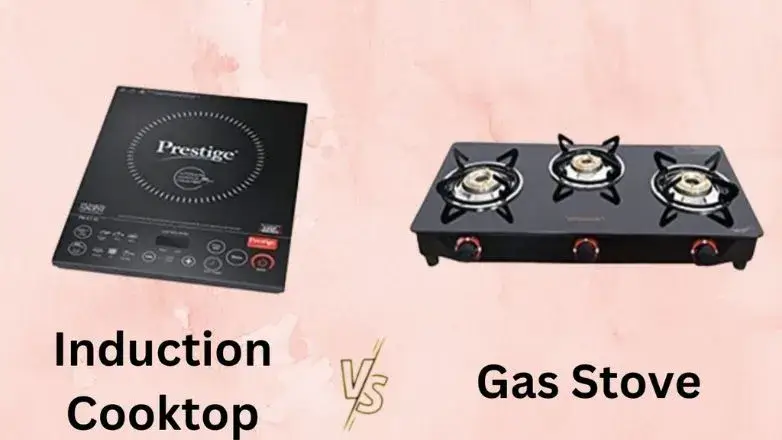
Choosing between an induction cooktop and a gas stove is not just about which one heats faster. For an Indian kitchen, the right choice depends on your cookware, everyday dishes, electricity supply, available counter space, safety priorities and the features you will genuinely use. This guide compares those practical differences so you can judge individual models, not just appliance types. For a wider comparison of running costs and overall use, see our Induction Stove vs Gas Stove Guide.
Written by Abdul Khader, researcher and writer at Gas Stove Hub. Last updated: October 26, 2026
Quick Answer: Which Features Matter Most?
An induction cooktop is a strong option if you want a flat surface that is easy to wipe, adjustable power settings, and model-dependent features such as timers, pan detection, overheat protection and child lock. It requires electricity and induction-compatible cookware. A gas stove is more flexible with vessel materials, provides a visible flame, commonly offers two to four burners, and can keep cooking during a power cut. It also requires safe LPG or piped-gas connections and care around an open flame.
Do not assume every induction cooktop has every feature listed in advertisements, or that every gas stove has the same burner layout and ignition system. Check the exact model specifications and manual before buying.
Gas Stove Features

Burners
Indian gas stoves commonly come in 2, 3 and 4-burner configurations. Burner caps are typically brass or a lighter alloy, both built to withstand direct flame contact, and they lift off for cleaning. More burners let you cook several dishes at once, which is one of gas’s genuine practical advantages over a typical single or double-zone induction cooktop.
Body Material
Stainless steel bodies are the traditional choice, valued for durability and resistance to the steamy, high-heat kitchen environment. Glass top and hob-style stoves have become popular more recently for their sleek look, though the glass needs more careful handling to avoid scratches and cracks. Our Glass Top Gas Stove Problems Guide covers that trade-off in detail.
Flame Control
A gas stove gives direct, visible control over flame intensity through the knob, with instant visual feedback on heat level, which many people who cook regularly find easier to judge than a numbered power setting.
Size
A 2-burner stove suits a smaller household and costs less, while 3 and 4-burner stoves offer more cooktop space for handling multiple pots at once, at a higher price. Choose based on how much you typically cook at the same time rather than defaulting to the largest option.
Ignition Type
Indian gas stoves use one of two ignition methods: manual lighting with a matchstick or lighter, or auto-ignition, where turning the knob triggers a spark automatically. Auto-ignition itself splits into piezo, which needs no battery and works through mechanical pressure, and battery or electronic ignition, which needs a small battery or mains power. Our guide on What Is Auto Ignition and How It Works covers the mechanics of each in detail.
Induction Cooktop Features

Built-In Timer
Many induction cooktops include a timer, but its maximum duration and behaviour vary by model. A timer can be useful for boiling or simmering, yet it is not a replacement for supervision. Check the product manual for the time range and whether the timer only alerts you or actually stops heating at the end of the set period.
Preset Cooking Menus
Many mid-range and premium induction cooktops include preset modes for boiling, frying, steaming or grilling, where the cooktop manages the time and heat profile automatically once you select the mode. This takes some of the guesswork out of matching a power level to a specific cooking task.
Voltage Display
Some induction cooktops show power or voltage information, but not every model displays actual energy consumption or compensates for an unstable supply. Check the rated voltage and wattage in the manual, and do not assume a voltage display means the appliance is suitable for unreliable power. Follow the manufacturer’s stated operating range.
Automatic Shutoff
Automatic shutoff, overheat protection and pan-detection behaviour differ by model. Do not assume every induction cooktop has the same timeout or that a zone always switches off after a fixed period. If you regularly prepare dishes that need a long, steady simmer, check the manual to learn which safety cutoffs are fitted and how they operate.
Child Lock
A child lock can help prevent accidental changes to electronic settings, but how it works depends on the model. It does not make the appliance childproof, remove hot cookware hazards or replace supervision. Check whether the lock blocks the control panel, whether cooking continues when it is enabled, and how to unlock it safely.
Feature Comparison at a Glance
| Feature | Gas Stove | Induction Cooktop |
|---|---|---|
| Heating method | Open flame heats the vessel | Electromagnetic induction heats compatible cookware |
| Cookware compatibility | Works with most cookware suitable for flame cooking | Needs a magnetic, induction-compatible base |
| Number of cooking zones | Commonly 2, 3 or 4 burners | Portable models often have 1 zone; multi-zone hobs are available |
| Heat adjustment | Visible flame adjusted with a knob | Electronic power or temperature settings, model dependent |
| Timer and auto-off | Not typical on a basic model; features vary | Available on many models; check the manual |
| Preset cooking modes | Not typical on a basic model | Available on some models and may vary by brand |
| Child lock | Not common on standard mechanical models | Available on some models |
| Power-cut use | Often works if gas supply and ignition method are available | Requires electricity |
| Cleaning | Grates, burner caps and ports need separate cleaning | Flat top is generally easier to wipe when cool |
| Running cost | Depends on LPG price, burner use and cooking time | Depends on electricity tariff, power draw and cooking time |
Which Features Actually Matter for Your Kitchen?
- If you cook several dishes at once, compare burner or zone count, vessel spacing and available countertop space. A multi-zone induction hob may be suitable, but a portable single-zone unit will not replace several burners at the same time.
- If you want timer or automatic shutoff functions, verify the exact induction model and read what the feature actually does. These functions vary and do not replace supervision.
- If children use the kitchen, consider controls and any child-lock feature, but remember that both hot cookware and cooking surfaces need supervision and safe handling.
- If your area has frequent power cuts, check whether gas can meet your needs safely. An induction cooktop requires electricity unless a suitable backup supply is available.
Which Appliance Suits Common Indian Cooking Tasks?
Roti, Phulka and Direct-Flame Cooking
A gas stove is usually the simpler fit when your routine specifically requires roasting food directly over a flame. An induction cooktop heats the vessel base, not food suspended over a flame, so it cannot reproduce that same method. You can still make rotis on a suitable flat tawa, but the workflow and result may differ from direct-flame roasting.
Dal, Rice, Milk and Simmering
Induction can be convenient for boiling and simmering when the cookware is compatible and the selected power level is appropriate. A timer may help with routine cooking, although recipes still need attention. Gas also handles these tasks well, especially for cooks who prefer to judge heat through a visible flame.
Tadka, Sautéing and Frying
Both appliances can support tadka, sautéing and frying. On induction, use a flat-bottomed compatible pan that matches the cooking zone and adjust the power gradually because cookware can heat quickly. On gas, keep the flame beneath the vessel and avoid letting it wrap around the sides. Never leave hot oil unattended.
Cooking Several Dishes at Once
A three- or four-burner gas stove can be more practical than a portable single-zone induction cooktop when you routinely cook multiple dishes at once. A multi-zone induction hob can also support simultaneous cooking, but compare zone count, pan spacing and total power, including whether all zones can run at full output together.
Will Your Existing Indian Cookware Work on Induction?
Cookware compatibility is one of the most important checks before switching from gas to induction. An induction cooktop needs a magnetic base designed to work with its cooking zone. Iron and cast iron generally work. Some stainless-steel vessels work, while others do not. Plain aluminium, copper, glass and clay cookware usually will not work unless the product has a specifically designed induction-compatible base.
Try the Magnet Test
- Hold a fridge magnet against the flat underside of the vessel.
- If it sticks firmly, the vessel may be suitable, but also check the cookware and cooktop manuals.
- Check that the base fits the cooking zone and sits flat. Very small, warped or uneven pans may not be detected or heated evenly.
- Look for an induction-compatible label on pressure cookers, tawas and kadhais before buying replacements.
You may not need to replace every vessel at once. Start by checking the pressure cooker, tawa and saucepan you use most often. For more detail, see Does Carbon Steel Work on an Induction Stove? and How an Induction Stove Works.
Electricity Use vs LPG Cost: How to Compare Fairly
Neither appliance is always cheaper to run in every Indian household. Your result depends on the local electricity tariff, LPG refill price, how long you cook, appliance performance, cookware and the dishes you prepare. Be cautious of claims promising a fixed saving without explaining their assumptions.
Estimate Induction Electricity Use
A simple first estimate is power in kilowatts multiplied by hours of operation and your electricity rate per kilowatt-hour. For example, a 2,000-watt cooktop is rated at 2 kilowatts, but it will not necessarily draw full power for every minute of a cooking session. Some models adjust or cycle power to maintain a setting, so a calculation based on rated power is only a rough estimate.
Illustrative Electricity-Cost Example
If a 2 kW appliance drew its full rated power continuously for 30 minutes and your tariff were ₹8 per kWh, the estimated energy charge would be 2 × 0.5 × ₹8 = ₹8. This is an illustration, not a promise of actual cost. Real consumption can be lower or vary with the cooking setting, cookware, heat cycling and your tariff slab.
Estimate Gas Use and Total Cost
Gas use depends on burner rating, flame setting and cooking duration. For a useful comparison, compare the cost of preparing the same meals for a similar household over several days rather than comparing the wattage with the price of an LPG cylinder directly. Include the appliance price, any induction-compatible cookware you need, electrical work if required, maintenance and expected use. A dual setup can be practical when you want induction for some tasks and gas for others.
For a wider discussion of energy efficiency and cost trade-offs, read our Benefits and Costs of Induction Cooking in India guide.
Safety, Maintenance and Installation Checklist
Induction Cooktop Safety Checks
- Use a suitable electrical outlet and follow the manufacturer’s rated voltage, power and installation instructions.
- Keep air vents clear and place the unit on a stable, dry surface as instructed.
- Do not use a cooktop with a cracked surface, damaged cord, loose plug or signs of overheating.
- Remember that cookware and the surface may stay hot after switching off. Keep children away until safe.
- Do not use a thin extension cord or an unsuitable socket to power a high-wattage cooktop. Ask a qualified electrician to assess the circuit if needed.
Gas Stove Safety Checks
- Use the correct appliance and regulator arrangement for the gas supply and follow the installation instructions.
- Keep the stove stable and the cooking area suitably ventilated. Keep cloth, paper and other flammable materials away from the flame.
- Clean burner caps and ports only when cool and as directed in the manual.
- Never try to repair a gas valve, regulator, hose or leaking connection yourself. Contact an authorised service professional.
- If you smell LPG, do not light a flame or operate electrical switches or appliances. Move to a safe place and call the LPG emergency helpline on 1906. Follow official emergency guidance.
IndianOil lists 1906 as its round-the-clock, all-India LPG leakage emergency helpline. Read the Official IndianOil LPG Emergency Helpline Information and our Gas Stove Safety and Explosion-Risk Guide.
Buying Checklist: Compare the Exact Model
- Measure the space. Check the width, depth and ventilation clearance for a countertop stove or built-in hob.
- Match your cooking habits. Count how many dishes and vessels you usually use at the same time.
- Check your cookware. For induction, verify the base is compatible and fits the cooking zone.
- Read electrical details. Check wattage, rated voltage, plug and socket requirements for induction.
- Verify safety features. Look for the exact model’s information about pan detection, overheat protection, auto-off, child lock or flame-failure protection.
- Compare warranty and service. Confirm coverage and availability of authorised service in your area.
- Check applicable safety compliance. Buy from a reputable seller, review the manufacturer and model details, and verify markings or certification applicable to that product category.
- Estimate total cost. Include the appliance, installation, cookware replacement, energy use and expected maintenance.
Gas Stove vs Induction Cooktop Features FAQs
Do all induction cooktops have a timer?
Most do, though the maximum duration and precision vary by model. Check the specification of the specific cooktop if a long timer range matters to you.
Does a gas stove have any safety cutoff like induction does?
Generally no, unless the specific model includes a flame failure device, which cuts the gas supply if the flame goes out unexpectedly. This is a separate feature from auto-ignition and is not standard on every gas stove.
Why do gas stoves not have a child lock?
A child lock is more commonly associated with electronic controls, while many basic gas stoves use mechanical knobs. Features vary, so compare the controls and protective devices on the exact models you are considering. Regardless of appliance type, supervise children around hot cookware and cooking surfaces.
Can I cook multiple dishes at once on an induction cooktop?
Only if you own a multi-zone model, since most induction cooktops sold for home use have 1 or 2 cooking zones, compared with the 3 or 4 burners common on gas stoves.
It is a built-in mode, such as boil, fry, steam or grill, where the cooktop automatically manages the time and heat profile for that type of cooking, rather than you adjusting the power level manually throughout.
Conclusion
Gas and induction solve different problems. Gas offers a visible flame, broad cookware flexibility and the option to cook during many power cuts. Induction offers a flat surface, electronic controls and model-dependent features such as a timer, automatic shutoff or child lock. Neither is universally best. Check the appliance specifications, measure your space, test your cookware compatibility and compare realistic running costs before choosing. For a broader comparison of cost, efficiency and safety, read our Induction Stove vs Gas Stove Guide and our Induction Cooktop Pros and Cons Guide.
Source & About This Guide
This guide was prepared for Gas Stove Hub to help readers compare practical features and choose an appliance that fits their cooking habits. Product features, electrical requirements and safety systems vary by model, so check the latest manufacturer instructions before purchase or use. For additional reference, consult the Electrolux India Guide to Induction vs Gas Hobs for general feature differences, the Bureau of Indian Standards Details for Household Electrical Appliance Safety, and IndianOil’s Official LPG Emergency Helpline Information. This article provides general consumer information and is not a substitute for an appliance manual, professional installation or authorised repair.


