Last updated: 30 September 2026 by the Gas Stove Hub team
Carbon steel is a kitchen favourite for its light weight and fast heating, but induction cooktops do not work with every type of cookware, so it is worth checking before you bring a new pan home. This guide covers whether carbon steel actually works on induction, why warping happens and how to prevent it, and how to use and maintain a carbon steel pan properly on an induction cooktop.
Does Carbon Steel Work on Induction? Yes, and Here’s Why
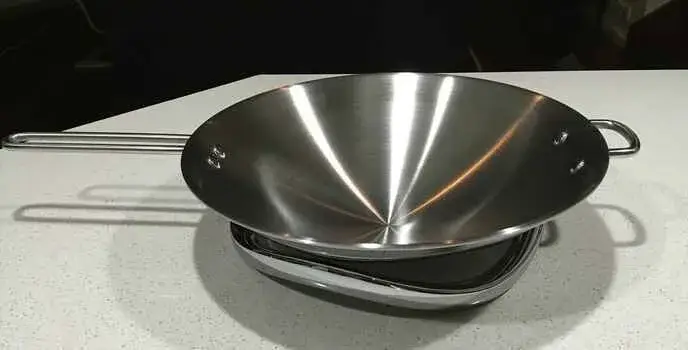
An induction cooktop heats cookware through a magnetic field, which only works with ferromagnetic metal. Carbon steel is roughly 98 to 99 percent iron, making it naturally ferromagnetic and fully compatible with induction. As a general reference, cast iron, enamelled cast iron, carbon steel and most stainless steel pans work on induction, while plain copper or aluminium cookware does not, unless it has a magnetic base bonded to it.
There are two simple ways to check any pan you already own:
- Hold a fridge magnet to the base. If it sticks firmly, the pan will work on induction.
- Check the base for an induction-safe symbol, usually a small coil icon stamped or printed near the manufacturer’s mark.
Carbon Steel vs Cast Iron: What’s the Difference?
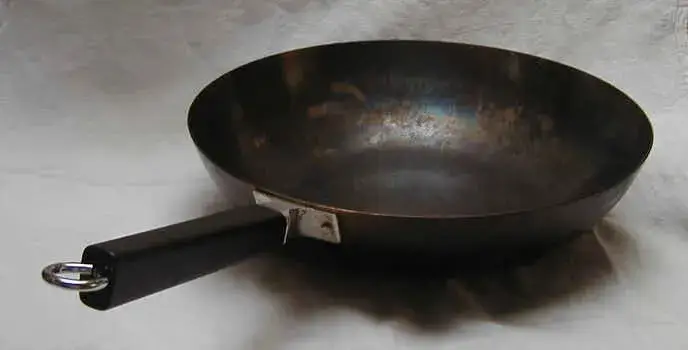
Carbon steel and cast iron are close relatives. Cast iron is roughly 2 to 4 percent carbon, while carbon steel has a lower carbon content, usually under 2 percent, which makes it lighter and more flexible than cast iron. Cast iron heats slowly and holds that heat for a long time, which suits slow searing and baking. Carbon steel heats up much faster, which makes it well suited to quick, high-heat cooking such as stir-frying, but that same speed is also why it needs more careful handling on induction than cast iron does.
Why Carbon Steel Pans Warp on Induction, and How to Prevent It
Warping is the main complaint people have with carbon steel on induction, and it is worth understanding why it happens rather than just avoiding it blindly. Induction heats a pan almost instantly, and if the metal heats unevenly or too quickly, the base can distort slightly, which then reduces contact with the cooktop and causes uneven cooking. Independent cookware guides, including Made In’s Induction Compatibility Guide, confirm that carbon steel is genuinely induction compatible but still prone to warping from thermal shock if heated or cooled too abruptly.
A few habits prevent most warping:
- Preheat gradually on a low to medium setting rather than starting on high, and let the pan come up to temperature slowly.
- Avoid the rapid boil or power boost setting when seasoning or heating an empty carbon steel pan.
- Never rinse a hot pan under cold water or place it directly into a cold sink, since the sudden temperature change is a common cause of warping.
- Let the pan cool down naturally after cooking before washing it.
- Choose a thicker, heavier gauge carbon steel pan where possible, since thinner pans are more prone to warping than heavier ones.
A simple way to check if the pan has come up to temperature evenly is the water droplet test: flick a few drops of water onto the preheated pan. If they skitter and dance across the surface rather than sitting still and evaporating slowly, the pan is evenly heated and ready to cook.
How to Use Carbon Steel on Induction, Step by Step
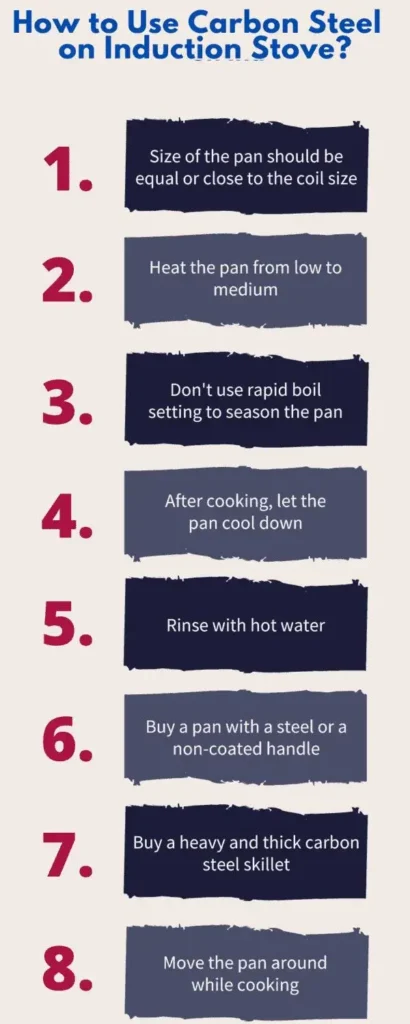
- Match the pan to the cooking zone as closely as possible. The induction coil underneath, not just the visible ring on the glass, is what actually generates the heat, so a pan that is too small for the zone heats unevenly.
- Start on a low to medium power setting, generally in the range of 4 to 6 on most cooktops, rather than jumping straight to high.
- Check the pan is dry and clean on the base before placing it on the cooktop, since debris or moisture can affect contact and heating.
- Move the pan slightly or adjust the power if you notice one area heating faster than the rest, which helps distribute heat more evenly across the base.
- After cooking, let the pan cool naturally rather than plunging it into water or under a cold tap.
One thing worth knowing: carbon steel retains heat longer than stainless steel or aluminium cookware, so the glass surface underneath can stay noticeably warm for a while after you remove the pan. Be mindful of this when cleaning the cooktop right after cooking.
What to Look for When Buying Carbon Steel for Induction
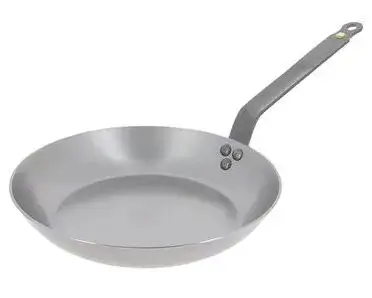
- Thickness: a heavier gauge pan, generally around 2.5 to 3 millimetres, resists warping better than a thin, lightweight one.
- A completely flat base: essential for full contact with the induction coil and even heating.
- An uncoated, oven-safe handle: stainless steel or plain steel handles let you season the whole pan in the oven, including the sides, which a coated or riveted plastic handle will not allow.
- Pre-seasoned vs raw: a pre-seasoned pan is ready to use sooner, while a raw pan needs seasoning at home before its first real use, though both perform the same once properly seasoned.
Our guide to the Best Induction Cookware in India covers specific options across materials if you are shopping more broadly.
Seasoning and Caring for Carbon Steel
Wash a new pan with hot water and a little dish soap, dry it thoroughly, then coat it lightly with a high smoke point oil and heat it in the oven or on the stovetop until it stops smoking. This builds the natural non-stick layer carbon steel is known for. After regular use, clean with hot water and a soft brush rather than soap where possible, dry immediately, and apply a thin layer of oil before storing to prevent rust.
Carbon Steel on Induction FAQs
Does carbon steel work on all induction cooktops?
Yes, as long as the pan is ferromagnetic, which carbon steel naturally is. Confirm with a magnet test if you are unsure about a specific pan.
Why does my carbon steel pan warp on induction but not on gas?
Induction heats far faster than gas and transfers heat directly into the metal rather than around it, so uneven or overly rapid heating shows up as warping much sooner on induction than it would on a gas flame.
Can I use carbon steel for a wok on induction?
Yes, and it is a popular choice, but a traditional round-bottomed wok will not make good contact with a flat induction surface. Look for a flat-bottomed carbon steel wok or a cooktop with a dedicated wok zone.
Is carbon steel better than cast iron for induction?
Neither is strictly better. Cast iron holds heat longer and suits slow, steady cooking, while carbon steel is lighter and heats faster, which suits quick, high-heat dishes. Carbon steel needs more careful preheating on induction to avoid warping.
How do I know if my carbon steel pan has warped?
Check the base on a flat surface. A warped pan will rock or show a visible gap under the centre. On induction, a warped pan usually also heats unevenly, with one side noticeably hotter than the other.
Conclusion
Carbon steel works well on induction, and the warping concern that puts people off is almost entirely preventable with gradual heating, a well-matched pan size, and avoiding sudden temperature changes. Choose a thicker pan, season it properly, and it will perform reliably for years. If you are deciding between induction and gas more broadly, our guide on Induction Stove vs Gas Stove covers the wider comparison.