

Last updated: 8 October 2026 by the Gas Stove Hub team
An Indian kitchen is rarely complete without a gas stove, and most households light it several times a day. That frequent use means grease, spilled food and rust build up fast on the burners, grates, pipe and body. This guide covers safe, step by step cleaning for every part of the stove, plus how to check the gas pipe for wear, which cleaners to avoid, and how often each part actually needs attention.
Safety first: always turn off the stove knobs, switch the regulator off and shut the cylinder valve before you clean anything near the burners or pipe, and never use an open flame to check for a leak. Details are below.
How Often Should You Clean a Gas Stove?
- After every use: a quick wipe of the top and around the burners removes fresh spills before they bake on.
- Weekly: lift the grates, rinse them and wipe underneath.
- Monthly: a full deep clean of burners, grates, knobs and drip trays keeps flames even and stops grease building up in corners.
- Every few months: a full disassembly, along with a visual check of the gas pipe, regulator and connection points.
Preparing the Gas Stove for Cleaning
Before touching any part of the stove, turn the stove knobs off, switch the regulator off and shut the cylinder valve so no gas can flow while you work. Wait until the burners have fully cooled if the stove was used recently, since hot metal and hot water do not mix safely. Once it is cool, remove the grates and burner caps and set them aside to soak.
Read Also: Induction Stove vs Gas Stove, Detailed Comparisons
Easy and Quick Cleaning Method
This is the fastest routine for everyday grime. You only need soapy water, a kitchen towel and a scrub brush. Mix a few drops of dish soap into half a bucket of warm water.
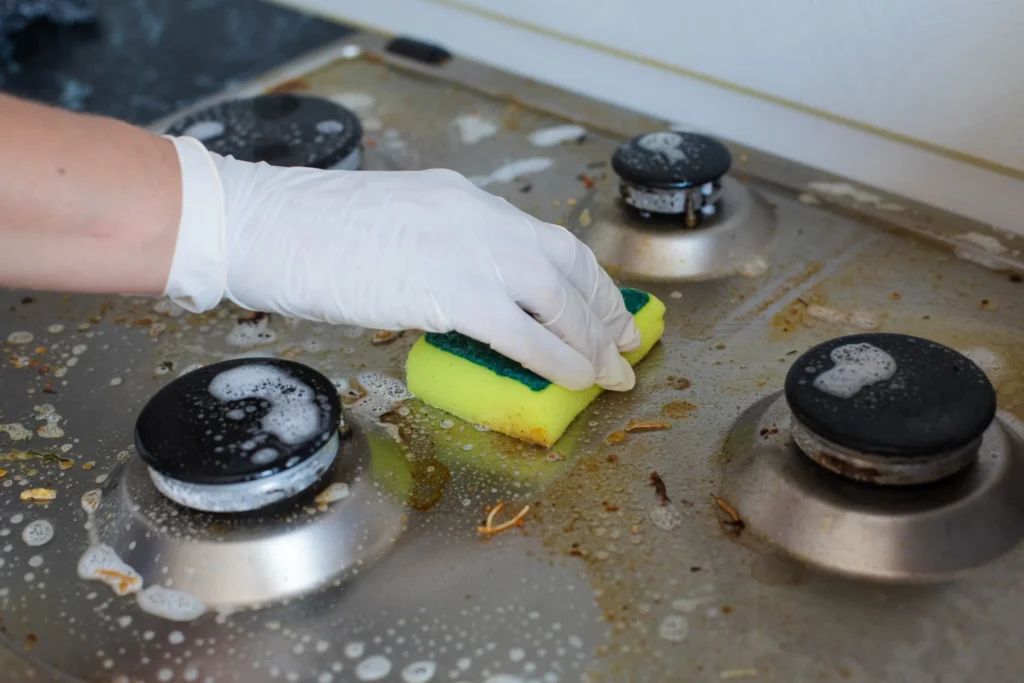
Remove the grates and burners and soak them in the soapy water for about an hour. Meanwhile, spray a little dish soap on the stove body and scrub gently, then wipe with a damp kitchen towel. Once the grates and burners have soaked, scrub them with a brush, making sure the burner holes stay unclogged, then wipe dry with a towel and refit them. This WikiHow Guide on Cleaning a Gas Stovetop covers the same basic method with extra photos.
Deep Cleaning Method for Burners and Grates
For a deeper monthly clean, gather white vinegar, a non-scratch or plastic scrubbing pad, dish soap, a kitchen towel and an old toothbrush. Manufacturer guides such as Whirlpool’s Grates and Burners Guide recommend a non-abrasive pad rather than steel wool, since steel wool can scratch coated grates and burner caps.
Cleaning the Burners
Remove the burners and place them in a small bowl, then pour white vinegar until it covers them. Leave this in a well ventilated spot for an hour, or overnight for the best result, since vinegar has a strong smell. The vinegar softens any rust on the burner. Scrub gently with a non-scratch sponge, then add a little dish soap to the sponge and scrub again. Use an old toothbrush to clear the small burner holes, since a clogged port causes an uneven or yellow flame and wastes gas.
Cleaning the Grates
Soak the grates in hot water for about 30 minutes to loosen oily stains. Scrub with dish soap on a non-scratch sponge, rinse well and dry completely before refitting. Uncoated cast iron grates generally should not be soaked for long periods or put in a dishwasher, since this can strip their seasoning, so check your stove’s manual if you are unsure.
Cleaning the Stove Body
Mix one part white vinegar with two parts water, sprinkle it over the stove body and wipe with a kitchen towel. This cuts through everyday grease without leaving the surface sticky.
Cleaning a Glass Top (Hob) Stove
A glass top stove needs gentler handling than a standard gas stove. If water gets into the burner area on a hob, the burner can stop lighting properly, so wipe up spills before they run toward the burners rather than pouring water directly on top. Clean spilled sugar or salt immediately with a damp cloth, and never use a steel sponge on the glass, since it can scratch the surface permanently. Our guide on Common Glass Top Gas Stove Problems covers more issues specific to this type.
How to Clean the Gas Stove Pipe
The rubber or ISI-marked Suraksha hose carries gas from the cylinder to the stove, and it needs both cleaning and periodic replacement, not cleaning alone. Bending, heat and age make the pipe brittle and greasy over time, and a cracked pipe is a genuine safety risk.
Wiping the Outside of the Pipe
Lemon juice cuts through grease on the outside of the pipe, and baking soda lifts solid grime. This cleans the exterior of the pipe only and does not replace the safety checks described further down.
What You Need
- Water
- A medium bowl
- Lemon juice
- Baking soda
- A sponge brush
- A kitchen towel
Method
- Turn off the cylinder and fully detach the pipe from both the cylinder and the stove. Coil it loosely and place it in the bowl.
- Mix lemon juice with water and pour it over the pipe until it is fully submerged.
- Leave it for 30 to 40 minutes.
- Cover each open end with your thumb, shake gently, then drain the liquid out of the pipe.
- Scrub the outside of the pipe with the sponge brush.
- Mix baking soda with a little water to form a paste and scrub it over any remaining greasy patches.
- Rinse the outside of the pipe with clean water and dry it thoroughly with a kitchen towel before reconnecting it.
After Reconnecting: Always Check for Leaks
Once the pipe is dry and reconnected at both ends, mix a little dish soap with water and rub it over both connection points. Turn the cylinder on and watch for bubbles. Bubbles mean gas is escaping, so turn the cylinder off immediately and tighten the connection or replace the pipe. Never use a lighter or matchstick to check for a leak.
How Often Should You Replace the Gas Pipe?
Most Indian gas distributors recommend replacing an ISI-marked Suraksha hose roughly every two years, or sooner if the rubber looks cracked, feels hard instead of flexible, or has been bent sharply behind the stove for a long time. Check the printed date on the hose during your monthly deep clean, and replace it through your gas supplier rather than a generic hardware store pipe.
What to Use and What to Avoid
| Safe to use | Avoid |
|---|---|
| Dish soap and warm water | Steel wool on coated grates or glass tops |
| Baking soda paste for grease and stains | Bleach or ammonia-based cleaners near burners |
| White vinegar for rust and stains | Soaking uncoated cast iron grates for long periods |
| A soft toothbrush for burner ports | Lighting the stove to check for a gas smell |
| Soapy water to test pipe connections | Using a hose that is cracked, hard, or past its date |
Tips to Keep a Gas Stove Clean
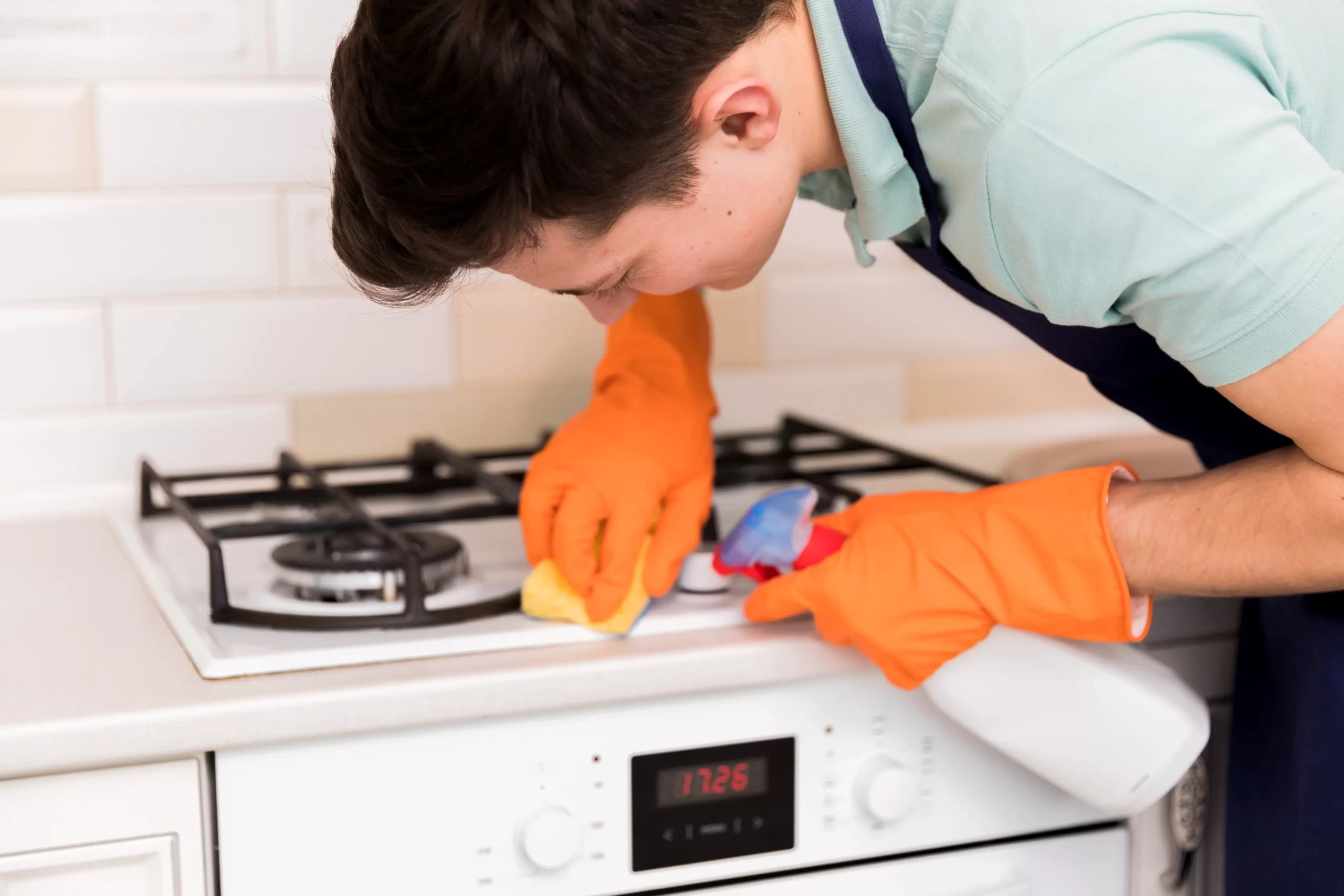
- Wipe spills as soon as it is safe, since food left on a hot stove bakes on and gets harder to remove every day it is left.
- Dry the stove fully after cleaning before you use it again.
- Check the burner holes regularly. Clogged holes cause an irregular flame, so let the stove cool, spray the burner with soapy water and clean it with a toothbrush.
- Keep a dedicated cleaning cloth in the kitchen so you always wipe promptly rather than putting it off.
- Clean Underneath the Gas Stove weekly, since crumbs and grease collect there unnoticed.
If you are dealing with recurring flame or ignition issues rather than just cleaning, our guide on Common Gas Stove Problems and their fixes can help you troubleshoot further, and our safety explainer on Whether Gas Stoves Can Explode covers the warning signs worth knowing.
Gas Stove Cleaning FAQs
What is the easiest way to clean a gas stove?
Mix warm water with a few drops of dish soap, wipe the stove body and top with a soaked cloth, then dry with a kitchen towel. This handles most everyday grime without any special ingredients.
How do you deep clean a gas stove burner?
Soak the burner in white vinegar for an hour or overnight to soften rust, scrub with a non-scratch sponge and dish soap, then clear the burner ports with a soft toothbrush.
How do you get brown stains off a gas stove?
A paste of white vinegar and baking soda, left on the stain for a few minutes before wiping, lifts most brown stains without scratching the surface.
How often should the gas pipe be cleaned and replaced?
Wipe the outside of the pipe during your monthly deep clean, and plan to replace the hose itself roughly every two years, or sooner if it looks cracked, feels stiff, or is past the date printed on it.
Can I use steel wool on my gas stove?
Only on uncoated cast iron grates. Steel wool will scratch coated grates, enamel surfaces and glass hob tops, so use a non-scratch sponge on those parts instead.
How do I know if my gas pipe is leaking?
Rub soapy water over the connection points and watch for bubbles, or smell for a distinct gas odour. If you notice either, turn off the cylinder immediately, ventilate the room and contact your gas supplier. Never test for a leak with a flame.
Why does my burner have a yellow or uneven flame after cleaning?
This usually means one or more burner ports are still clogged, or the burner cap is not seated flat on its base. Recheck the ports with a toothbrush or pin and make sure everything is dry before reassembling.
Conclusion
A gas stove that is wiped daily, deep cleaned monthly and checked every few months for a worn pipe will stay safe and cook evenly for years. Cleaning the burners, grates and body keeps the stove looking good, but checking the gas pipe and testing connections for leaks is what actually keeps your kitchen safe, so do not treat that step as optional. If a burner still will not light properly after cleaning, our guide to Common Gas Stove Problems covers the most likely causes.