Last updated: 30 September 2026 by the Gas Stove Hub team
Most gas burner cleaning advice treats every burner the same, but brass and alloy burners actually need slightly different care, and cleaning them the wrong way can quietly damage the very thing you are trying to fix. This guide focuses specifically on the burner itself: what your burner is made of, how to read its flame for early warning signs, and the cleaning habits that keep it performing well for years rather than just looking clean.
Why Burner Cleaning Matters Beyond Appearance
A blocked burner does not just look dirty. Clogged ports change how gas and air mix as they leave the burner, which shows up as a weak, uneven, or yellow-tinted flame instead of a clean blue one. Beyond the inconvenience of slower cooking, this also means more unburned gas and a less efficient flame, so regular cleaning is genuinely a performance issue, not just a cosmetic one.
Know Your Burner: Brass vs Alloy
Most Indian gas stoves use either brass or a lighter aluminium alloy for the burner, and each responds slightly differently to cleaning.
Brass Burners
Brass conducts heat well and resists corrosion, which is why it remains the traditional choice for Indian gas stoves. It naturally develops a dark patina over time from heat exposure, which is a cosmetic change rather than a sign of damage. Routine cleaning only needs mild dish soap and warm water. A mixture of equal parts water and white vinegar, with the burner soaked for around 20 to 30 minutes, helps restore shine and lift stubborn buildup on an older brass burner.
Alloy or Aluminium Burners
Alloy burners are lighter and generally wipe clean more easily than brass, without developing the same patina. They are a little more sensitive to acidic spills and harsh cleaning agents over time, so mild soap and water is the safer everyday choice, with vinegar used more sparingly than you would on brass.
Whichever material your stove uses, avoid wire brushes, steel wool, or any abrasive scrubbing on the burner ports themselves. Aggressive scrubbing can gradually widen the small flame ports, and a widened port changes the burner’s flame geometry permanently, leading to a larger, less controlled flame and reduced efficiency. A soft toothbrush and a gentle touch is all the ports need.
How to Clean a Gas Burner, Step by Step

- Turn off the cylinder and let the burner cool completely before touching it.
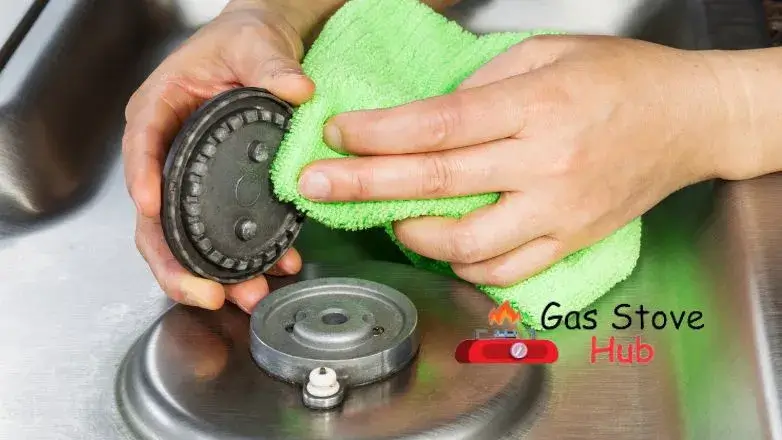
- Lift off the burner cap and base, and set them in a bowl of warm, soapy water to soak for 10 to 15 minutes.
- For stubborn grease on brass, use the vinegar and water soak described above instead, for about 20 to 30 minutes.
- Scrub gently with a soft sponge or toothbrush, paying particular attention to the small flame ports around the edge.
- Use a burner cleaning pin or a straightened paperclip to clear any port that still looks blocked after scrubbing, working gently so you do not widen the hole.
- Rinse thoroughly under running water and dry every part completely before reassembling. Leftover moisture in the ports is one of the most common causes of a weak flame the next time you light the stove.
- Place the base and cap back in their original position. Most burners only sit correctly one way, so check that the cap is seated flat before lighting.
Avoid letting water drip into the burner base or gas inlet while cleaning the stove body around it, since trapped moisture there can affect ignition. For a full stove-wide clean rather than just the burners, our Full Guide to Deep Cleaning a Gas Stove covers the body, grates and stubborn stains in detail.
Reading the Flame: What Colour Tells You
Once the burner is reassembled and lit, the flame itself tells you whether the cleaning actually worked.
- A steady blue flame means the burner is clean and the gas-air mixture is correct.
- A yellow or orange flame, soot, or an uneven shape usually means a port is still partially blocked, or the burner cap is not seated flat. Recheck both before assuming a deeper fault.
- A flame that is unusually large or hisses loudly after a deep clean can indicate a port was widened by overly aggressive scrubbing, which is worth having checked rather than ignored, since it affects how much gas the burner is releasing.
How Often Should You Clean Gas Burners?
- After spills: wipe the burner cap once it has cooled, rather than waiting.
- Weekly: a basic soap and water clean of the caps and bases.
- Monthly: a deeper clean with vinegar, plus clearing the ports with a pin if the flame has started to look uneven.
Gas Burner Cleaning FAQs
How important is the ISI mark on a gas stove?
An ISI mark means the stove has been manufactured to the Indian Standards Institution’s safety and quality regulations, so it is worth checking for when buying a new stove or replacement burner parts.
What is the difference between brass and alloy burners?
Brass holds up to high heat well and resists corrosion but develops a patina and needs slightly more attentive cleaning over time. Alloy burners are lighter, wipe clean more easily, and are a bit more sensitive to harsh or acidic cleaners.
Can I clean gas burners with vinegar only?
Yes. Mix equal parts water and white vinegar, soak the burner parts for 20 to 30 minutes, then scrub gently with a brush and rinse well. This works especially well on brass.
Can I clean the stove knobs the same way?
Yes, knobs can generally be cleaned with the same soap and water or vinegar method, though make sure they are completely dry before refitting, since trapped moisture can make them feel stiff.
Why does my burner flame look larger after I deep cleaned it?
This can happen if the flame ports were widened by scrubbing too hard or with an abrasive tool. It is worth having the burner checked, since a widened port changes how much gas it releases.
Conclusion
A clean gas burner comes down to knowing what it is made of, cleaning it gently rather than aggressively, and reading the flame afterward to confirm it actually worked. Brass and alloy both hold up well for years with basic soap and water and the occasional vinegar soak, as long as you avoid anything abrasive on the ports themselves. If your burner is still giving you trouble after cleaning, our guide on Common Gas Stove Problems covers what else might be going on.