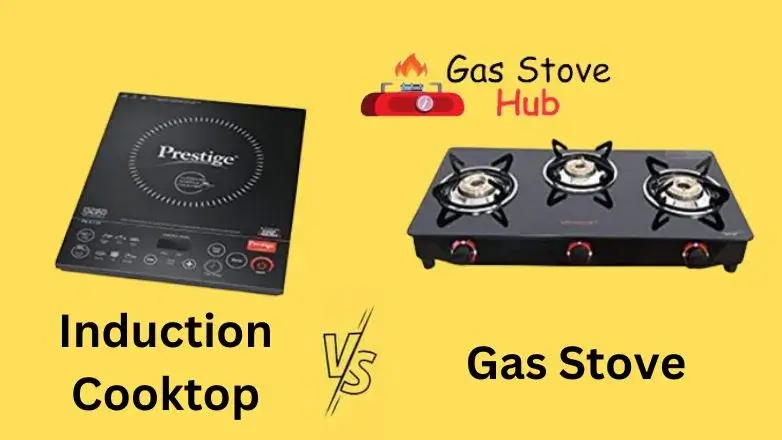
An induction cooktop and an LPG gas stove can both handle everyday cooking, but they heat cookware in different ways. Induction uses electricity and a changing magnetic field to heat compatible pans directly, while gas burns fuel to create a flame. For Indian households, the better choice depends on the dishes you cook, your utensils, electricity reliability, LPG and electricity prices, ventilation, and budget.
Written by Abdul Khader, researcher and writer at Gas Stove Hub. Last updated: October 26, 2026
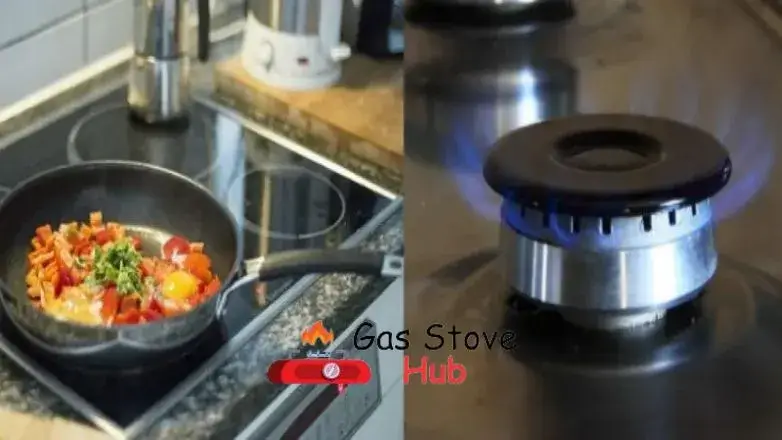
Quick Answer: Induction Cooktop or Gas Stove?
Choose induction if you want fast, responsive heating, a flat surface that is easier to clean, and no open gas flame at the cooking appliance. It works best when your cookware is induction-compatible and your power supply can handle the cooktop. Choose gas if you regularly roast phulkas or vegetables directly over a flame, use a wider variety of cookware, or need a cooking method that works during power cuts. Some households benefit from having both.
Neither method is best for every home. Compare the full running cost and practical fit rather than choosing only on purchase price or a general claim about efficiency.
What Is a Gas Stove?
A typical Indian gas stove burns LPG supplied from a cylinder or an approved piped-gas connection. Fuel flows through the burner and mixes with air; ignition creates a flame that heats the bottom and sides of a vessel. A gas stove provides visible feedback through the flame, which many cooks find helpful when adjusting heat.
Advantages of a Gas Stove
- Works during most power cuts: a conventional gas burner does not depend on household electricity for the flame, although an electric ignition system may need power or a battery to spark.
- Broad cookware compatibility: many aluminium, steel, cast-iron, copper and traditional vessels can be used if they are stable and suitable for the burner.
- Direct-flame cooking: a flame can be useful for phulkas, charring vegetables, roasting papad and techniques that require contact with an open flame.
- Visible heat adjustment: the flame gives a direct visual cue when you increase or reduce the gas flow.
Disadvantages of a Gas Stove
- LPG supply, cylinder delivery, or a piped-gas connection must be available and maintained safely.
- Open flames and hot burner supports present burn and fire hazards.
- Combustion produces pollutants, so correct installation and suitable kitchen ventilation matter.
- Burner caps, pan supports and the surrounding surface can take more effort to clean than a flat cooktop.
- Gas installation, hoses, regulators and burners need correct maintenance. A suspected leak must be treated as an emergency.
For related advice, see How to Choose a Gas Stove in India and Gas Stove Explosion Risks and LPG Safety.
What Is an Induction Cooktop?
An induction cooktop is an electric appliance with a coil beneath a glass-ceramic surface. When alternating current flows through the coil, a changing magnetic field induces electrical currents in a compatible pan base. Resistance in the metal produces heat in the vessel, which then cooks the food. The glass is not intended to work like a traditional radiant electric hotplate, although it can become hot from contact with the pan.
Read our explainer, How an Induction Stove Works, for the underlying science.
Advantages of an Induction Cooktop
- Fast and responsive: compatible cookware can heat quickly, and power can respond rapidly to control changes.
- Efficient energy transfer: induction directs much of its cooking energy into the vessel instead of losing as much heat around the sides. Actual performance varies by model and cookware.
- No open gas flame: the cooktop does not burn LPG at the cooking surface.
- Easy surface cleaning: the smooth top has fewer gaps and removable parts than a typical gas stove.
- Useful controls: many models offer timers, multiple power levels, cookware detection, control locks or residual-heat indicators. Features are model-specific.
- Can reduce excess kitchen heat: compared with a gas flame, induction often releases less heat around the vessel, although food preparation still creates heat, steam, grease and smoke.
Disadvantages of an Induction Cooktop
- Cookware compatibility: the vessel needs a suitable magnetic base. Not all stainless-steel cookware works, and plain aluminium, copper, glass and clay vessels generally do not work unless they have a compatible base.
- Electricity dependency: a typical induction cooktop will not cook during a power cut.
- Electrical load: some portable cooktops draw substantial power. Check the wattage, socket, earthing and circuit requirements in the manual.
- Upfront expense: the appliance and any replacement cookware add to the initial cost.
- Noise and surface care: a hum or fan noise can be normal, and glass-ceramic surfaces can be damaged by hard impact or rough handling.
- No direct flame: induction cannot reproduce tasks such as roasting a phulka directly over a flame.
For utensils, see Best Induction Cookware in India and Does Carbon Steel Work on Induction?.
Induction Cooktop vs Gas Stove: Side-by-Side Comparison
| Feature | Induction Cooktop | LPG Gas Stove |
|---|---|---|
| How heat is generated | A changing magnetic field induces currents in compatible cookware. | Burning LPG creates a flame that heats the vessel. |
| Cooking speed | Often very fast, depending on wattage and pan. | Fast and responsive; results depend on burner and vessel. |
| Heat control | Electronic power levels can change quickly; low-power performance varies by model. | Flame level is visible and adjusts quickly. |
| Cookware | Needs an induction-compatible magnetic base. | Works with many heat-safe vessels that sit stably on the pan supports. |
| Traditional Indian cooking | Works for curries, rice, boiling, simmering, and pressure cooking with suitable vessels. Direct-flame roasting is not possible. | Works for a broad range of cooking styles, including phulkas and direct-flame roasting. |
| Power cuts | Usually cannot operate without electricity. | Conventional burners can continue to work, though ignition may depend on the model. |
| Energy transfer | Generally transfers a higher share of input energy into compatible cookware. | Some heat escapes around the vessel into the kitchen. |
| Indoor combustion emissions | No LPG combustion at the cooktop. | Combustion products are generated, so ventilation is important. |
| Cleaning | Flat surface is usually easy to wipe after cooling. | Burner caps, pan supports and gaps need routine cleaning. |
| Cost to run | Depends on the electricity tariff, actual kWh use, and cooking time. | Depends on LPG price, consumption, and how you cook. |
This comparison describes typical appliances, not every model. Power output, safety features, cooktop dimensions, burner designs and cookware performance vary. A manufacturer’s manual is the best reference for an individual appliance.
Which Is Cheaper in India: Induction or LPG?
There is no reliable one-price-fits-all answer. Induction can transfer energy efficiently, but the cost of electricity per unit varies by state, tariff category, usage slab and household. LPG cost depends on the price paid for the cylinder or piped gas and how much fuel your cooking consumes. Media comparisons often use assumed cylinder prices, electricity tariffs and cooking times, so those estimates may not match your bill.
How to Estimate Your Induction Running Cost
- Find the cooktop’s rated wattage on its label or manual. For example, 1,800 watts equals 1.8 kilowatts.
- Estimate the time it actually draws power. At full rated power, 30 minutes at 1.8 kW would use about 0.9 kWh. Lower settings and cycling controls can reduce actual consumption.
- Multiply estimated or measured kWh by the per-unit charge on your electricity bill.
- Compare the cost with LPG used for a similar meal, not with a different cooking task or duration.
- Include any cookware you must buy, the appliance price, warranty and maintenance when considering the overall cost.
Worked Example
If an induction cooktop draws 1.8 kW continuously for half an hour, energy use is 1.8 × 0.5 = 0.9 kWh. At a hypothetical tariff of ₹8 per kWh, that would cost ₹7.20 for that period. This is an illustrative calculation, not a promise of actual cost. Your appliance may draw less than rated power over a cooking session, and your electricity tariff may differ.
A 2026 NDTV comparison also explains that the result depends on local tariffs and assumptions about consumption. Use your own bill and observed cooking pattern rather than relying on a nationwide rupee estimate. See the NDTV Guide to Comparing Induction, LPG and Other Cooking Costs.
Which Is Better for Indian Cooking?
Choose Induction If
- You prepare rice, dal, curries, tea, milk, soups, or other dishes using flat-bottom vessels.
- You want quick heating and an easily cleaned surface.
- Your regular utensils pass the magnet test or you are comfortable buying compatible cookware.
- Electricity is reliable and the kitchen socket and circuit meet the cooktop’s requirements.
- You want to avoid an open gas flame and combustion at the appliance.
Choose Gas If
- You frequently make phulkas over an open flame, roast papad or vegetables directly over the burner, or prefer flame-based techniques.
- You use cookware that is not induction compatible and do not want to replace it.
- Power outages are frequent and you need a cooking method that does not normally depend on electricity.
- You already have a safe, correctly installed LPG or piped-gas setup and its ongoing cost suits your budget.
Consider Keeping Both
For some households, a small induction cooktop is useful for boiling, simmering or backup cooking while a gas stove handles flame-based techniques. This adds purchase cost and requires a suitable electrical supply and storage space. Only use electrical equipment rated for the intended load, and do not create an improvised connection to manage a power cut.
How to Check Whether Your Utensils Work on Induction
Check the cookware before purchasing a cooktop or replacing your entire set. Cast iron and many induction-labelled steel utensils are compatible, while some stainless steel is not.
- Hold a household magnet against the flat base of the empty vessel.
- If the magnet sticks firmly, the vessel is likely to be induction compatible.
- If it does not stick, check the vessel’s symbol and manufacturer details. It may not work.
- Make sure the base is flat and the vessel sits securely on the cooking zone. A magnetic base alone does not guarantee the best performance.
Use the magnet test as a first check only. Follow the cooktop manual for minimum pan size and vessel requirements.
Safety and Indoor Air Quality
Induction Safety Considerations
Induction avoids an open flame, but the cookware becomes hot and transfers some heat back to the glass surface. Do not touch the surface to test its temperature. Use residual-heat indicators if fitted, keep the appliance dry, maintain clear air vents and follow its electrical instructions. Stop using the cooktop if the glass is cracked, the power cable is damaged, a burning smell occurs, or repeated fault codes appear. Seek authorised service.
People with implanted medical devices should review the cooktop manufacturer’s guidance and consult their medical-device manufacturer or healthcare professional about any required precautions.
Gas Stove Ventilation and LPG Safety
Gas combustion can produce indoor pollutants such as nitrogen dioxide. Proper installation, maintenance and ventilation are important when cooking with gas. A range hood that exhausts outdoors can reduce exposure to cooking pollutants and should be used where available. Frying and other cooking processes can produce particles even on induction, so ventilation remains useful with either method.
If you suspect an LPG leak, stop cooking, do not operate electrical switches or use any flame, leave the area, and call the LPG emergency helpline 1906 from a safe location. Turn off the regulator only if you can do so without approaching danger and follow the emergency service or distributor’s instructions. For related safety guidance, see Is an Automatic Gas Stove Safe? and Can Gas Stoves Explode?.
How to Clean and Maintain Each Cooktop
Cleaning an Induction Cooktop
- Switch off the appliance and allow the surface to cool as instructed by the manufacturer.
- Wipe spills with a soft cloth and a cleaner approved for glass-ceramic surfaces.
- Do not pour water over the cooktop or allow liquid into its air vents.
- Avoid abrasive pads, heavy impacts and dragging rough cookware across the surface.
- Keep cooling vents clear and do not open the appliance casing.
See How to Clean an Induction Stove for more tips.
Maintaining a Gas Stove
- Turn the controls off after use and follow LPG-distributor guidance for the regulator.
- Keep burner caps and pan supports clean, dry and correctly positioned.
- Have the gas connection and appliance inspected according to the manufacturer and distributor’s guidance.
- Do not dismantle gas controls, modify injectors or repair hoses and regulators yourself.
- If you smell gas, stop troubleshooting and follow the emergency directions above.
For general buying considerations, see How to Choose a Gas Stove in India.
Frequently Asked Questions
Is induction safer than a gas stove?
Induction avoids open-flame cooking and LPG combustion at the appliance, but it still presents burn and electrical risks. A gas stove can also be used safely when properly installed, maintained, ventilated and operated. Safety depends on the actual appliance, its features and how it is used.
Does induction use less energy than gas?
Induction generally transfers a higher share of input energy into compatible cookware than gas cooking does. Energy efficiency and household cost are different measures: cost depends on the electricity tariff, LPG price, cooking task and actual appliance use.
Can I cook Indian food on induction?
Yes. Many everyday dishes such as rice, dal, curries, boiling milk and pressure cooking work well with compatible cookware. Direct flame roasting, such as making phulkas over a burner, requires gas or another suitable flame source.
Will an induction cooktop work during a power cut?
A typical induction cooktop needs electricity, so it will not cook during a power cut. A conventional gas burner usually can keep operating if its gas supply is available, though ignition behaviour varies by model.
Can I use aluminium or stainless-steel cookware on induction?
Plain aluminium usually will not work unless the vessel has an induction-compatible magnetic base. Some stainless-steel pans work and others do not. Check for an induction symbol or use a magnet as a first test.
Why does an induction cooktop make a buzzing noise?
A low hum or buzz can be normal and may vary with the pan, power level and cooling fan. Unusually loud noise, a burning smell or repeated error messages should be checked by authorised service.
Is induction cheaper than LPG in India in 2026?
The answer depends on your current electricity tariff, LPG price, cooking volume and the actual efficiency of your appliance and cookware. Estimate electricity use from kWh and compare it with LPG consumed for similar meals. Do not rely on a general price estimate from another city or household.
Which cooktop is easier to clean?
Induction is usually easier to wipe because it has a flat surface and no burner caps or pan supports. Clean only after switching off and allowing the surface to cool, and use products approved by the manufacturer.
Which cooktop is best for small homes or students?
A portable induction cooktop can suit small households or students if the accommodation allows it, the electrical circuit is appropriate, and compatible cookware is available. Gas may be more practical where power is unreliable or an LPG setup is already available and permitted.
Final Verdict: Induction Cooktop or Gas Stove?
Induction is a strong option for fast heating, easy cleaning and avoiding an open gas flame, provided you have compatible cookware and a reliable, correctly rated electrical supply. Gas remains practical for direct-flame Indian cooking, broad cookware compatibility and cooking during many power cuts. Compare your own electricity and LPG costs, cooking habits, safety needs and initial purchase costs before deciding. The best stove is the one that suits your home, not the one that wins every category on paper.
Source & About This Guide
This comparison is prepared for Indian households choosing between induction cooking and an LPG gas stove. It draws on appliance-manufacturer explanations, public energy-efficiency information, indoor-air guidance and Indian consumer cost comparisons. Efficiency values and running costs vary by cooking task, model, cookware, fuel and tariff; use the appliance manual and your own bill for decisions.