Yes, a gas stove or LPG installation can be involved in a fire or explosion if leaking gas builds up and ignites. A stove does not normally explode simply because it uses gas. Risk increases when a hose, regulator or connection leaks, gas is released without igniting, or a faulty appliance is used despite warning signs. If you smell LPG, stop cooking and follow the emergency instructions below instead of trying to find the leak yourself.
Written by Abdul Khader, researcher and writer at Gas Stove Hub. Last updated: October 25, 2026
What to Do if You Smell LPG
Treat any LPG smell as a possible leak. Do not continue cooking or try to find the leak yourself. Follow these emergency precautions:
- Do not light a match, lighter, incense stick or cigarette.
- Do not turn electrical switches, appliances, plugs or fans on or off in the affected area.
- If it is safe to do so, turn the LPG regulator OFF. Do not risk approaching the cylinder if the smell is strong.
- Open doors and windows for ventilation only if you can do so without delay or risk, then leave the area if the smell persists.
- From a safe location, call the 24-hour LPG leakage helpline at 1906. For fire or immediate danger, call 112 or the local fire service at 101.
- Keep people away and do not re-enter or use the stove until authorised personnel say it is safe.
These steps follow the Official LPG Safety Pledge and the Ministry of Petroleum and Natural Gas LPG Emergency Helpline Guidance.
Gas-related explosions can occur when unburned LPG accumulates in an enclosed space and then meets an ignition source. Possible sources include a leaking hose or regulator, a loose or damaged connection, a burner that releases gas but fails to light, or an appliance fault. Regular maintenance reduces avoidable risks, but no appliance should be described as completely risk-free.
If a burner does not ignite promptly, turn its control knob to OFF and do not keep trying to light it repeatedly. Allow time for gas to disperse only if there is no persistent gas smell and it is safe to remain in the area. If you smell LPG, do not operate electrical switches or use a flame. Leave the area if the smell persists and call 1906 from a safe location.
A gas smell should not be treated as normal during cooking. If you notice an LPG smell at any time, treat it as a possible leak. Do not light a match, smoke, or switch electrical equipment on or off. Follow the LPG emergency procedure and call the 24-hour LPG emergency helpline at 1906.
Can a Gas Stove Explode, and Why Does It Happen?
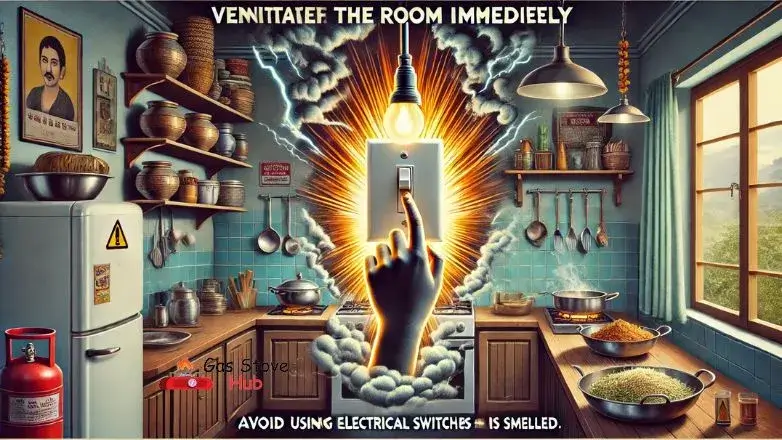
LPG is flammable. If it escapes and accumulates in a poorly ventilated area, a flame or spark can ignite the gas-air mixture and cause a flash fire or explosion. This is why official LPG guidance warns people not to operate electrical switches during a suspected leak. Do not investigate a leak yourself or use a lighter to test a connection.
If you suspect an LPG leak: Do not light flames or operate electrical switches, plugs, fans or appliances in the affected area. If it is safe to do so, turn the regulator OFF, extinguish open flames only if this can be done without risk, and open doors and windows. If the smell persists or you suspect a significant leak, leave the building and keep others away. Call 1906, India’s 24-hour LPG leakage helpline, from a safe location. For an immediate fire or other emergency, call India’s emergency number 112 or the local fire service at 101. Do not re-enter or use the stove until authorised personnel say it is safe.
1. A Leaking or Damaged Hose, Regulator, or Connection
A cracked hose, damaged regulator, worn seal or loose connection can allow LPG to escape. Do not tighten, detach or repair gas fittings yourself. If the hose appears cracked, brittle, burned or damaged, stop using the appliance and contact your LPG distributor’s trained mechanic. The Official LPG Consumer Safety Guidance recommends approved appliances and regulators, and authorised servicing rather than self-repair.
2. A Burner That Releases Gas but Does Not Ignite
If the igniter clicks but the burner does not light, gas may be released without burning. Turn the knob to OFF and do not make repeated ignition attempts. Once the appliance is cool and there is no gas smell, follow the user manual for permitted cleaning of removable burner caps and make sure they are dry and correctly seated. If the burner still fails to light, or you smell LPG, stop using it and contact authorised service.
3. Blocked Burner Ports or Poor Maintenance
Food spills and grease can obstruct burner ports, produce uneven flames or interfere with ignition. Clean the stove as directed by its manufacturer after it has cooled, and keep liquid away from the fixed burner base and igniter. Cleaning is not a repair for a damaged hose, regulator, injector or other gas component. If the flame remains weak, unusually yellow or uneven after approved cleaning, arrange an inspection by an authorised technician.
Other Safety Risks During Gas Cooking
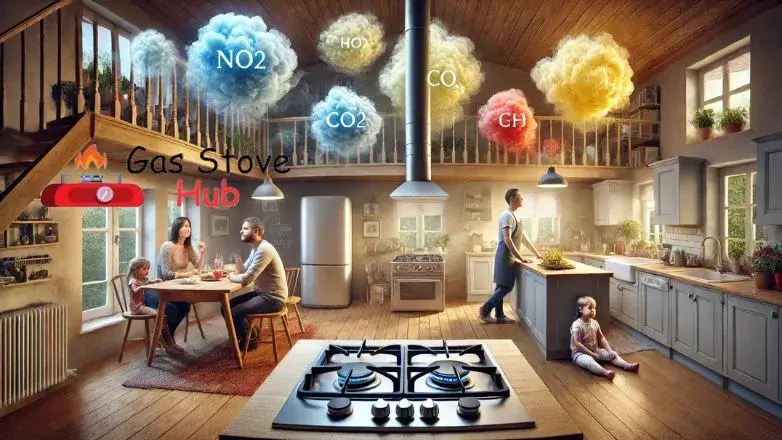
Explosion and fire are not the only possible risks. Gas combustion can contribute to indoor air pollutants, including nitrogen dioxide, and faulty or incomplete combustion can produce carbon monoxide. Use an exhaust hood or fan that vents outdoors where possible, keep the kitchen ventilated during cooking, and have a poorly burning appliance inspected. See the US EPA Guidance on Nitrogen Dioxide and Indoor Air Quality for information about gas stove emissions and ventilation.
A kitchen chimney or exhaust hood can help remove cooking emissions when it vents to the outdoors, but it does not make an LPG leak safe and does not replace regular appliance inspection. If you smell gas, treat it as a possible leak regardless of whether a chimney is running.
Which Gas Stove Safety Features Can Help?
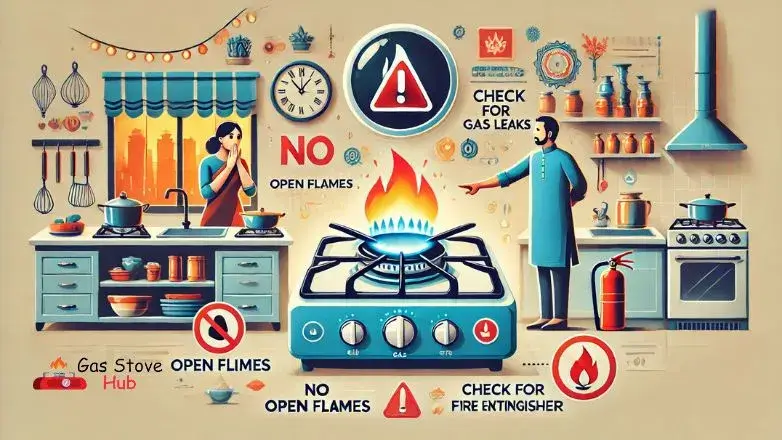
Safety features differ between models, and not every domestic LPG stove has every feature. A safety feature can reduce a particular risk, but it cannot replace correct installation, suitable ventilation, routine inspection and safe behaviour when a gas smell is detected. Check the specification and user manual for your exact model.
Auto-Ignition System
Auto-ignition produces a spark to light the burner. It does not automatically detect a leaking hose or guarantee that gas will shut off after a failed ignition. If a burner does not light promptly, turn the knob OFF and do not continue repeated ignition attempts.
Flame Failure Device (FFD)
A flame failure device is designed to stop or reduce the gas supply to a burner if its flame goes out, where that feature is fitted and functioning correctly. Not all cooktops have an FFD, so verify your model specifications. It is not a substitute for closing the LPG regulator when the stove is not in use or responding properly to a suspected leak.
Regulator and Shut-Off Controls
The LPG regulator controls the gas supply from the cylinder to the appliance. Follow the distributor’s instructions and keep the regulator OFF when the stove is not in use. Do not dismantle or modify the regulator, cylinder valve or hose. If the regulator is damaged or you suspect a leak, contact your LPG distributor or call 1906 in an emergency.
Timers and Other Convenience Features
Some models have timers or automatic shut-off functions, but availability and operation vary. A timer is not a gas-leak detector and should never be relied on to prevent an explosion. Never leave cooking unattended, and check the user manual to understand what your model’s features actually do.
Safety Features Do Not Replace Safe Use
Auto-ignition, flame failure protection and timers do different jobs, and not every stove has all of them. None guarantees protection against a damaged hose, a leaking regulator or unsafe installation. Follow the appliance manual, arrange periodic installation checks and treat any LPG smell as a possible leak.
The most important safeguards are careful installation, approved equipment, an upright cylinder in a ventilated location, regular checks, and knowing what to do if LPG is smelled. The following practices are based on Indian LPG consumer guidance.
LPG Safety Tips for Indian Homes
Use an approved LPG stove, regulator and hose sourced through a reputable supplier or authorised LPG distributor. IndianOil identifies the ISI-marked hotplate and approved Suraksha LPG hose as part of a domestic LPG installation. Replace visibly damaged equipment through the distributor, and do not patch hoses or modify regulators. See the IndianOil LPG Consumer Safety Guidance for equipment and installation precautions.
Everyday LPG Safety Checklist for Indian Homes
- Use a BIS-approved stove and an approved regulator and LPG hose from a reputable source.
- Keep the LPG cylinder upright, at floor level, in a ventilated location and away from heat. Do not put it in a closed cabinet or pit.
- Keep the stove on a stable raised platform above the cylinder level, as advised by the official LPG safety guidance.
- Keep the regulator OFF when the stove is not in use, including before going to bed.
- When a refill arrives, check that the cylinder seal and safety cap are intact. Ask the delivery person or distributor for a demonstration if you are unsure about safe use.
- Keep curtains, paper, oils and other flammable items away from the burners. Do not leave cooking unattended.
- Keep burners and removable caps clean, dry and correctly seated. Never probe gas ports or dismantle the injector as a DIY repair.
- Do not repair, extend or modify the hose or regulator yourself. Ask the distributor’s trained mechanic to inspect damaged equipment.
- Get the domestic LPG installation checked by an authorised mechanic once every five years, and sooner if you notice damage, a gas smell or abnormal flame behaviour.
How Common Are Gas Stove Explosions?
There is no verified nationwide annual count cited in this article that would support a specific number of domestic gas stove explosions. News reports show that LPG leaks and fires do occur, but individual incidents cannot be used to calculate a reliable national rate. Rather than repeating an unverified number, focus on the practical risks: damaged equipment, a burner that releases gas without igniting, poor installation, and a failure to respond to a gas smell. Every suspected LPG leak should be taken seriously, regardless of how often explosions occur.
Frequently Asked Questions About Gas Stove Explosions
Can a gas stove explode?
A gas stove can be involved in a flash fire or explosion if leaking LPG accumulates and ignites. This is different from a stove spontaneously exploding during normal use. Damaged hoses, leaking connections, failed ignition and unsafe repairs can increase the risk.
What should I do if I smell gas near my stove?
Do not light a flame or turn electrical switches on or off. If safe, turn the regulator OFF, ventilate and leave the area if the smell persists. From a safe location, call the 24-hour LPG leakage helpline at 1906. For an immediate fire or threat to life, call 112 or the local fire service at 101.
Can a gas stove explode if the burner will not light?
Repeated ignition attempts can allow unburned gas to escape. Turn the burner knob OFF if it does not light promptly and do not keep trying. If you smell LPG, follow the emergency steps above. If the burner still fails after the stove is cool and any permitted removable-part cleaning, contact authorised service.
Does auto-ignition prevent a gas stove explosion?
No. Auto-ignition creates a spark to light the burner, but it is not a gas-leak detector. A flame failure device, if installed and working correctly, is designed to stop gas flow when a flame goes out, but it does not replace safe installation or responding to a gas smell.
Do all gas stoves have a flame failure device?
No. Features differ by model and price range. Check the manufacturer’s specifications and manual rather than assuming an appliance has a flame failure device or automatic shut-off.
How can I reduce the risk of an LPG accident at home?
Use approved equipment, keep the cylinder upright in a ventilated place, switch the regulator off when not in use, keep flammable items away from burners, avoid DIY gas repairs, and arrange inspection by an authorised mechanic every five years or sooner if there are warning signs.
How often should a domestic LPG installation be inspected in India?
The official LPG safety pledge and IndianOil consumer guidance recommend an installation inspection by an authorised or trained mechanic once every five years. Contact your distributor sooner if the hose or regulator looks damaged, a burner behaves abnormally, or you suspect a leak.
Conclusion
Gas stoves do not normally explode simply because they use LPG, but leaking gas that accumulates and meets an ignition source can cause a dangerous fire or explosion. The best protection is approved equipment, correct placement and ventilation, periodic inspection, avoiding DIY gas repairs, and knowing the emergency response. If you smell LPG, do not ignore it or treat it as normal during cooking.
Related Reading: How to Repair a Gas Stove Safely, How to Handle LPG Regulator and Hose Concerns Safely, Auto-Ignition Gas Stove Problems, and How to Clean a Gas Stove Top.
Source & About This Guide
This article was reviewed against official LPG safety guidance and consumer information. The article avoids unverified claims about the annual number of explosions and distinguishes a possible gas-leak emergency from routine stove maintenance. Manufacturer and distributor instructions should be followed for an individual appliance. This guide is general safety information and is not a substitute for a trained technician inspecting, installing or repairing gas equipment.
- Pradhan Mantri Ujjwala Yojana: LPG Safety Pledge
- IndianOil: Domestic LPG Safety and Installation FAQ
- Haier India: How a Flame Failure Device Works on Gas Hobs
- Ministry of Petroleum and Natural Gas: LPG Emergency Helpline 1906
- IndianOil: 24-Hour LPG Leakage Helpline 1906
- National Portal of India: Emergency Numbers
- IndianOil: LPG Consumer Safety Guidance
- US EPA: Nitrogen Dioxide and Indoor Air Quality
About the author: Abdul Khader researches and writes practical gas stove guides for Gas Stove Hub. This article focuses on LPG safety, prevention, and emergency response for Indian households, using the official sources listed above.