Last updated: 30 September 2026 by the Gas Stove Hub team
An induction cooktop makes everyday cooking faster and easier, but every appliance runs into the occasional hiccup. Here are five of the most common induction cooktop issues people run into, what actually causes each one, and how to fix it, most of which come down to small, easy-to-fix habits rather than a serious fault.
An induction cooktop is one of the safer kitchen appliances available, since it has no open flame, but it still needs to be used correctly to avoid most of these issues in the first place.
Common Induction Cooktop Issues, Causes and Solutions
Issue 1: The Induction Cooktop Does Not Start
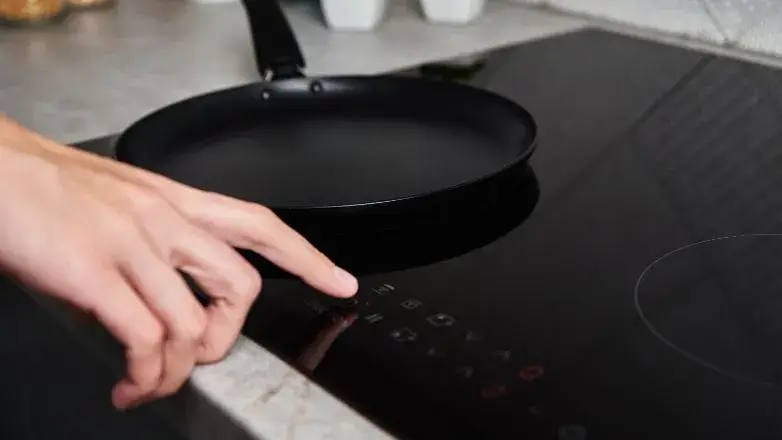
You switch the cooktop on, but nothing happens: no display, no heating, no response.
Cause
This is usually a power supply issue, a tripped circuit, a loose plug, or the socket itself not working. It can also happen if the control panel is locked, since a locked panel will not respond to any input.
Solution
Check first whether the control lock is on and unlock it if so. Next, confirm the socket has power by testing it with another appliance, and check your home’s circuit breaker for a trip. If the cooktop still will not respond after these checks, the fault is likely internal and needs a qualified technician rather than a DIY fix.
Issue 2: The Cooktop Shuts Off While Cooking

The cooktop switches itself off midway through cooking, even though you did not turn it off.
Cause
This is almost always a built-in safety feature doing exactly what it is designed to do, not a malfunction. Most cooktops shut off automatically once a cooking zone has run at the same setting for a set number of hours. They also stop immediately if the cookware is lifted off or moved away from the zone, since induction only generates heat while it senses a pan in place. An internal temperature sensor can also trigger a shutdown if the unit is overheating, often because the ventilation underneath is blocked.
Solution
Check whether you have simply hit the automatic shutoff timer for long cooking sessions, which is normal rather than a fault. Confirm the pan has stayed centred on the zone throughout cooking. Make sure the vents underneath the cooktop are not blocked by clutter or dust, since restricted airflow is one of the most common causes of an overheating-related shutdown.
Issue 3: Food Is Not Heating Properly

Food is cooking slowly, unevenly, or not getting hot enough even though the cooktop is switched on.
Cause
A power level set too low for the dish is the most common cause. Cookware also matters a great deal here: a pan with a warped, uneven, or undersized base will not make full contact with the heating zone, which means heat transfers unevenly or inefficiently.
Solution
Check the power level against what the dish actually needs, since induction often needs a lower setting than gas to achieve the same result. Confirm the cookware has a flat, even base that matches the size of the cooking zone as closely as possible, and hold a fridge magnet to the base to confirm it is properly ferromagnetic. If heating is still inconsistent after checking both, the issue may be a sensor fault worth having checked professionally.
Issue 4: Food Overcooks or Cookware Overheats Quickly
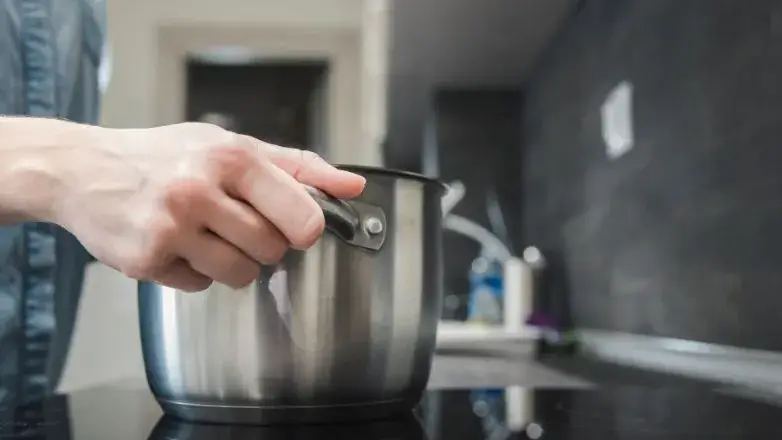
Food scorches faster than expected, or the cookware itself heats up noticeably quicker than you are used to.
Cause
Induction responds to a power level change almost instantly, unlike gas, which ramps up gradually. Using the same power level you would use on gas is the most common reason food overcooks. Cookware also plays a role: a pan with a thin, highly conductive base can heat up faster than one with a thicker, more even base, so the same setting can behave differently depending on what you are cooking in.
Solution
Start a dish at a lower power level than you would use on gas and adjust upward if needed, rather than defaulting to a high setting out of habit. Medium to heavy-gauge, flat-bottomed cookware tends to give more predictable, even results than very thin or very lightweight pans. Our Guide to the Best Induction Cookware in India can help if you are shopping for pans that perform consistently.
Issue 5: Humming, Buzzing or Clicking Noise While Cooking
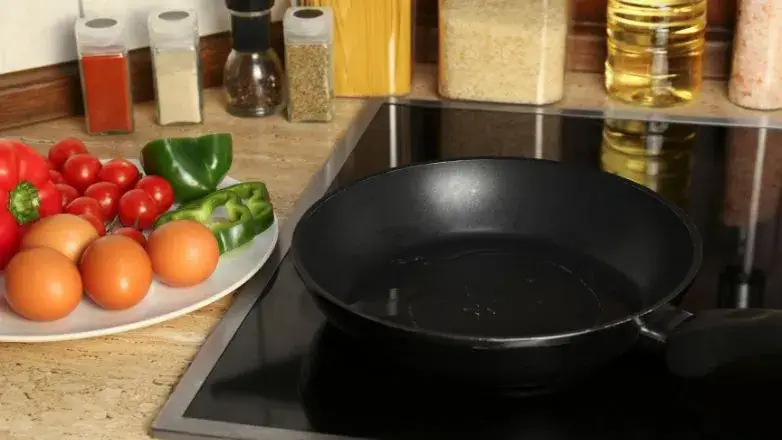
A humming, buzzing, crackling or clicking sound coming from the cooktop while it is running.
Cause
This is worth being clear about, since it is one of the most misunderstood issues with induction cooking: manufacturer support pages from Samsung and Whirlpool confirm that a humming or crackling sound is a normal part of how induction transfers energy to the pan, not a fault. The humming comes from the physical vibration of the metal in the cookware’s base as the magnetic field switches rapidly, an effect called magnetostriction, and it tends to get louder at higher power levels. A crackling sound usually comes from cookware made of layered or sandwich-base materials that vibrate slightly against each other. A clicking sound can come from the cooktop’s electronics cycling at lower power levels to hold a steady temperature. A fan-like whirring sound, which can continue briefly after you switch the cooktop off, is simply the internal cooling fan and is entirely normal.
Solution
In most cases, no fix is needed, since these sounds are a normal part of how the cooktop works. If the noise bothers you, switching to thicker, better-constructed cookware with a solid, well-bonded base often reduces humming and crackling noticeably. Only treat the noise as a problem worth having checked if it is unusually loud, grinding, or paired with another issue such as the cooktop not heating properly.
When to Call a Technician
Most of the issues above are solved by a simple check: the control lock, the power level, the cookware, or the ventilation. Bring in a qualified technician when the cooktop will not turn on at all after checking the power supply, when an error code persists after restarting the unit, or when a zone stops heating entirely while the others work fine. These point to an internal fault, such as the control board, sensor or coil, which is not safe or practical to fix yourself. Our more detailed guide on Induction Cooktop Problems and Solutions covers error codes and less common faults in more depth.
Induction Cooktop Issues FAQs
Is it normal for an induction cooktop to make noise?
Yes, in most cases. Humming, buzzing, crackling and fan noise are all normal effects of how induction heats cookware and cools its own electronics. Only an unusually loud or grinding noise is worth having checked.
Why does my induction cooktop keep shutting off?
This is usually the automatic shutoff timer, the cookware being lifted or moved off the zone, or the unit overheating due to blocked vents, rather than a fault with the cooktop itself.
Why does my food cook unevenly on induction?
This is most often caused by a warped or undersized pan base that does not sit flush with the heating zone, or a power level that does not match what the dish needs.
Does cookware material affect how fast food cooks on induction?
Yes. Thin, highly conductive cookware can heat up faster than a thicker, more even base, which can lead to overcooking if you are using a power level suited to heavier cookware. Starting lower and adjusting as needed avoids this.
When should I call a technician for my induction cooktop?
Call a technician if the cooktop will not turn on after checking the power supply, an error code keeps returning, or one zone has stopped working while the others are fine. These point to an internal fault that needs professional attention.
Conclusion
Most induction cooktop issues trace back to a short list of causes: a locked control panel, the wrong power level, mismatched cookware, or a safety feature doing exactly what it is designed to do. Working through the checks in this guide resolves the vast majority of them without a service call. The main exception is an internal fault such as a sensor, coil or control board issue, which is the point to bring in a qualified technician rather than attempting a repair yourself. If you want a deeper dive into less common faults and error codes, our Comprehensive Induction Cooktop Problems Guide is the next place to look, and our Home Appliance overview has useful general context on how appliances like this are designed to fail safely.