Last updated: 29 September 2026 by the Gas Stove Hub team
A good home is never complete without a perfectly cleaned kitchen, and the induction cooktop is often the centrepiece of a modern kitchen. If you have spent money on an Induction Stove, keeping the glass surface clean protects that investment and keeps the sensors working properly. This guide walks through daily cleaning, deep cleaning, the tools worth having, and the cleaners you should never use.
How Often Should You Clean an Induction Cooktop?
A quick wipe after every use is the single habit that keeps an induction cooktop looking new. Manufacturer guides such as KitchenAid’s Cleaning Guide recommend wiping the surface once it has cooled, and a full deep clean once a week or after any heavy spill. Spills left to harden, especially sugary or acidic ones, are what turn a two minute wipe into a twenty minute scrub.
Tools You Need to Clean an Induction Stove
- A soft microfiber cloth or damp sponge for everyday wiping
- A ceramic or glass cooktop cleaning cream
- Baking soda and white vinegar for natural deep cleaning
- A cooktop scraper with a single-edge blade, held at a low angle, for burnt-on residue
- A dry cloth for the final buff, which prevents water spots
Check Here: 10 Best Induction Cookware in India | Buying Guide
Daily Cleaning: Step by Step
- Turn off the cooktop and let it cool until it is warm but not hot to the touch.
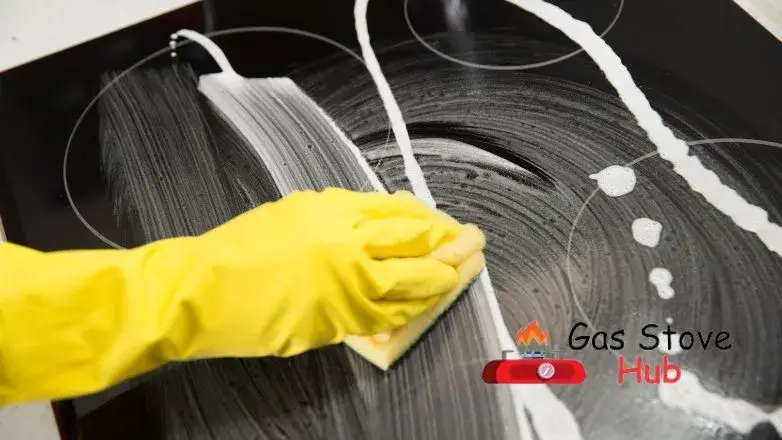
- Wipe the surface with a damp microfiber cloth to lift loose spills and dust.
- For light marks, add a drop of dish soap to the cloth and wipe in circular strokes.
- Dry the surface with a clean cloth so no streaks or water spots remain.
Deep Cleaning Methods for a Dirty or Stained Cooktop
Baking Soda and Dish Soap
Mix warm water with a little dishwashing liquid and soak a cloth in it. Sprinkle baking soda over the cooled cooktop, lay the damp cloth on top, and leave it for 15 to 20 minutes. Wipe away the residue with the same cloth and finish with a dry one.
Baking Soda and Vinegar
Mix equal parts white vinegar and water, spray or rub it onto the cooktop, and let it sit for a few minutes. Wipe with a soft damp cloth, then sprinkle baking soda over the same area and let it settle for another 15 to 20 minutes before wiping clean. This combination is also recommended by Whirlpool’s Induction Cooktop Cleaning Guide for everyday grease and light stains.
Toothpaste for Light Marks
A small amount of plain white toothpaste, rubbed gently in circular strokes and rinsed off with a damp cloth, can lift light surface marks. Use it sparingly and never on a scratch, since the mild abrasives in toothpaste can dull the glass with repeated use.
How to Clean Burnt Residue Off an Induction Cooktop
- Wait until the cooktop has cooled fully before touching burnt spots.
- Apply a cooktop cleaning cream or solution and let it sit for a few minutes to loosen the residue.
- Hold a cooktop scraper at a low angle, around 20 to 30 degrees, and gently lift the burnt food away. A steeper angle can scratch the glass.
- Wipe the area with a clean, damp cloth, then buff dry.
How to Clean Melted Plastic or Sugar Spills
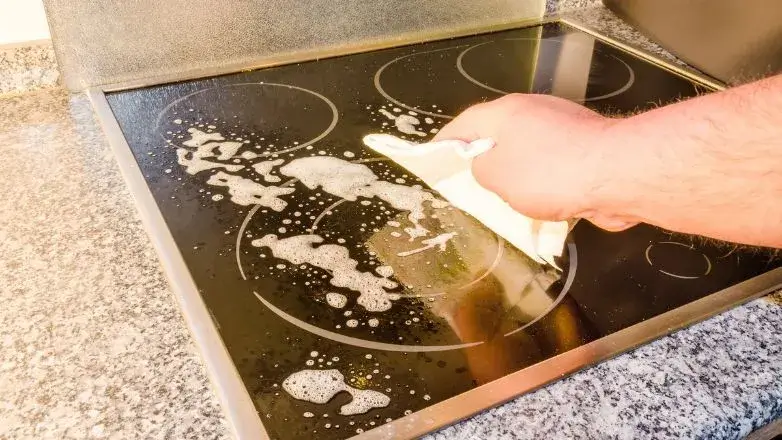
Melted plastic or a sugary spill can damage the glass if it is left to sit, so act as soon as it is safe. Turn off the surface unit immediately, move the pan aside, and put on an oven mitt. Use a razor blade scraper to gently push the spill to a cooler area of the cooktop, then wipe it with a damp towel. If any residue remains, let the surface cool fully and repeat the same technique.
How to Remove Hard Water Stains and the Toughest Marks
Hard water leaves mineral deposits that look like white spots or streaks. Dab a clean cloth in undiluted white vinegar and rub the marks, then follow with a ceramic cooktop cleaning cream. For stubborn hardened residue, a Vitroceramic scraper designed for glass surfaces removes the deposit without scratching, since it is built specifically for this purpose. A few drops of lemon juice can also help soften the hardest stains before you scrape, though it should be rinsed off promptly since citric acid left too long can dull the finish.
How to Clean Different Parts of an Induction Cooktop

Glass Ceramic Surface
Use a soft cloth with a glass-ceramic cooktop cream, spread it evenly, then wipe it off with a dry towel to leave a streak-free finish.
Stainless Steel Edges and Trim
Wipe stainless steel trim with a soft cloth and a non-abrasive cleaner such as mild soapy water, then dry it fully so no watermarks remain.
Control Panel and Sensors
Wipe the touch controls with a barely damp cloth only, since excess moisture can affect the sensors. Never spray cleaner directly onto the control panel.
What to Use and What to Avoid on an Induction Cooktop
| Safe to use | Avoid |
|---|---|
| Soft microfiber cloth or sponge | Steel wool or wire scrubbers |
| Mild dish soap and warm water | Glass or window cleaners (contain ammonia) |
| Baking soda and white vinegar | Bleach or chlorine-based cleaners |
| Cooktop cleaning cream made for glass-ceramic | Powdery abrasive scouring cleaners |
| A cooktop scraper at a low angle | Metal scrapers or knives held upright |
Manufacturer support pages from Bosch specifically warn against window cleaners, since the ammonia in them can damage the glass and release fumes when the surface heats up again. Chlorine bleach, caustic cleaners and gritty powders can etch the glass-ceramic coating over time, so they do not belong on an induction cooktop even though some are sold as general kitchen cleaners.
Preventing Stains Before They Start
- Lift pots and pans instead of sliding them, since dragging cookware is one of the main causes of scratches.
- Check the base of your cookware for grit or dried residue before placing it on the cooktop.
- Wipe spills as soon as it is safe rather than letting them dry and bake onto the surface.
- Use flat-bottomed, induction-compatible cookware, which sits evenly and reduces the chance of scratches. Our guide on Whether Carbon Steel Works on Induction can help you choose the right pans.
- Do not use the cooktop as extra counter space for heavy items, since the weight can crack the glass.
Induction Cooktop Cleaning and Maintenance FAQs
How often should I clean my induction cooktop?
Wipe it after every use once it has cooled, and do a deeper clean weekly or whenever there is a heavy spill.
Which cooktop cleaner is best for an induction stove?
A cleaning cream made specifically for glass-ceramic cooktops gives the safest, streak-free result. Baking soda with vinegar or mild dish soap works well for regular cleaning without any risk of damage.
Can I use vinegar on an induction cooktop?
Yes. White vinegar is safe and effective for light grease and hard water marks. Wipe it off with a damp cloth afterward so no residue is left behind.
Can I use a metal scrubber on an induction cooktop?
No. Steel wool and metal scrubbers scratch the glass-ceramic surface. Use a soft cloth for daily cleaning and a proper cooktop scraper only for stuck-on food.
Why should I avoid glass cleaner on an induction cooktop?
Most glass cleaners contain ammonia, which is too harsh for the cooktop’s coating and can release fumes when the surface heats up during the next use.
How do I remove burnt sugar or melted plastic from the cooktop?
Turn off the unit immediately, let the spill cool slightly, then gently scrape it away at a low angle with a razor blade scraper before wiping with a damp cloth.
Are induction cooktops easier to clean than gas stoves?
Yes, since there are no burners, grates or drip pans to clean around. If you also have a gas stove at home, see our guide on Cleaning Gas Stove Pipes, Burners and Grates.
Conclusion
An induction cooktop is a real investment, and a consistent, gentle cleaning routine is what keeps it looking and working like new. Wipe it after every use, deep clean weekly with baking soda and vinegar or a proper cooktop cream, and keep bleach, ammonia-based cleaners and metal scrubbers away from the glass. Handled this way, an induction cooktop stays scratch free and spotless for years. If you are still deciding between an induction cooktop and a traditional stove, our comparison of Induction Cooktop vs Gas Stove covers cost, cleaning and cooking differences in detail.