Induction cooking uses electricity and a changing magnetic field to heat compatible cookware directly, rather than burning LPG or heating a radiant element first. That often makes it quick and responsive, with less wasted heat around the cooking vessel. For Indian kitchens, the main questions are whether your utensils work on induction, whether the electricity supply and socket suit the appliance, and whether the running cost fits your household.
Written by Abdul Khader, researcher and writer at Gas Stove Hub. Last updated: October 26, 2026
Why Are More Indian Households Considering Induction Cooking?
An induction cooktop can be useful for students, tenants, small households, hostels where permitted, and families who want a second way to cook when they need it. It has a flat surface, no open cooking flame, and controls that can change heating power quickly. India’s Ministry of Power has also highlighted induction cookers through the National Efficient Cooking Programme, reflecting interest in efficient electric cooking. That does not mean induction is the cheapest option for every home: electricity tariffs, LPG prices, power reliability, cookware and cooking habits all matter.
If you want to understand the technology before deciding, see our guide to How an Induction Stove Works.
How Does Induction Cooking Work?
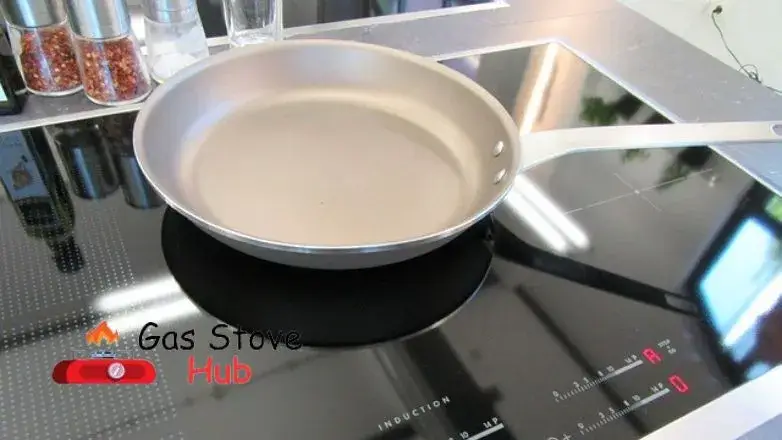
Under the glass-ceramic surface is a coil, commonly made from copper wire. When the cooktop operates, electronic circuitry supplies alternating current to the coil, producing a changing magnetic field. With compatible cookware in the cooking zone, that field induces electrical currents in the pan’s magnetic base. The metal’s electrical resistance turns this energy into heat, and the pan transfers the heat to the food.
What Is Electromagnetic Induction?
Electromagnetic induction is the production of voltage or current in a conductor when the magnetic field around it changes. In an induction cooker, this principle lets the pan itself become the main source of heat. The glass surface is not completely cool during cooking: the hot vessel transfers heat back to the glass, which can remain hot after the pan is lifted.
Why Does Induction Heat Cookware Quickly?
Energy is transferred directly into a suitable vessel instead of first heating a flame or a large exposed heating element. This can make heating responsive and reduce heat wasted into the surrounding air. Actual cooking speed still depends on cooktop wattage, cookware material and size, the amount of food, and the selected setting.
Does the Cooktop Detect a Pan?
Many models use cookware-detection sensors and may stop or pause heating when a suitable pan is absent. The response and any safety functions vary by model. Do not assume every appliance has the same automatic shut-off functions; check the manual and specification sheet.
Benefits of Induction Cooking
1. Fast, Responsive Heating
Induction cooktops can heat water and suitable pans quickly and can respond rapidly when you change the power setting. This is helpful when preparing tea, boiling water, reheating dal, making sauces, or moving between a boil and a simmer. Performance varies by appliance and pan, so treat speed claims as model-specific rather than a guarantee.
2. Efficient Transfer of Energy
Because the cooking vessel receives energy directly, induction generally transfers a larger share of its input energy into the cookware than a traditional gas flame or radiant electric element. Household running cost is a separate question. An efficient device can still cost more to run where electricity is expensive, so compare your local electricity tariff with your LPG cost and usual cooking routine.
3. No Open Gas Flame
Induction does not burn LPG at the cooking surface. That avoids combustion emissions from a gas flame inside the kitchen, although cooking food itself can still release smoke, grease and airborne particles. Ventilation remains useful, particularly during frying, tadka and high-heat cooking.
4. Easier Routine Cleaning
The flat glass-ceramic surface has fewer gaps than a gas burner and pan-support assembly. Once the cooktop has been switched off and cooled sufficiently, small spills can usually be wiped away with a soft cloth and a cleaner approved by the manufacturer. Sugary spills and burnt-on residue need prompt, careful attention according to the manual.
5. Useful Controls and Safety Features
Depending on the model, the cooktop may offer multiple power levels, timers, a child lock, residual-heat indicators, overheat protection, and cookware detection. These are not universal features, so check the exact model. Induction lowers some risks associated with open flames, but hot cookware, hot surfaces, spills and electricity remain potential hazards.
6. A Practical Secondary Cooking Option
A portable single-zone cooktop can provide an additional cooking option for quick meals or limited kitchen space. It is not a substitute for planning around a power cut, and it should be used only in a suitable, ventilated, dry area with the electrical supply specified by the manufacturer.
Limitations to Consider Before Buying
1. Not All Indian Cookware Works
An induction cooktop needs an appropriate magnetic base. Cast-iron cookware and many iron or induction-labelled stainless-steel vessels work, but some stainless steel does not. Plain aluminium, copper, glass, ceramic and clay vessels generally will not work unless they have a compatible base approved for induction.
2. Power Cuts Stop Cooking
A typical induction cooktop requires electricity and will not operate during a power cut. If outages are frequent where you live, consider whether induction should be a secondary appliance rather than your only cooking method. Never improvise an electrical backup or use an undersized extension cord to power a high-wattage appliance.
3. Upfront Cost May Include New Utensils
The appliance price is only one part of the switch. If most of your existing pots do not work, replacement cookware may add to the cost. Compare the total cost, including service support, warranty and power requirements, before purchasing.
4. Some Cookware Makes a Humming Sound
A gentle humming, buzzing or clicking sound can be normal. It may vary with power level, the pan’s construction and the cooktop’s cooling fan. Unusually loud noise, a burning smell, repeated error messages or abnormal performance call for stopping use and contacting authorised service.
5. The Glass Surface Needs Care
The surface can be damaged by a hard impact, a heavy vessel dropped onto it, or rough cookware dragged across it. Do not use a cooktop with cracked glass or a damaged power cable. Have it assessed by authorised service instead of trying to repair it yourself.
How to Check Whether Your Utensils Work on Induction
Before buying an induction cooktop, test the vessels you use most often, especially your kadhai, pressure cooker, tawa and saucepan. A simple magnet test is a useful first check.
- Place a household magnet against the flat base of the empty vessel.
- If the magnet sticks firmly, the vessel is likely to be induction-compatible.
- If the magnet does not stick, check the manufacturer’s marking and product details. The vessel may not work on induction.
- Check that the base is flat and sits securely on the cooktop. A magnetic base alone does not guarantee good performance if the vessel is too small or badly warped.
For more cookware guidance, read Best Induction Cookware in India and Does Carbon Steel Work on Induction?.
Induction vs LPG Gas vs Infrared Cooktops
| Feature | Induction Cooktop | LPG Gas Stove | Infrared Electric Cooktop |
|---|---|---|---|
| Heat source | Electromagnetic energy heats compatible cookware | LPG combustion creates a flame | An electric element heats the surface, which transfers heat to the vessel |
| Cookware | Magnetic, induction-compatible base needed | Many heat-resistant vessels can be used if stable above the flame | Usually works with a wider variety of flat-bottom vessels |
| Power or fuel | Electricity | LPG supply | Electricity |
| Heating response | Usually fast and responsive | Flame responds quickly to knob changes | Surface generally takes time to heat and cool |
| Emissions at cooktop | No combustion at the cooking surface | Combustion emissions occur | No fuel combustion at the cooking surface |
| Main consideration | Cookware and reliable electricity | LPG supply and safe installation | Hot surface and heat-transfer delay |
There is no single best choice for every household. Induction can be attractive for speed and energy transfer if your vessels and electrical supply are suitable. LPG may be more practical where power is unreliable or open-flame cooking is preferred. Infrared can work with more types of cookware but heats the cooktop surface itself. See our comparison of Induction Cooktops and Gas Stoves for another perspective.
Is Induction Cooking Cheaper Than LPG in India?
It depends on the price you pay for electricity and LPG, how much food you cook, the vessel you use, and how efficiently you use each appliance. Induction cooking is generally efficient at transferring energy into cookware, but efficiency alone does not prove that your monthly bill will be lower.
Estimate Your Induction Electricity Use
Use the rated wattage and the time the appliance actually spends drawing that power as a rough estimate. Lower settings, cycling controls and cooking time affect actual use.
Example: A 1,800 W Cooktop Running for 30 Minutes
A 1,800-watt cooktop running at full rated power for 30 minutes would use about 0.9 kilowatt-hours (kWh), because 1.8 kW multiplied by 0.5 hours equals 0.9 kWh. Multiply the actual or estimated kWh by your electricity tariff to estimate the cost.
For a fair comparison, compare the electricity cost for a similar meal with the LPG cost for that meal. Include any new cookware you need and remember that appliance input power is not necessarily drawn continuously at full power. India’s Ministry of Power has promoted efficient induction cookers through the National Efficient Cooking Programme, but household savings still depend on the local conditions and usage.
Is Induction Cooking Safer and Better for Indoor Air Quality?
Induction avoids a gas flame and combustion products from burning LPG at the cooktop. That can be an advantage for indoor air quality. However, frying, searing, roasting and other cooking activities can still create particles, smoke and grease, so ventilation remains important. A range hood that exhausts outdoors can help remove cooking pollutants.
The cooktop and pan can still be hot. Keep children away from active cooking, use suitable cookware, keep ventilation openings clear, and do not touch the surface to check its temperature. Follow the manufacturer’s electrical safety instructions and stop using the cooktop if its glass is cracked, its cord is damaged, or it develops a burning smell or repeated fault.
How to Use an Induction Cooktop Correctly
- Place the cooktop on a stable, dry, heat-resistant surface with the clearances required by the manual.
- Check the appliance label for its rated wattage and follow the manufacturer’s instructions for a correctly rated, earthed electrical outlet. Do not overload sockets or use an unapproved extension lead.
- Place a flat-bottomed, induction-compatible vessel in the centre of the cooking zone before switching to the selected setting.
- Choose an appropriate power level or cooking preset. Monitor the food, particularly when frying or heating liquids.
- When finished, switch off the cooking zone and appliance as directed. Remember that the hot vessel can transfer heat to the glass surface.
- Allow the surface to cool before cleaning, and keep liquids away from the ventilation openings and electrical components.
For practical cooking advice, read How to Cook on an Induction Cooktop.
Maintenance and Cleaning Tips
- Switch off the appliance and follow the manual before cleaning.
- Use a soft cloth and a cleaner approved for the glass-ceramic surface.
- Do not pour water over the appliance or allow liquid to enter its air vents.
- Do not scrape the surface with sharp tools unless the manufacturer specifically approves a suitable scraper and method.
- Keep cooling vents clear and leave the required space around the unit.
- Do not open the casing or attempt internal electrical repairs. Use authorised service for damaged parts or persistent faults.
See our guide to How to Clean an Induction Stove for more maintenance advice.
Common Questions About Induction Cooking
Is an induction cooktop suitable for Indian cooking?
Yes, it can be suitable for many Indian dishes, including boiling, simmering, reheating, and cooking in a compatible kadhai or pressure cooker. Check that your frequently used vessels have induction-compatible bases and are stable on the cooking zone.
Can I use my regular aluminium kadhai on induction?
Plain aluminium generally will not work unless the kadhai has a magnetic induction-compatible base. Use the magnet test as a first check and read the product label.
Does an induction cooktop use a lot of electricity?
Consumption depends on wattage, power setting and cooking duration. A higher power setting uses more electricity while active but may finish a task sooner. Estimate kWh from the appliance’s power and actual run time, then multiply by your local tariff.
Can induction cooking reduce kitchen heat?
It usually releases less heat into the surrounding kitchen than an open gas flame or a radiant electric element because energy is directed to compatible cookware. The pan and food still release heat, steam and cooking emissions, so the kitchen may still become warm.
Can an induction cooktop work when electricity fails?
A typical cooktop needs an electricity supply and will not heat food during a power cut. Plan a safe alternative if power outages are common in your area.
Why does my induction cooker beep or fail to detect a pan?
The vessel may not be magnetic, may be too small for the zone, may not be centred, or the appliance may be displaying a model-specific warning. Check the manual and cookware compatibility. If the issue persists, contact authorised service. Do not bypass the sensor.
Is induction safer than gas cooking?
Induction avoids an open gas flame and combustion at the cooktop, but it is not risk-free. Hot cookware, hot glass, electrical faults and spills can still cause injury. Safe use depends on appliance condition, proper electrical supply, cookware and user behaviour.
Does induction cooking require special cookware?
It requires cookware with a compatible magnetic base. Cast iron and many induction-labelled steel vessels work, but some stainless steel and most plain aluminium, copper, glass and ceramic vessels do not. Check the utensil’s induction symbol or perform a magnet test.
Is an induction cooktop better than an infrared cooktop?
Induction heats compatible cookware directly and usually responds quickly. Infrared cooktops heat a surface element and can accommodate more vessel materials, but the surface itself gets hot. The right option depends on cookware compatibility, performance, cost and your cooking preferences.
Final Verdict: Should You Choose Induction Cooking?
Induction cooking is worth considering if you value responsive heating, easy surface cleaning, and no open gas flame at the cooking surface. It works best when you have compatible flat-bottom cookware and reliable electricity. Before buying, compare the appliance wattage, outlet requirements, warranty, cookware cost and local electricity tariff with your LPG expenses. For many Indian homes, induction is useful as a primary or supplementary cooking option, but the best choice depends on the household’s needs and local conditions.
Source & About This Guide
This guide is written for Indian households considering induction cooking. It combines manufacturer explanations of induction technology, public energy guidance and Indian government information about efficient cooking. Performance, operating cost, cookware detection and safety functions vary by model; follow the instruction manual for your appliance. No universal savings figure applies to every home.
- Bosch India: How Induction Cookers Work
- Bosch India: Induction-Compatible Cookware
- US Department of Energy: Making the Switch to Induction Cooktops
- Press Information Bureau, Ministry of Power: National Efficient Cooking Programme
- The Indian Express: How an Induction Cooktop Works
- Research Review: Gas Stove Emissions and Indoor Air Quality